
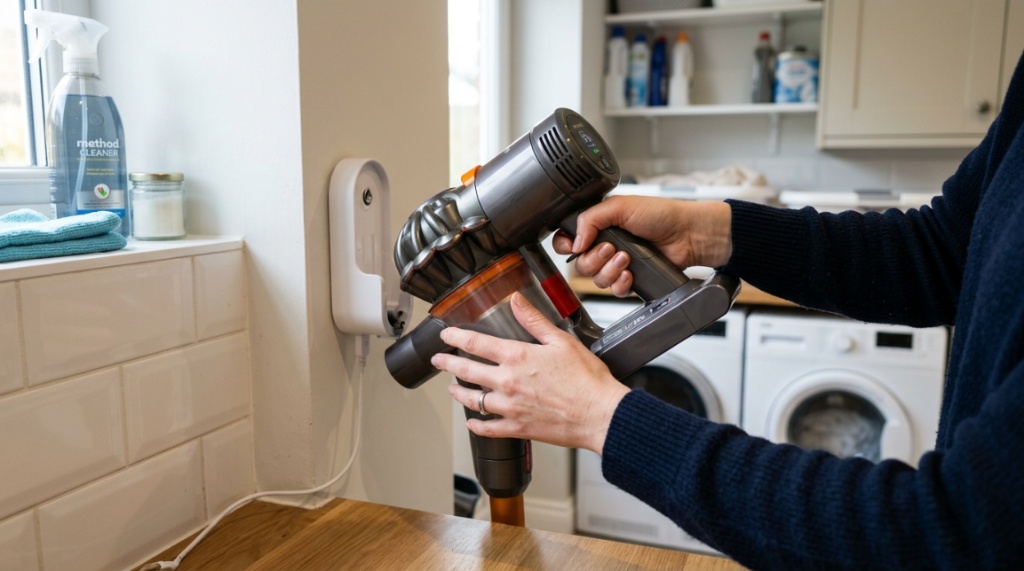
03 Sep What Should You Know Before Using a Cordless Vacuum Buying Guide?
You’re ready to ditch the cord, the wall outlet gymnastics, and the tangled mess that comes with every traditional vacuum. But standing in the aisle—or scrolling through endless product pages—you quickly realize that choosing a cordless vacuum isn’t as simple as grabbing the shiniest model. Battery life, suction power, weight, and price vary wildly between models. If you pick the wrong one, you could end up with a machine that dies halfway through your living room or struggles to pick up pet hair. This cordless vacuum buying guide breaks down the essential factors you need to evaluate before spending your money, helping you match a machine to your actual home, floor types, and cleaning habits.
Key Takeaways
- Battery runtime ratings are often based on eco mode with a non-motorized tool; real-world runtime on high power is usually 10–15 minutes.
- For homes over 1,500 square feet, prioritize models with removable batteries so you can keep a spare charged and swap it mid-clean.
- Airflow (CFM) and suction (Pa or AW) matter more than wattage, which only measures motor power draw, not cleaning effectiveness.
- Consider brush roll design carefully—hard floors require a soft roller or a brush-roll-off setting to prevent scattering debris.
- Look beyond the purchase price: consider replacement battery and filter costs over 2–3 years to understand the true total cost of ownership.
Understanding the Real Differences Between Cordless Stick Vacuums
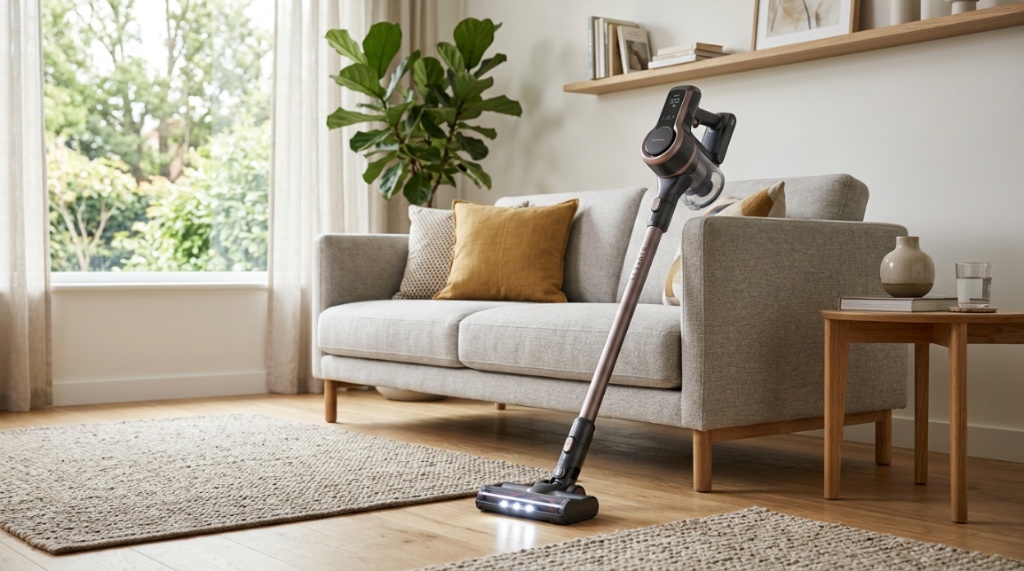
There are also three broad categories: lightweight stick vacuums for quick pickups, 2-in-1 stick and handheld models for versatility, and full-size cordless vacuums designed as primary cleaners. If you’re replacing a traditional upright vacuum entirely, you need a model in that third category with strong cyclonic suction and a motorized floor head. If you’re only supplementing a corded model for quick kitchen cleanups, a lighter and less expensive stick may be plenty. Dyson, Shark, LG, Samsung, and Tineco dominate the premium space, while brands like Hoover and Bissell offer more budget-friendly options. Each brand has slightly different strengths, and performance varies significantly even within the same brand’s lineup—which reinforces why doing your homework before purchasing is critical. If you want an example of how specific models compare in real-world use, you can explore a more detailed cordless vacuum buying guide that breaks down a popular model’s features and limitations, but keep reading for the core principles you should apply to any purchase decision.
Battery Runtime: The Specification That Matters Most
Battery runtime is the single largest pain point for cordless vacuum owners. Manufacturers list runtimes that are technically accurate but practically misleading. A vacuum rated for 60 minutes typically achieves that only on eco mode with a non-motorized crevice tool attached—not while using the motorized floor head that actually does the heavy lifting. In reality, you should expect roughly one-third of the advertised maximum runtime during normal cleaning with the power floor head on the standard or high setting. That means a claimed 60-minute vacuum will realistically give you 20–30 minutes, which may be enough for smaller apartments but inadequate for large homes.
Why Battery Chemistry Matters
Most cordless vacuums use lithium-ion cells, but the quality and number of cells directly impact runtime and long-term battery health. Cheaper models often experience noticeable power fade—the vacuum starts strong but gradually loses suction as the battery depletes. Battery cells also degrade over time.
Another factor is swappable batteries. Some models, like the LG CordZero series and several Dyson models, feature removable battery packs. This is a huge advantage for anyone with a larger home: you can buy a second battery and simply swap it when the first drains. Models with built-in, non-removable batteries force you to wait for the vacuum to recharge mid-clean or stop entirely if the battery dies early. If your living space exceeds 1,500 square feet of hard flooring or 1,000 square feet of carpet, prioritize models with swappable batteries. Recharge times matter too, with 3–3.5 hours being the typical expectation for a full charge.
Suction Power Is Not Wattage
Manufacturers often market the motor wattage, leading consumers to equate higher watts with stronger cleaning. Wattage only tells you how much electrical power the motor draws, not how effectively it converts that power into suction and airflow. The real performance indicators are:
- Air Watts (AW): A measurement that combines airflow and suction pressure, representing actual cleaning power at the nozzle.
- Pascals (Pa): A unit of pressure that indicates suction strength. Vacuum cleaner motors typically range from 8,000 Pa (weaker) to 30,000+ Pa (very strong).
- CFM (Cubic Feet per Minute): Measures airflow volume. High CFM matters for moving debris through the hose and picking up larger particles.
Modern premium cordless vacuums from Dyson and LG produce between 150 and 240 AW, with 20,000–30,000 Pa of suction. Budget models usually fall between 8,000–15,000 Pa. For comparison purposes, remember that a traditional 1,200-watt corded upright vacuum produces roughly 200+ AW, which clarifies why many cordless vacuums still underperform on deep-pile carpets. You do not need maximum suction all the time. Higher suction usually means shorter battery life, so premium models offer adjustable power modes. Eco mode handles hard floors and low-pile rugs efficiently, while max mode is reserved for stubborn debris or high-pile carpet.
Filtration and Sealed Systems
Filtration is another overlooked factor tied to suction. For allergy sufferers, a cyclonic vacuum with a HEPA filter is essential, but only if the vacuum has a fully sealed system. A sealed system prevents air from leaking out through gaps and seals, ensuring all exhaust air passes through the HEPA filter. Many budget vacuums claim HEPA filtration but do not have true sealed systems, allowing fine dust particles to escape back into your air. Check the product specifications for a “fully sealed” or “whole-machine filtration” claim rather than just an individual HEPA filter component.
Floor Head Design and Brush Roll Types
The floor head is where the vacuum actually meets the dirt, making its design arguably as important as motor power. Different models deliver distinctive cleaning experiences on varied surfaces, mostly because of the brush roll design. A direct-drive brush roll typically uses a motor directly inside the cleaner head to power a stiff, bristle roller—excellent on woven, medium-pile carpets but sometimes too aggressive for delicate rug fringes. In contrast, a soft roller head uses a mix of soft nylon and carbon fiber; these work beautifully on hard floors where they prevent scattering debris and catch fine dust in the same pass. Some premium models, like the Dyson V15 series, automatically adjust suction and roller speed based on the floor type detected through an acoustic sensor. But this comes at a higher price.
Understanding Hard Floor Capabilities
Hard floors present a unique challenge for vacuums. A hard, bristle brush roll spinning at high RPM can scatter small debris like sand or cereal across the floor rather than capturing it. For hard-floor-only homes, look for models with a soft roller option or a dedicated hard-floor head. Some vacuums let you turn the brush roll off entirely, which is acceptable for occasional gentle dust pickup but often reduces agitation too much for anything beyond surface debris. In contrast, if you have wall-to-wall carpet, motorized brush rolls are essential for pulling embedded dirt and pet hair from carpet fibers. A common complaint about cheaper models is that their rollers tangle easily with hair, requiring manual cleaning every few weeks.
Weight, Ergonomics, and Real-World Handling
A vacuum can have incredible suction and battery life, but if it hurts your wrist to hold and feels unbalanced to push, you will not use it. The weight specification alone is not the full story—how that weight is distributed matters much more. A heavier motor and battery placed high (near the handle) create torque that strains the wrist during overhead cleaning or under-furniture work. Vacuums with the battery positioned lower, closer to the floor head, feel more stable and easier to maneuver. When testing a vacuum in-store, hold it with one hand for 30 seconds and simulate pushing it across the floor. If you feel significant wrist strain, it will only worsen after several minutes of real cleaning.
Check the articulated or flexible neck on the floor head. A head that swivels smoothly and can lie flat to reach under sofas creates less need to bend. Also, verify the reach—the combined length of the handle, wand, and floor head should comfortably reach under typical furniture (usually requiring a low-profile head of around 9–10 cm in height). Finally, check the dustbin emptying mechanism. Look for models with a toggle or locking button if you have grip issues or plan to vacuum daily.
Cordless vs. Corded: When It Makes Sense to Keep the Cable
The cordless vacuum revolution is settled, but that does not mean corded vacuums are obsolete. In certain scenarios, the corded model remains the better choice. For homes larger than 2,500–3,000 square feet, a budget-priced 1,200-watt corded upright will clean 50–70 minutes continuously with no drop in suction, leaving a cordless vacuum in the dust. For deep-cleaning wall-to-wall carpets, only the most expensive premium cordless vacuums deliver comparable agitation and suction to a mid-range corded machine.
A more practical approach is following the 80-20 rule: use a cordless vacuum for daily or weekly quick cleans—covering 80% of your routine needs—while keeping a separate corded vacuum for longer deep-cleaning sessions. Most consumers find this hybrid system works better than trying to use either type alone for every situation. Think about how you vacuum today. Do you do quick daily spot-cleans? Cordless works. Do you have a weekly marathon clean of multiple rooms? Corded is still the most reliable workhorse. Also consider how often the shopping task changes: cordless models often get replaced every 2 years as battery technology improves, while an upright can last for a decade.
What Should You Expect to Pay?
Price is an unavoidable factor, and the cordless vacuum market has a wide price band with clear performance tiers. Typically, you can divide it into the following categories:
| Price Range | What You Get | Common Limitations |
|---|---|---|
| Under $150 | Basic stick vacs, 8,000–15,000 Pa suction, small 0.3L bins, 15–25 min runtime | Weak on carpets, non-removable batteries, often cheap plastic build, poor filtration |
| $150–$350 | Mid-tier models with swappable battery options, 16,000–22,000 Pa suction, better floor heads | Still may struggle on high-pile carpets, bigger and heavier, less advanced filtration |
| $350–$600 | Premium features like laser illumination, auto-adjusting suction, self-cleaning rollers | Not every feature is essential—lasers are cool but don’t clean, you may overpay for brand name |
| $600–$1,000+ | Flagship models, 240+ AW suction, multi-surface heads, multiple batteries included sometimes | Performance difference over the $350 model is small; you pay for exclusivity and accessories |
A thoughtful budget sweet spot for most homes is the $250–$450 range, where several models from Shark, LG, and Tineco provide swappable batteries, decent warranty periods (2–3 years), and genuinely strong suction. If you have two floors and multiple pets, aim for this band.
If you have limited storage space or live in tight quarters, check out our guide on the best Cordless Vacuum for Small Apartments and Dorms to find a compact model that delivers maximum cleaning performance.
Frequently Asked Questions
How many years do cordless vacuum batteries last?
Most lithium-ion batteries in cordless vacuums last about 2 to 4 years with regular use. After that, you will notice runtime decreasing significantly. If your model has a removable battery, you can extend the vacuum’s overall life by simply replacing the battery instead of buying a whole new machine.
What vacuum suction is good for pet hair?
For pet hair on carpets, you need at least 20,000 Pa of suction (around 150 AW) plus a motorized brush roll with either a self-cleaning mechanism or an easily accessible roller for hair removal. Higher CFM also helps lift hair that gets embedded deep in carpet fibers.
Can a cordless vacuum replace a corded upright?
Yes, but only with premium-level cordless models (above $500) if you have predominantly carpeted floors. If your home is mostly hard flooring, you can skip the corded upgrade entirely with any model providing more than 15,000 Pa of suction. For larger homes or deeper carpet piles, a cordless might still be a supplement.
Is higher voltage or wattage better on a cordless vacuum?
No. Wattage and voltage only tell you the motor’s electrical draw. They are marketing shorthand, not performance metrics. Always look at Air Watts (AW) or Pascals (Pa) for a useful comparison of suction, and compare decibel ratings if noise is a concern.
How often should I clean the filter on my cordless vacuum?
Check your filter monthly and wash it with water if washable; allow it to dry completely for 24 hours. Replace non-washable HEPA filters every 6–12 months, or sooner if suction appreciably drops. Also, remove hair from the brush roll after every few uses to prevent motor strain.
What does the dustbin capacity affect in a cordless vacuum?
Larger dustbins (0.5 liters or more) require less frequent emptying, which is helpful for large areas. However, full bins reduce airflow, so if you notice weaker suction, check the bin first. Emptied correctly, a dirt canister should not require touching the debris.
Conclusion
Finding the right cordless vacuum means looking beyond the shiny exterior and carefully evaluating battery runtime expectations, real suction values, brush roll types, and ergonomics. Understand that claimed runtimes are based on optimal conditions, wattage does not equal cleaning power, and hard floors may require a different brush roll design than carpets.