

13 Mar How to Choose a Cordless Vacuum for Small Apartments and Dorms
Living in a small space comes with unique cleaning challenges. You need effective cleaning tools that don’t take up precious storage space or require complicated setup procedures. A cordless vacuum designed for limited square footage can transform your cleaning routine from a dreaded chore into a quick, manageable task.
Traditional vacuums with bulky bodies and tangled cords often feel like overkill for a studio apartment or dorm room. They’re difficult to store, cumbersome to maneuver, and honestly unnecessary for the amount of floor space you’re actually cleaning. Fortunately, modern cordless technology has evolved to meet the specific needs of small-space dwellers.
This guide will walk you through everything you need to consider when selecting the perfect cordless vacuum for your compact living situation. You’ll learn about essential features, what to prioritize on a budget, and how to avoid common purchasing mistakes that lead to buyer’s remorse.
Understanding Your Cleaning Needs in Limited Space
Before diving into specific vacuum features, take a moment to assess your actual cleaning requirements. Small apartments and dorms have different characteristics than larger homes, and your vacuum should match these realities.
Most compact living spaces feature a mix of flooring types. You might have hardwood in the main area, tile in the bathroom, and a small rug near your bed. Your vacuum needs to handle these transitions smoothly without requiring multiple attachments or settings changes.
Consider how often you’ll actually clean. In a small space, dirt and dust become visible quickly, but the actual cleaning time is minimal. You might vacuum three times per week for just ten minutes each session. Therefore, you don’t need an industrial-strength machine designed for marathon cleaning sessions.
Storage limitations represent perhaps the biggest consideration. Unlike homeowners with dedicated utility closets, you’re probably working with a single small closet or even just a corner of your room. Your vacuum needs to fit into whatever limited space you can allocate without dominating your living area.
Pet ownership changes the equation significantly. If you have a cat or small dog in your apartment, you’ll need stronger suction and better filtration to manage fur and dander. However, many dorms prohibit pets entirely, making this a non-issue for some readers.
Key Features That Matter for Small Apartment Vacuum Selection
Certain features become particularly important when choosing a small apartment vacuum. Understanding which specifications actually impact your daily use helps you make a smart purchasing decision.
Weight and maneuverability top the list of practical considerations. You’ll be lifting your vacuum to clean stairs, reaching under furniture, and possibly storing it on a shelf. Models weighing less than five pounds offer the best combination of power and portability. Additionally, swivel heads make navigating around furniture legs and tight corners much easier.
Battery life needs to match your cleaning reality, not manufacturer marketing claims. For a 400-square-foot studio, you might need only 15 minutes of runtime. However, look for models offering at least 25 to 30 minutes to provide a comfortable buffer. This extra time accounts for spot cleaning between regular sessions and ensures you won’t run out of power mid-clean.
Dustbin capacity affects how often you’ll empty the vacuum. Small apartments don’t generate massive amounts of debris, so a 0.5-liter capacity typically suffices. Larger bins are nice but add weight and bulk. Consider whether you’d rather have a lighter vacuum that you empty more frequently or a heavier one with more capacity.
Charging convenience impacts your daily routine more than you might expect. Wall-mounted charging stations save floor space but require drilling into walls, which many renters cannot do. Models with freestanding charging bases or detachable batteries offer more flexibility for renters and dorm residents.
Noise levels matter when you share walls with neighbors. Early morning or late evening cleaning becomes problematic with louder models. Look for vacuums operating below 75 decibels if you plan to clean during quiet hours.
Compact Vacuum Design and Storage Solutions
The physical footprint of your vacuum directly impacts your quality of life in a small space. Smart design features can make the difference between a vacuum that integrates seamlessly into your home and one that constantly annoys you.
Stick vacuums represent the most popular style for small spaces. They stand upright on their own, require minimal floor space, and often include wall mounts for vertical storage. The slim profile fits into narrow closets or even behind doors.
Handheld models offer ultimate portability and storage convenience. They’re perfect for quick cleanups and take up minimal space. However, they typically have smaller dustbins and shorter runtimes. Consider whether bending over to clean floors would become uncomfortable during longer sessions.
Two-in-one convertible designs provide the best of both worlds. These vacuums function as stick models for floors but detach into handhelds for furniture, stairs, and car interiors. This versatility makes them excellent value for small-space dwellers who need flexibility.
Folding mechanisms allow some models to collapse to half their operating height. This innovation dramatically improves storage options, letting you tuck the vacuum under beds or into shallow closets that wouldn’t accommodate traditional designs.
Color and aesthetics might seem superficial, but they matter when your vacuum sits visible in your living space. Modern designs come in sleek finishes that look more like decor than cleaning equipment. If storage space forces you to keep your vacuum in plain sight, appearance becomes a legitimate consideration.
Budget Considerations and Value Assessment
Cordless vacuums range from under one hundred dollars to over six hundred. Understanding what you get at different price points helps you invest wisely without overspending on unnecessary features.
Entry-level models between seventy-five and one hundred fifty dollars typically offer basic suction, simple attachments, and shorter battery life. They work adequately for small spaces with primarily hard floors. However, they may struggle with carpets and lack advanced filtration systems.
Mid-range options from one hundred fifty to three hundred dollars deliver better battery technology, stronger suction, and improved build quality. These models usually include multiple attachments and perform well on various floor types. For most apartment dwellers, this price range offers the best value.
Premium vacuums above three hundred dollars feature the latest technology, including intelligent suction adjustment, advanced filtration, and exceptionally long battery life. They’re engineered for durability and performance. However, for a small apartment or dorm, these capabilities often exceed your actual needs.
Consider total cost of ownership beyond the initial purchase. Replacement filters, batteries, and accessories add up over time. Some budget models have expensive proprietary parts, while certain premium brands offer affordable consumables. Research these ongoing costs before committing to a purchase.
Warranty coverage provides insight into manufacturer confidence and your long-term protection. Look for at least a one-year warranty on the vacuum and battery. Some brands offer extended warranties or satisfaction guarantees that reduce purchase risk.
Floor Type Compatibility and Performance
Different flooring materials require different cleaning approaches. Your vacuum must handle whatever surfaces exist in your specific living space.
Hard floors including tile, hardwood, and laminate are common in apartments. These surfaces need gentle brushes that won’t scratch while still capturing fine dust. Look for models with soft roller heads or the ability to disable the brush roll entirely.
Low-pile carpets or area rugs benefit from motorized brush rolls that agitate fibers to release embedded dirt. However, you don’t need the aggressive beater bars designed for thick carpeting. Adjustable suction lets you optimize performance for different surfaces.
Transitions between floor types should happen seamlessly. Quality compact vacuum models detect surface changes and adjust automatically, or at minimum, make manual switching simple and quick. Avoid models requiring complete attachment changes between rooms.
Edge cleaning capabilities determine how well your vacuum handles baseboards and corners. Small apartments have proportionally more edge space relative to floor area. Vacuums with good edge suction reduce the need for separate tools or manual sweeping.
Furniture navigation becomes crucial in furnished studios where you’re maneuvering around beds, desks, and storage units. Low-profile heads that fit under furniture and swivel necks that turn easily prevent frustration and save time.
Filtration Systems for Small Space Air Quality
Air quality matters more in compact living spaces where the air you clean gets redistributed through a smaller volume. Poor filtration means you’re just moving dust around rather than removing it.
HEPA filtration captures 99.97 percent of particles down to 0.3 microns. This level of filtration benefits allergy sufferers and anyone concerned about air quality. True HEPA filters cost more than standard filters but provide significantly better protection.
Sealed systems prevent dust from escaping through seams and joints in the vacuum body. Without this feature, fine particles can blow back into your living space during cleaning. Look for models advertising fully sealed air paths from intake to exhaust.
Washable filters reduce ongoing costs and environmental impact. You can rinse and reuse them multiple times before replacement becomes necessary. However, they require regular maintenance and complete drying before reinstallation.
Pre-filters protect the main filter from larger debris, extending its lifespan. This two-stage approach improves efficiency and reduces how often you’ll need to purchase replacement filters.
Odor elimination features using activated charcoal help in small spaces where cooking smells, pet odors, or general stuffiness concentrate. These specialized filters absorb odors rather than just trapping particles.
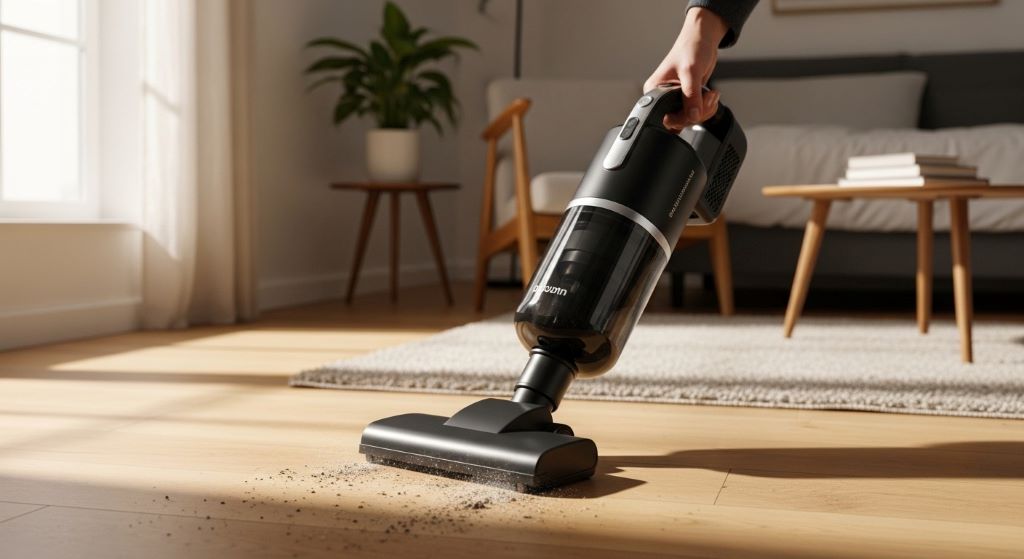
Attachment Versatility for Multi-Surface Cleaning
Even small spaces contain multiple surfaces beyond floors. The right attachments expand your vacuum’s utility without requiring separate cleaning tools.
Crevice tools reach into tight spaces between cushions, along baseboards, and into corners. These narrow attachments prove invaluable in small apartments where furniture sits close to walls and storage solutions create numerous gaps and crevices.
Dusting brushes with soft bristles clean delicate surfaces like lampshades, keyboards, and blinds without causing damage. In a small space, you want one tool that handles multiple cleaning tasks rather than a collection of single-purpose gadgets.
Upholstery tools remove dust and crumbs from furniture, mattresses, and curtains. Since compact living often means your bed serves as both sleeping and sitting space, keeping upholstery clean becomes more important than in larger homes.
Motorized pet tools agitate fabric to release embedded fur. If you have pets, this attachment quickly becomes essential. Even if you don’t have animals, it works wonderfully on regular upholstery that accumulates lint and hair.
Extension wands help you reach ceiling corners, tops of cabinets, and other elevated areas without standing on furniture. In small apartments, vertical storage often places items on high shelves that accumulate dust.
Battery Technology and Runtime Reality
Understanding battery performance helps you set realistic expectations and choose a model that matches your cleaning patterns.
Lithium-ion batteries power virtually all modern cordless vacuums. They charge faster, last longer, and maintain power better than older battery types. However, not all lithium-ion batteries perform equally. Check reviews for real-world runtime experiences rather than relying solely on manufacturer claims.
Removable batteries offer significant advantages. You can purchase a spare battery for extended cleaning sessions, and replacing a worn battery costs far less than buying a new vacuum. Additionally, you can charge the battery separately from the vacuum, improving flexibility.
Charge time varies from two to five hours depending on the model. Faster charging seems appealing but rarely matters for small space cleaning. You’ll likely charge overnight anyway, making a four-hour charge time perfectly adequate.
Power modes let you balance runtime against suction strength. Maximum power drains batteries quickly but handles tough messes. Eco or standard modes extend runtime for routine cleaning. For small apartments, standard mode usually provides sufficient power while maximizing battery life.
Battery degradation happens inevitably over time. After two to three years, you’ll notice reduced runtime. Quality batteries maintain 80 percent capacity for several years with proper care. Avoid fully depleting the battery regularly, and don’t leave it uncharged for extended periods.
Maintenance Requirements and Long-Term Care
Keeping your cordless vacuum performing well requires minimal but consistent maintenance. Understanding these requirements helps you avoid performance degradation and premature replacement.
Regular dustbin emptying prevents reduced suction and maintains efficiency. In small spaces, you might empty the bin after every use simply because it’s easy and takes seconds. Don’t wait until the bin reaches capacity, as this stresses the motor.
Filter cleaning or replacement follows manufacturer recommendations, typically every one to three months depending on use. Set a recurring reminder on your phone to check filters. Clogged filters dramatically reduce suction and can damage the motor over time.
Brush roll maintenance involves removing tangled hair and debris. Even if you don’t have long hair, strings, threads, and fibers wrap around the roller. Monthly checks prevent buildup that interferes with rotation and cleaning effectiveness.
Battery care extends the lifespan of your vacuum’s most expensive component. Store the vacuum in moderate temperatures, avoiding extreme heat or cold. Follow the manufacturer’s guidance on initial charging and ongoing maintenance charging.
General cleaning of the vacuum itself prevents dust accumulation that can affect performance. Wipe down the exterior, clean sensors if present, and check for blockages in the air path. These simple tasks take minutes but preserve your vacuum’s functionality.
Making the Final Decision
With all this information, you’re ready to make an informed choice. However, a few final considerations can help you narrow down your options.
Read actual user reviews from people living in similar spaces. Professional reviews test vacuums in ways that don’t reflect real-world small apartment use. Customer feedback reveals issues like actual runtime, ease of emptying dustbins, and whether the vacuum tips over easily.
Compare return policies before purchasing. The best way to know if a vacuum works for your space is to try it at home. Retailers with generous return windows let you test the vacuum in your actual environment without commitment.
Consider future needs if you might move to a larger space within a year or two. A slightly more capable vacuum might serve you through a transition to a bigger apartment. However, don’t overbuy for hypothetical future needs at the expense of current functionality.
Look for sales and promotions, particularly during major shopping events. Cordless vacuum prices fluctuate significantly, and patience can save you substantial money. However, don’t choose a vacuum solely because it’s discounted if it doesn’t meet your actual needs.
Trust your instincts about which model feels right. After researching specifications and reading reviews, your gut feeling about a particular vacuum often points you toward the best choice. If something about a model bothers you during research, it will likely annoy you during ownership.
Conclusion
Choosing a cordless vacuum for your small apartment or dorm doesn’t have to be overwhelming. Focus on models that balance effective cleaning performance with compact storage and lightweight portability. The ideal small apartment vacuum offers sufficient battery life for your space, handles your specific floor types, and fits seamlessly into your storage solutions.
Remember that you don’t need the most powerful or feature-rich vacuum on the market. A compact vacuum designed specifically for limited spaces will serve you better than an overpowered model meant for large homes. Prioritize essential features like good suction, easy emptying, and reliable battery performance over impressive but unnecessary extras.
Consider your budget realistically, accounting for long-term costs beyond the initial purchase. Mid-range models typically offer the best value for apartment dwellers, providing quality performance without excessive features you’ll never use. However, if you find a budget model that meets your needs, don’t overspend simply because you can.
Take time to research, read reviews, and if possible, test your chosen vacuum in your actual living space. The right cordless vacuum will make cleaning quick and effortless, helping you maintain a comfortable home environment without sacrificing precious storage space or struggling with cumbersome equipment. Your small space deserves a cleaning solution that works as efficiently as you need it to.
Frequently Asked Questions
How much suction power do I really need for a small apartment?
For small apartments with mostly hard floors and low-pile rugs, 60 to 100 air watts provides adequate cleaning power. Higher suction numbers sound impressive but drain batteries faster and add weight. Focus on consistent suction rather than maximum power. Most mid-range cordless vacuums offer sufficient strength for typical apartment cleaning without the bulk and battery drain of premium high-suction models.
Can I use a cordless vacuum if my dorm room only has one outlet?
Absolutely. Cordless vacuums charge from standard outlets and then operate completely untethered. You can charge overnight or during classes, then clean without occupying the outlet. Some models even feature removable batteries that charge separately, freeing up the vacuum itself. This makes cordless models actually more convenient than corded vacuums in outlet-limited dorm situations.
How do I know if a vacuum will fit in my small closet?
Check the vacuum’s dimensions in the product specifications, particularly its height and width when standing upright. Measure your storage space before shopping. Many manufacturers now list collapsed dimensions if the model folds. Stick vacuums typically measure 40 to 50 inches tall and 8 to 12 inches wide. Wall-mounted options save floor space entirely but require installation permission.
Will a budget cordless vacuum last as long as an expensive one?
Not typically. Budget models often use lower-quality motors, cheaper plastics, and less sophisticated batteries that degrade faster. However, in a small apartment with light use, even a budget vacuum might last two to three years. Mid-range models generally offer the best longevity-to-cost ratio, frequently lasting four to six years. Consider your timeline and whether paying more upfront for longer life makes financial sense.
Do I need special features for cleaning a studio apartment?
Studio apartments benefit most from lightweight designs, good edge cleaning, and quiet operation since you’re cleaning the same space where you sleep and relax. Special features like app connectivity or automatic dirt detection add cost without much practical benefit in small spaces. Focus instead on fundamentals like reliable battery life, easy dustbin emptying, and effective filtration that keeps your limited air space fresh.
Related Topics:
How To Empty and Clean Shark Vacuum Dust Container
Which Vacuum Reigns Supreme? Our Best Picks by Floor Type