
23 Sep Layered Haircuts vs. One-Length Styles: Which Works for Your Hair?
Key Takeaways
- Layered cuts add movement, volume, and texture throughout the hair.
- One-length styles create a sleek, uniform look with maximum thickness.
- Your hair type, density, and face shape should guide your final choice.
- Layered cuts suit thick or wavy hair, while one-length suits fine, straight hair.
- Maintenance needs differ significantly between the two styles.
Choosing between layers and one-length hair is a common styling dilemma. Both options offer distinct benefits depending on your hair type. However, as hair experts at https://newjerseystylist.com/ caution, picking the wrong cut can leave hair looking flat, bulky, or completely unmanageable. This guide compares layered haircuts and one-length styles in detail. It covers texture, face shape, maintenance, and styling time. By the end, you will know which option truly suits your hair.
What Are Layered Haircuts?
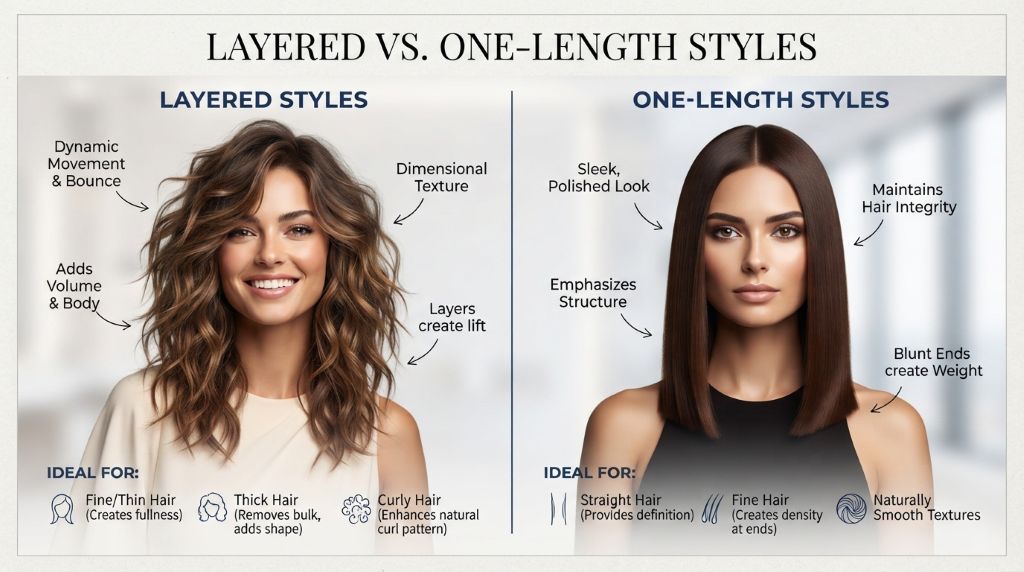
Layered haircuts involve cutting hair at different lengths throughout the head. This technique creates movement, texture, and visible dimension. Stylists use layers to remove bulk from thick or heavy hair sections.
Layers can be subtle or dramatic, depending on personal preference. Long layers offer gentle movement while keeping most of the hair’s length. Short layers, however, create more noticeable texture and volume near the crown. Therefore, the amount of layering changes the overall style significantly.
Layered cuts work especially well for hair that lacks natural movement. They break up heaviness and add bounce to otherwise flat sections. Additionally, layers frame the face nicely, softening angular features. This makes layered cuts popular among people wanting a face-slimming effect.
Curly and wavy hair often benefits greatly from layering. Layers allow curls to spring up rather than weigh each other down. Without layers, curly hair can form a heavy, triangular shape. Therefore, many curly-hair specialists recommend layers as a default starting point.
However, layered cuts do require more regular maintenance than simpler styles. Layers can grow out unevenly, changing the shape over time. Additionally, styling layered hair often takes more time and product. Despite this, many people find the added volume worth the extra effort.
What Are One-Length Styles?
One-length styles keep hair at a uniform length throughout the head. This creates a clean, sleek, and polished overall appearance. Blunt bobs and classic long styles are common examples of this cut.
One-length cuts maximize the appearance of thickness and fullness. Since no hair is removed through layering, ends appear denser. Therefore, this style suits people wanting maximum visual volume at the ends. Fine or thin hair especially benefits from this thickening effect.
Straight hair pairs particularly well with one-length styles. The uniform length highlights straight hair’s natural shine and smoothness. Additionally, one-length cuts create sharp, defined lines that look intentional and polished. This makes them popular for formal or professional settings.
One-length styles generally require less frequent trimming than layered cuts. Since there is only one length to maintain, growth patterns stay simpler. Therefore, many people find one-length styles more low-maintenance overall. Styling time also tends to be shorter with fewer sections to manage.
However, one-length cuts can look heavy on very thick or curly hair. Without layers, dense hair may feel weighed down and bulky. Additionally, one-length styles offer less natural movement than layered options. People wanting a softer, more textured look may find this style limiting.
Comparing Layers and One-Length by Hair Texture
Hair texture plays a major role in choosing between these two styles. Each texture reacts differently to layering versus uniform length. Understanding this helps you predict how a cut will actually look.
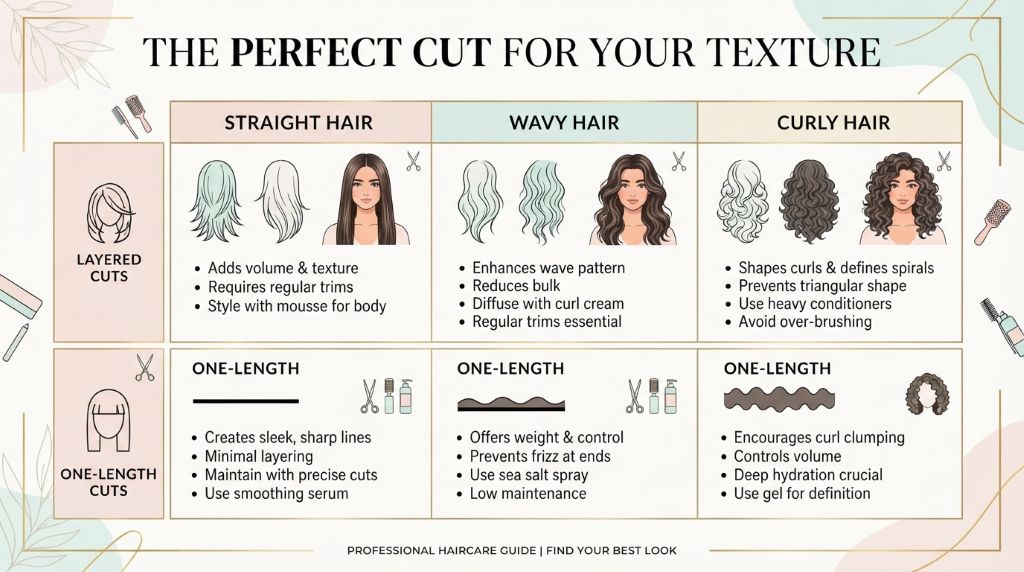
Straight hair generally suits one-length styles well. The smooth texture highlights clean lines beautifully without extra effort. However, straight hair can also handle subtle layers for added movement. Heavy layering on straight hair sometimes creates unwanted gaps or thinness.
Wavy hair tends to look best with moderate layering. Layers enhance the natural wave pattern without flattening it. Meanwhile, one-length wavy hair can sometimes look overly heavy at the ends. Therefore, light to medium layers usually strike the best balance for waves.
Curly and coily hair almost always benefits from layering. Layers prevent the pyramid shape that often forms without them. Additionally, layers help curls bounce and appear more defined throughout. One-length curly cuts are possible but require careful, skilled cutting.
Consider this quick breakdown by texture:
- Straight hair: One-length for sleekness, subtle layers for movement.
- Wavy hair: Moderate layers to enhance natural texture.
- Curly hair: Layers to reduce bulk and define curl shape.
- Coily hair: Layers to manage shrinkage and add shape.
Matching texture to technique prevents common styling frustrations later.
Comparing Layers and One-Length by Hair Density
Hair density refers to how many strands grow per square inch. This differs from texture and significantly affects styling outcomes. Choosing the right cut for your density improves overall results.
Thick, dense hair often benefits from layering techniques. Layers remove bulk and prevent hair from feeling overly heavy. Without layers, thick hair can look like a solid, unmovable mass. Therefore, stylists frequently recommend layers for high-density hair types.
Fine or thin hair generally suits one-length styles better. Removing hair through layering can make thin hair look sparser. Therefore, keeping one length preserves the appearance of fullness and thickness. Blunt cuts are especially popular among people with finer hair.
However, exceptions exist depending on personal styling goals. Some people with thin hair still want subtle layers for movement. In these cases, very light layering can add dimension without excessive thinning. Additionally, some people with thick hair prefer one-length styles for a bold, dramatic look.
Density awareness helps prevent common cutting mistakes. Many people choose styles based on trends rather than their own density. However, matching density to technique produces more flattering, natural results. Therefore, always discuss density honestly with your stylist beforehand.
Maintenance and Styling Time Differences
Maintenance needs differ significantly between layered and one-length styles. Understanding these differences helps you choose a realistic, sustainable option. Your daily routine and salon visit frequency should factor into this decision.
Layered cuts typically require more frequent trims to maintain shape. As layers grow out unevenly, the overall silhouette can shift. Therefore, salon visits every six to eight weeks are often necessary. Additionally, layered hair may need more product for definition and control.
One-length styles generally need less frequent maintenance overall. Since the entire style relies on one uniform length, growth is simpler. Many people stretch salon visits to ten or twelve weeks comfortably. Additionally, styling time is often shorter with fewer sections to blow-dry or curl.
Daily styling time also varies between the two options. Layered cuts often require more tools to define separate sections properly. One-length styles, however, can look finished with minimal effort in many cases. Therefore, busy schedules may favor one-length styles for practicality.
Consider your available time honestly before choosing a style. A gorgeous layered cut loses its appeal if you lack time to style it. Similarly, a sleek one-length style may feel boring if you crave more texture. Balancing beauty and practicality leads to the most satisfying long-term choice.
Conclusion
Layered haircuts and one-length styles each offer distinct advantages. Layers add movement, texture, and volume, especially for thick or curly hair. One-length styles create sleek uniformity and work beautifully for fine, straight hair. However, the right choice depends on your texture, density, and daily routine. Therefore, consider these factors honestly before your next salon visit. Discuss your hair goals openly with your stylist for the best results. If thinning is also a concern, learning is head spa effective for hair thinning can help you understand whether scalp-focused treatments may complement your overall hair care routine. The perfect cut should feel effortless and reflect your natural hair’s strengths.
Ready to choose your next cut? Book a consultation and ask your stylist which style truly fits your hair.
Frequently Asked Questions
Are layers better for thick hair?
Yes, layers remove bulk and prevent thick hair from looking heavy or shapeless.
Do one-length cuts make hair look thicker?
Yes, one-length styles preserve maximum density at the ends, creating a fuller appearance.
How often do layered cuts need trimming?
Layered cuts typically need trims every six to eight weeks to maintain shape.
Can curly hair work with a one-length cut?
Yes, but it requires skilled, careful cutting to avoid excessive bulk and shape issues.
Which style takes less time to style daily?
One-length styles generally require less daily styling time than layered haircuts.