
13 Aug How To Use a Hybrid Bike for Commuting: Tips for Comfort, Traffic, and Longer Rides
A hybrid bike works extremely well for commuting because it balances road speed, upright comfort, and everyday control. Set the bike correctly, use smooth riding habits, and build your distance gradually for safer, easier trips. A useful target is 150 minutes of moderate activity each week, which regular cycling can help you reach.
Why a Hybrid Bike Works Well for Commuting
A hybrid bike sits between a road bike and a mountain bike. It usually combines efficient tires with a comfortable riding position and practical gearing.
That combination makes it useful for streets, bike paths, paved trails, and occasional rough surfaces. You also gain better visibility than many aggressive road bike positions provide.
However, the bike itself does not guarantee a comfortable commute. Your setup, route, traffic habits, clothing, and maintenance matter just as much.
Before your first regular commute, treat the bike as a transportation system rather than simple exercise equipment.
Set Up Your Hybrid Bike Before Commuting
A poor setup can make a short ride feel surprisingly difficult. Spend a few minutes adjusting the contact points before increasing your distance.
Adjust the Saddle Height
Your saddle should allow your knee to retain a slight bend when the pedal reaches its lowest position. A saddle that sits too low can strain your knees and waste energy.
Conversely, excessive saddle height can make your hips rock from side to side. Start with small adjustments and test the bike after each change.
Position the Handlebars
Keep the handlebars high enough to support a relaxed upper body. You should reach the grips without stretching your shoulders forward.
For traffic, a slightly upright position often works better than a low racing posture. It can also make frequent starts and stops feel more natural.
Check Your Tire Pressure
Check tire pressure before longer rides and after extended periods without riding. Use the pressure range printed on your tire sidewall as your starting point.
Lower pressure can improve comfort on rough pavement, while excessive pressure can make the ride harsh. Avoid guessing when a pressure gauge can provide a better answer.
Test Your Brakes
Squeeze both brake levers before leaving home. The levers should feel firm, and the pads should slow the wheels smoothly.
Also check whether either wheel rubs against the brake system. Fix unusual rubbing before your commute instead of ignoring it.
Build a Comfortable Commuting Position
Comfort comes from distributing your weight properly. Your hands, feet, and saddle should work together rather than forcing one area to absorb everything.
Keep your elbows slightly bent while riding. This position allows your arms to absorb small bumps without transferring every impact into your shoulders.
Relax your grip as much as traffic conditions allow. A death grip creates hand fatigue and makes steering less fluid.
Change hand positions periodically when your handlebar design allows it. Small position changes can reduce pressure during longer rides.
Learn to Ride Smoothly in Traffic
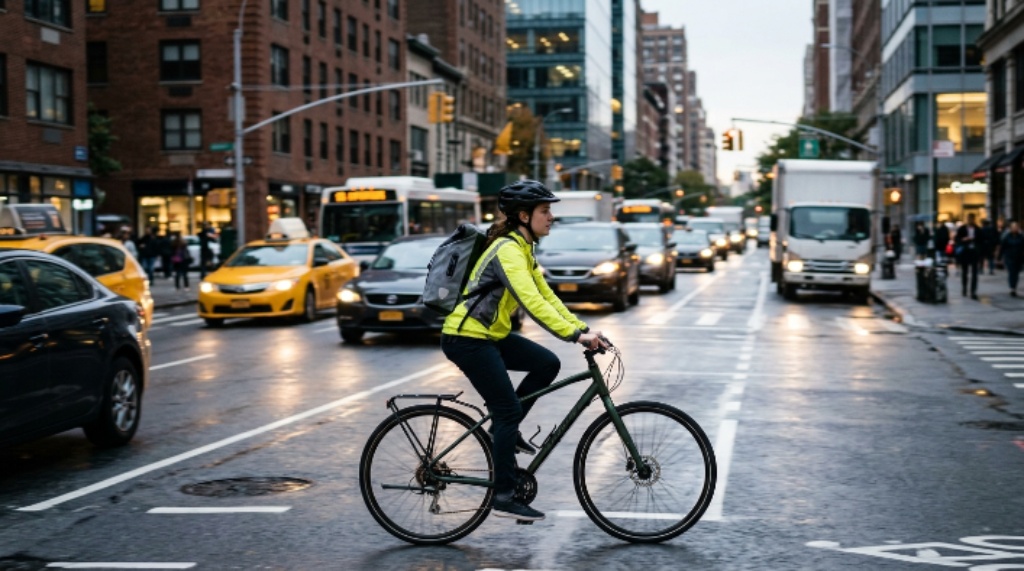
Traffic riding rewards anticipation more than speed. Your goal should remain predictable movement, not beating every vehicle through an intersection.
Make Yourself Predictable
Ride in a steady line whenever conditions permit. Avoid sudden swerves around parked cars, pedestrians, drains, or road debris.
Signal your turns early enough for other road users to understand your intention. Then confirm that the movement remains safe before changing position.
Use your brakes before situations become urgent. Gradual braking gives you more control and reduces the chance of locking a wheel.
Watch for Car Doors
Parked vehicles create one of the most common hazards for urban cyclists. Give parked cars enough space to protect yourself from suddenly opening doors.
Look through vehicle windows when possible. A visible driver can provide a useful clue about whether a car might move.
At night, assume parked vehicles may hide hazards. Slow down whenever your view becomes limited.
Approach Intersections Carefully
Intersections deserve extra attention because several traffic movements can happen simultaneously. Reduce your speed before entering rather than braking heavily inside the intersection.
Look for turning vehicles even when you have the right of way. Legal priority cannot protect you from a driver who fails to notice you.
Keep both hands ready for braking near complicated crossings. Avoid using your phone while moving under any circumstances.
Choose a Commuting Route That Reduces Stress
The fastest route is not always the best route. A slightly longer road with calmer traffic can produce a safer and more enjoyable commute.
When planning your route, consider:
- Traffic volume: Prefer roads with manageable vehicle movement when practical.
- Road surface: Avoid repeated potholes, broken pavement, and unstable shoulders.
- Intersections: Reduce unnecessary crossings of busy roads.
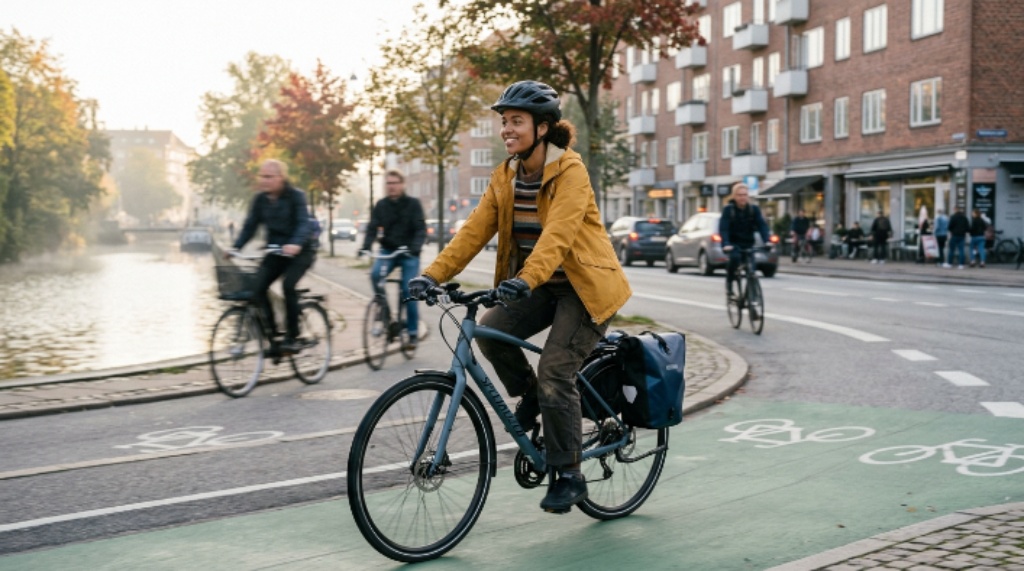
- Bike facilities: Use suitable bike lanes and shared paths where available.
- Lighting: Favor routes with good visibility during darker hours.
- Elevation: Consider hills when estimating your effort and arrival time.
- Services: Note water stops, repair shops, and safe places for emergencies.
Ride your planned route once during a quieter period. This test can reveal difficult intersections and awkward turns before your first workday.
Carry Your Work Essentials Without Losing Balance
A commuter bike needs practical storage. Carrying everything in your hands can affect steering and increase fatigue.
A rear rack with a suitable bag works well for many commuters. A backpack can also work, but heavy loads may create extra pressure on your shoulders.
Keep heavier items low and centered whenever possible. Secure loose objects so nothing can fall into the wheels.
Pack your essentials before riding:
- Identification and payment method
- Phone
- Water
- Basic repair equipment
- Weather appropriate clothing
- Work essentials
- Small first aid supplies
- Front and rear lights when needed
Keep your load consistent from day to day. A predictable setup makes the bike easier to control.
Dress for the Ride, Not Just the Destination
Commuting clothes should handle movement, temperature changes, and occasional weather. Avoid clothing that can catch in the drivetrain or restrict your legs.
For short rides, normal athletic clothing may work perfectly well. Longer commutes benefit from breathable fabrics and clothing that manages moisture.
Consider carrying a separate work outfit when sweating would become uncomfortable. A simple change of clothes can make cycling practical even during warmer weather.
Use bright or reflective elements when visibility becomes limited. Lights matter even when you believe other road users can already see you.
Make Longer Hybrid Bike Rides Easier
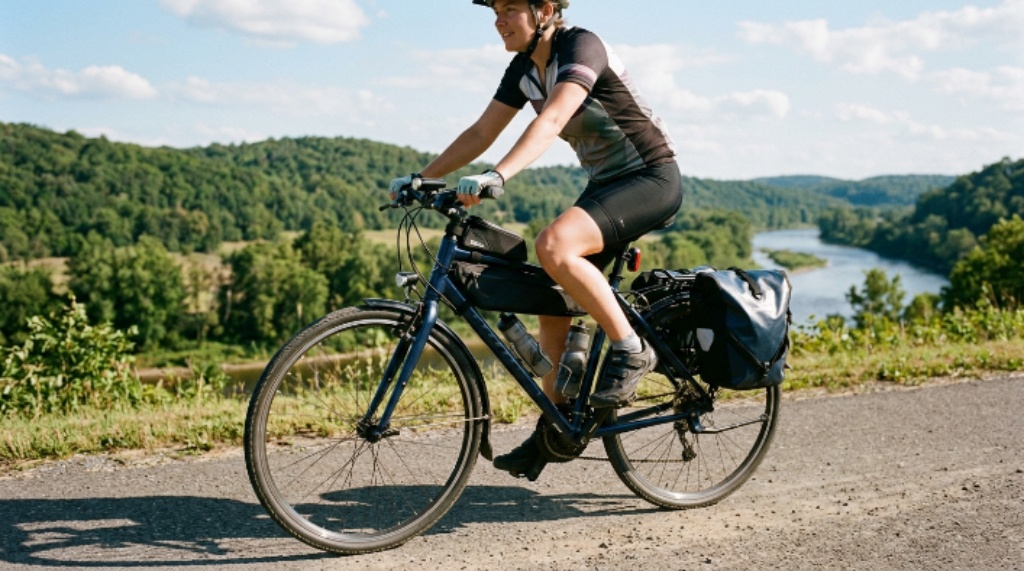
A hybrid bike can handle longer rides, but your body needs time to adapt. Increase distance gradually rather than doubling your mileage suddenly.
Start by making your normal commute comfortable. Once that feels manageable, add distance to one ride each week.
Maintain a steady effort instead of chasing speed. You should finish most training rides feeling tired but capable of continuing.
Use your gears before hills become difficult. Shift into an easier gear while you still have comfortable pedaling speed.
Improve Your Pedaling Technique
Try to maintain a smooth pedal rhythm instead of pushing extremely hard with every stroke. Easier gears can help you maintain that rhythm on climbs.
When descending, remain relaxed and keep your attention on the road. Avoid gaining unnecessary speed simply because the bike can roll faster.
Practice controlled braking on quiet roads. Understanding how your brakes respond will make emergency situations easier to manage.
Manage Heat, Cold, and Rain
Weather can change a good commute quickly. Check conditions before leaving and adjust your clothing, route, and riding speed accordingly.
In hot weather, drink regularly and avoid pushing too hard during the warmest part of the day. Carry enough water for the distance and conditions.
In cold weather, protect your hands and keep your core comfortable. You can remove layers as your body warms.
Rain requires extra caution because surfaces can become slippery. Brake earlier, corner more slowly, and avoid painted road markings when they become slick.
Give yourself extra stopping distance in wet conditions. Water can also hide potholes and other road damage.
Carry a Simple Repair Kit
You do not need a workshop in your backpack. However, basic equipment can prevent a small problem from ending your commute.
A practical kit can include:
- Spare inner tube
- Tire levers
- Compact pump
- Multitool
- Tire patch kit
- Small light
- Identification and emergency contact information
Learn how to repair a flat tire before you actually need the skill. Practice at home when you have enough time and good lighting.
Also learn how to adjust your saddle, tighten common bolts, and inspect your tires. These simple skills can save time during everyday commuting.
Maintain the Bike for Reliable Commuting
Daily riding increases wear on tires, chains, brake components, and other parts. Regular checks help you identify problems before they become inconvenient.
Wipe dirt from the drivetrain when needed and keep the chain properly lubricated. Avoid applying excessive lubricant because it can attract more dirt.
Inspect your tires for cuts, embedded debris, or unusual wear. Check the brakes regularly and replace worn components promptly.
Pay attention to new sounds and changes in handling. A clicking noise, loose component, or rough bearing deserves investigation rather than repeated use.
Handle Hills Without Burning Yourself Out
Hills become easier when you manage effort before the climb. Shift into an easier gear before your cadence drops sharply.
Stay seated when that position provides enough traction and control. Standing can help during short steep sections, but it usually demands more energy.
Do not judge your cycling ability by climbing speed alone. Consistent pacing will usually produce a better commuting experience.
On descents, prioritize control over speed. Keep your eyes ahead, brake smoothly, and leave room for unexpected obstacles.
Improve Comfort During Longer Commutes
Longer rides expose small problems that short trips may hide. Address discomfort early instead of trying to tolerate it.
If your hands hurt, examine your grip, handlebar position, and riding posture. Persistent saddle discomfort may indicate an unsuitable saddle or incorrect setup.
Stand briefly on the pedals when road conditions permit. This movement can relieve pressure after extended periods of seated riding.
Keep your shoulders relaxed and avoid locking your elbows. Small posture adjustments can make a noticeable difference over several miles.
Use a Simple Pre Ride Routine
A consistent routine reduces mistakes when you commute under time pressure. Keep it short enough that you can repeat it every day.
Before leaving, check:
- Tire condition and pressure
- Brake response
- Chain condition
- Lights
- Bag attachment
- Weather
- Route conditions
- Phone and emergency essentials
Then take a few seconds to confirm that nothing hangs near the wheels. This small habit can prevent avoidable mechanical problems.
Common Commuting Mistakes to Avoid
Many commuting problems come from rushing rather than from poor equipment. Avoiding a few common mistakes can improve both safety and comfort.
Do not ride aggressively simply because your hybrid bike feels stable. Stability helps, but traffic conditions can change instantly.
Do not ignore repeated pain. Adjust the bike, improve your posture, or seek professional fitting help when discomfort continues.
Do not carry unnecessary weight. Every extra item increases the effort required, especially during climbs.
Finally, do not treat maintenance as optional. A commuter bike needs dependable brakes, tires, drivetrain components, and lighting.
How to Make Commuting Sustainable
The best commuting routine is one you can maintain. You do not need maximum speed or maximum distance every day.
Start with realistic trips and give yourself enough time. Rushing encourages aggressive braking, poor decisions, and unnecessary stress.
Keep one or two backup transportation options available for severe weather or mechanical problems. That flexibility prevents one bad day from breaking your routine.
As cycling becomes easier, you can extend your route occasionally. A longer return trip can turn transportation into useful endurance training.
A Practical Hybrid Bike Commuting Formula
Think about every commute through four simple questions:
- Comfort: Can I ride without developing avoidable pain?
- Control: Can I brake, steer, and balance confidently?
- Visibility: Can other road users recognize my presence?
- Reliability: Can my bike handle the entire trip without problems?
If one answer remains no, solve that issue before adding more distance. This approach creates better progress than simply riding farther.
Conclusion
Using a hybrid bike for commuting becomes easier when you prioritize setup, control, route quality, and steady pacing. Start with a comfortable bike position, learn predictable traffic habits, carry practical equipment, and maintain your bike regularly.
Once your basic commute feels easy, gradually extend your distance and improve your riding skills. Set up your hybrid bike today, plan your safest practical route, and make your next commute a controlled ride rather than a rushed journey.
Frequently Asked Questions
Is a hybrid bike good for daily commuting?
Yes, a hybrid bike suits daily commuting because it combines efficient road performance with comfortable handling.
How far can you commute on a hybrid bike?
You can commute many miles on a hybrid bike when your fitness, bike setup, route, and riding pace support the distance.
Should I wear cycling clothes for commuting?
You do not need specialized cycling clothes, but comfortable moisture managing clothing can improve longer rides.
How do I carry work items on a hybrid bike?
A rear rack, pannier, or suitable bike bag can carry work items without placing excessive weight on your shoulders.
How often should I check my hybrid bike?
Check tires and brakes before frequent rides, then perform deeper maintenance as components accumulate mileage and wear.