
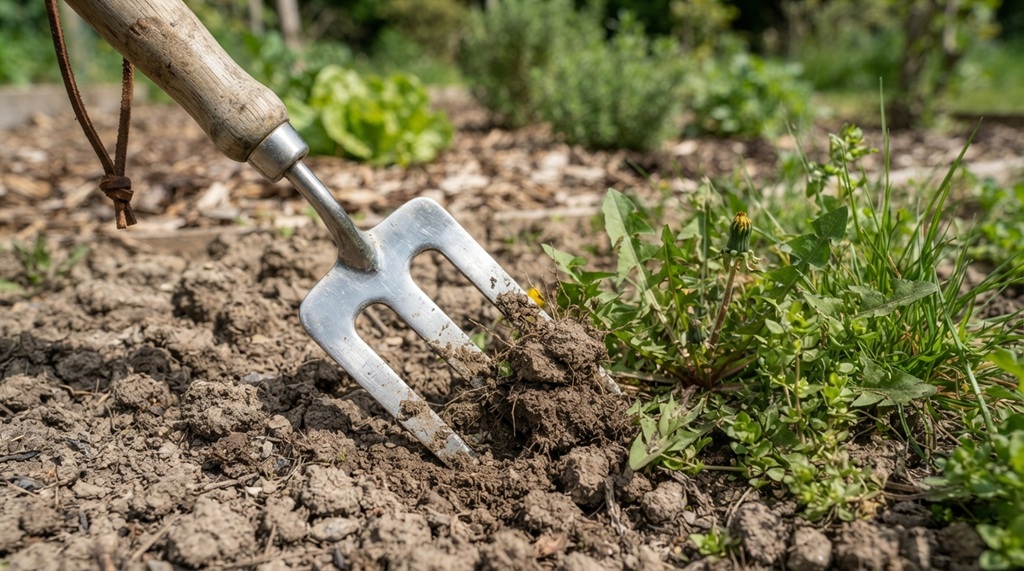
22 Aug How to Find a Durable Hand Fork for WA Weeds
You know the frustration. You’re on your knees, the Washington rain has just stopped, and you spot the usual suspects bittercress, dandelions, and the ever-persistent horsetail. You jab at the soil with a flimsy hand fork, and the tines bend like cheap wire. Or worse, the handle snaps clean off. Sound familiar? The problem isn’t your technique; it’s your tool. Finding a durable hand fork for WA weeds isn’t just about buying a pricier tool it’s about matching metallurgy, handle design, and geometry to the unique, often heavy, and rocky soils of the Pacific Northwest. In this guide, you’ll learn exactly what to look for, why specific materials fail, and how to select a tool that will outlast the weeds themselves.
What Are the Unique Soil Challenges for Hand Forks in Washington State?
The Pacific Northwest presents a specific set of conditions that aggressively test garden tools. You aren’t just digging in fluffy, screened topsoil. Washington soil ranges from glacial till packed with rocks to dense clay that turns rock-hard in summer and sticky in winter. A standard, cheap fork simply isn’t engineered for this abuse.
Why Does Glacial Till Break Cheap Tines?
Glacial till, common west of the Cascades, is a mixture of clay, sand, gravel, and boulders. When you strike a submerged rock, the force doesn’t just stop the fork; it transfers all that energy back into the tines and the shaft. A fork made from heat-treated, high-carbon steel will absorb the shock by flexing slightly. Cheaper, stamped steel forks will bend permanently, losing their shape and digging efficiency. The angle of the tines is critical a slight curve allows the fork to rock over rocks rather than fighting them.
How Does Wet Clay Test a Handle’s Strength?
East of the mountains, or in areas with heavy clay, the soil becomes a suction cup. Pulling a hand fork out of wet clay requires significant force. This pulling pressure, especially when applied at an awkward angle, is the primary cause of handle failure. Ash and fiberglass handles have different flex characteristics. Ash offers a natural shock absorption that breaks before it shatters, while a solid-core fiberglass handle provides stiffness but can transfer too much vibration to your wrist. The joint where the handle meets the socket is the weakest point look for a fully forged, solid-socket design where the metal extends up into the handle, not just a crimped metal sleeve.
Can Rocky Soil Bend Tines on Standard Forks?
Absolutely. Standard hand forks often have tines that are too thin and too straight. In rocky soil, they leverage against stones, causing the tines to splay outward (known as “banana-ing”). You need a fork where the tines are thicker at the base and taper to a sharp point. A forged, one-piece design, where the tines and socket are a single piece of steel, significantly reduces the risk of splaying compared to a stamped and welded version.
Which Materials Make a Hand Fork Actually Durable?
Durability comes down to metallurgy and handle construction. Don’t be fooled by shiny stainless steel it’s not always the best choice. Here’s a direct comparison of what you’ll find on the market.
Forged Boron Steel vs. Stainless Steel: Which Is Better?
Boron steel is a micro-alloy steel that, after heat treatment, offers exceptional hardness and tensile strength. It resists bending and holds a sharp edge much longer than standard stainless. While stainless is corrosion-resistant, it is often softer and more prone to bending. For Washington’s rugged conditions, forged boron steel is the superior choice. The trade-off is weight boron steel forks are slightly heavier, but the durability is worth it.
Ash Wood vs. Solid-Socket Fiberglass: Choosing the Most Reliable Handle
White ash remains the traditional benchmark for garden tool handles, revered for a natural shock-absorbing flex that buffers hand strain and prevents catastrophic shatters under sudden strain—though it demands periodic oiling to avoid drying out and splitting over time. Modern solid-core fiberglass offers a virtually indestructible, maintenance-free alternative, but its reliability hinges entirely on construction: avoid cheap, glued assemblies and insist on a handle securely bonded into a forged, solid socket, or opt for a full-tang design where the forged metal extends through the handle and locks with a riveted ferrule for maximum mechanical leverage. Integrating resilient tools like these into your daily routine supports long-term landscape maintenance, which becomes even more critical when managing broader stress factors, such as those detailed in our guide to Dallas plant care & problem solving – Drought stress & nutrient deficiencies.
What Is the Role of the Ferrule in Longevity?
The ferrule is the metal band that connects the handle to the head. This is the primary stress point. A durable hand fork features a long, tapered ferrule that is welded or forged as part of the head, not a separate piece that’s crimped. A long ferrule spreads stress over a larger area of the handle, preventing the “wiggle” that eventually leads to the head snapping off.
How to Assess a Hand Fork’s Tine Strength Before Buying
You can’t test the fork in wet clay at the store, but you can perform visual and physical checks to gauge its robustness. Look for craftsmanship cues that indicate quality.
What Tine Thickness and Spacing Do You Need?
For weeding in hard soil, choose tines that are at least 4mm thick at the base. Spacing should be moderate too wide lets small weeds pass through, too narrow clogs with wet soil. The tines should taper to a sharp point to penetrate crusted soil easily. A slight curve in the tine helps hook out taproots like dandelions, rather than simply cutting them off.
What Are the Signs of a Weak Weld or Construction?
Look for a thick flash line (the seam where metal is joined) that is rough or uneven. In forged tools, the metal grain is continuous, leaving no seam. In stamped tools, you can often see where the metal has been cut and bent. If you tap the tines and hear a “ring” rather than a dull thud, it indicates proper heat treatment. A dull thud suggests the metal is annealed (soft) and will bend easily.
How Important Is the Tang Extending into the Handle?
This is non-negotiable. A long tang the metal shaft that goes inside the handle is a mark of professional-grade tools. A tang that runs at least halfway up the handle distributes torque and prevents rotational snapping. If the fork is “through-tang” (where the metal goes all the way to the top of the handle), you have the most durable design possible. This feature is rare on low-cost forks.
Why Does Handle Length and Grip Matter for Weed Extraction?
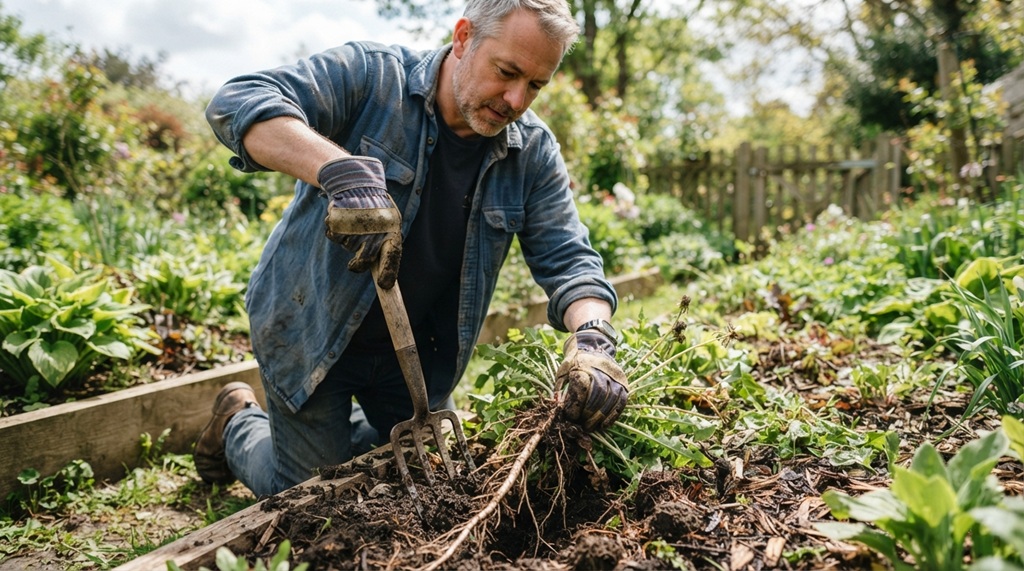
Ergonomics isn’t just about comfort; it directly impacts the force you can apply. A shorter handle requires you to bend over more, reducing your leverage and increasing fatigue. A longer handle, like a 5-inch model, allows you to use your arm and shoulder strength effectively.
Is a Longer Handle Better for Deep-Rooted WA Weeds?
Yes. Tools like thistle and dock have deep taproots. A longer fork gives you more leverage to pry them out without snapping the root. A length of 5 to 6 inches is optimal for most weeding tasks. Shorter forks are only suitable for container gardening or very loose, prepared soil.
Should You Choose Rubber, Wood, or Plastic Grips?
You need a handle that provides a secure grip, even when wet or covered in muddy gloves. Unfinished wood becomes slippery. Plastic becomes hard and brittle in cold weather. Rubberized grips offer the best traction but can degrade in UV light if left in the sun. Wood handles with a natural, matte finish are best for grip but require drying after use.
How Does the Handle Shape Affect Control?
A “D” or “T” top handle gives you a solid grip for pushing and twisting. A streamlined, straight handle is better for close-to-the-ground weeding. Choose a shape that allows you to keep your wrist straight; a bent wrist reduces force and increases the risk of strain, which can lead to careless, jerky motions that break tools.
What Is the Best Way to Test a Hand Fork for Durability?
While field testing is ideal, you can simulate stress in a store or at home. The goal is to test torsion (twisting) and compression (pushing).
Can You Test the Fork’s Torsional Strength at Home?
Hold the handle upright, place the tines flat on a solid surface, and gently lean your body weight onto it. Listen for creaks and feel for twisting. A quality fork will feel solid. Then, place the fork sideways against a step and apply downward pressure simulating leverage against a rock. If the tines bend or the handle flexes excessively, it’s a fail.
What Is the “Leverage Test” for a Fork?
Pry a heavy object with the fork, using a block of wood as a fulcrum. The tines are designed to lift soil, not bricks, so this is a torturous test. If it passes without bending, it’s a durable tool. However, don’t do this in a store; you risk damaging merchandise. Instead, read reviews and look for video tests from reputable gardeners in PNW climates.
How to Identify Poor Heat Treatment via Color
Heat-treated steel often has a dark, slightly blue or gray tint. If the metal is shiny, silver, and shows no signs of discoloration and it’s not stainless steel it’s likely unhardened and will bend under pressure. Quality brands will often mention “heat-treated” or “hardened” in the specs.
Which Brands Offer the Most Reliable Hand Forks for PNW Conditions?
Several brands have a reputation for building tools that survive heavy use. It’s not about the most expensive, but the best engineering.
Are High-End Forged Brands Worth the Investment?
Brands like Sneeboer, DeWit, and Spear & Jackson (their forged line) offer tools made from solid, heat-treated steel. They are pricey, but if you are gardening on rocky glacial till, they are a worthwhile investment. They often feature modular handles, meaning you can replace a broken handle without replacing the head.
What Should You Look For in a Mid-Range Fork?
Look for brands that specify “boron steel” or “drop-forged.” Companies like Fiskars (with their composite handles) and Nisaku offer good middle-of-the-road options. Fiskars uses a strong mechanical joining, though their blades are often not as thick. Read the spec sheet; if it doesn’t mention “forged,” it is likely stamped.
Are Garden Tool Kits Better Than Buying Separate Tools?
Usually, kits are value-oriented, meaning they use thinner steel to keep the bundle price low. You are better off buying a single, high-quality hand fork that you know will last. You can find a list of tested options for the region in this review of the durable hand fork for wa weeds.
How Should You Maintain a Hand Fork to Extend Its Life?
Even the toughest steel will rust and wood will crack if neglected. Five minutes of care after each use will make your tool last a decade or more.
Do You Need to Oil the Wooden Handle?
Yes. A coat of boiled linseed oil twice a year prevents the wood from drying out and splintering. Wipe the handle down after use to remove sap and moisture. Never leave the tool outside overnight; morning dew is corrosive.
What Is the Best Way to Clean and Sharpen the Tines?
Hose off the dirt, then scratch off any rust with a wire brush. Use a flat file or a sharpening stone on the inside of the tines to maintain a keen edge. A sharp fork requires less pressure to enter the soil, which reduces strain on the entire tool.
How to Store the Fork During Wet Washington Winters?
Store your fork head-down in a bucket of sand mixed with a bit of mineral oil. This keeps it clean, rust-free, and ready to go. Alternatively, hang it vertically. Do not keep it in a sealed plastic bin, as trapped moisture accelerates corrosion.
What Are the Common Mistakes That Break Hand Forks in Weed Control?
Often, the tool isn’t the problem the technique is. Avoiding these errors will save your wrist and your fork.
Why Do Gardeners Snap Forks by Prying in the Wrong Direction?
You should never use the fork as a pry bar to lift large rocks. The tines are meant for cutting roots and loosening soil, not lifting heavy objects. Always push the fork straight down, then angulate the handle to lift the soil but stop and reposition if you encounter heavy resistance.
Why Does Dug Soil, Not Weeds, Ruin the Blade?
Hitting a rock is an obvious break. But dragging the fork through soil with a sideways motion is what bends tines out of alignment. This lateral torque is the number one cause of bent tines in clay. Always use a “chop and lift” motion.
Is It Bad to Use a Hand Fork Like a Shovel?
Yes. A hand fork is for precision planting and weeding, not for moving bulk soil. If you are digging a hole for a large plant, use a proper spade. Using the fork to scoop heavy, wet soil overloads the tines and bends them.
How to Match the Fork to the Type of Weed You’re Battling
Not all weeds are equal. A dandelion has a thick, fleshy taproot, while horsetail has brittle, branching roots that spread horizontally. The fork you need depends on which weed dominates your yard.
What Fork Design Works Best for Taproots?
For dandelions and docks, choose a fork with two or three longer tines (not four). A two-pronged fork or a ‘dandelion weeder’ with a deep notch allows you to get underneath the root without breaking it. You need maximum depth and a sturdy base for twisting.
For Grassy Weeds and Creeping Roots, Which Fork Is Better?
For crabgrass or quackgrass, a fork with four shorter, widely-spaced tines is better. You want to disturb the soil minimally but lift the root mat. A flat, shallow fork acts like a hoe, slicing through the runner roots just below the surface.
Does a Sharp Edge or a Pointed Tip Matter More for Weeds?
For hard, dry soil, a pointed tip is essential to break the crust. For wet, loamy soil, a sharper edge is better for slicing through soft plant tissue. Look for a fork that has both pointed tips and slightly beveled edges.
When Is It Time to Replace Your Hand Fork?
Even durable forks eventually wear out. Knowing when to retire a tool prevents frustration and ineffective weeding.
What Are the Signs of Metal Fatigue in Tines?
If you notice small hairline cracks at the base of the tines, the metal is fatigued. Also, if the tines have bent and you have straightened them more than twice, the stress will eventually cause them to snap. Replace the fork immediately to avoid injury.
How Do You Know If the Handle Has Dried Out Beyond Repair?
If the wood is completely dry, has deep cracks or splinters that snag your glove, replace the handle or the entire tool. A broken handle in the middle of a weed pull is a hazard. If the grain is splitting, it will likely fail under pressure.
Are Scratches and Rust a Reason to Replace?
Surface rust is cosmetic and can be removed. However, pits in the metal are stress concentrators. If you see deep pitting, the structural integrity is compromised. At that point, you are just fighting a losing battle.
Frequently Asked Questions
What is the best material for a hand fork for rocky soil?
Forged boron steel is the best material. It offers high tensile strength and resistance to bending. It is harder and more resilient than standard stainless steel, which tends to be softer and more flexible.
Can I use a hand fork to break up heavy clay?
Yes, but you should use a “push and pull” motion rather than twisting. The fork is for loosening the top few inches. For deep tillage, use a broadfork. A hand fork will break easily if used as a crowbar.
Should I buy a hand fork with a wooden or metal handle?
A wooden handle (ash or hickory) is preferred if you want shock absorption and replaceability. A solid-core fiberglass handle is more durable and maintenance-free but transfers more vibration to your wrist. Metal handles are heavy and cold, so they are less common.
How long should a durable hand fork last?
With proper maintenance, a high-quality forged fork should last 10 to 15 years. A cheap stamped fork might only last one season. The lifespan depends heavily on the quality of the steel and the handle joint.
Do I need a sharp hand fork?
Yes. A sharp fork requires less force to enter the soil, making your job easier and reducing the chance of bending the tines. You should hone the edges regularly with a file or stone.
Why do hand forks bend so easily in hard ground?
They bend because the steel is too soft or the tines are too thin. Most inexpensive forks are made from stamped stainless steel that is not heat-treated. High-quality forks use thicker, hardened steel that resists deformation.
Is a two-pronged weeder better than a four-pronged fork?
For taproots, a two-pronged weeder is better. For loosening soil and removing surface weeds, a four-pronged fork is better. The choice depends on the weed type.
Conclusion: Dig In with Confidence
Finding a durable hand fork for WA weeds isn’t a luxury; it’s the key to an efficient and enjoyable weeding session. You now know to look for forged boron steel, a long tang, and a robust handle ferrule. Avoid the shiny cheap tools that promise the world but bend on the first rock. Invest in a tool that respects the unique challenges of Pacific Northwest soil, and it will pay you back in years of faithful service. Don’t settle for a bent tine and a snapped handle again. Choose a fork built for the job, use the correct technique, and your knees and your back will thank you. So, take the next step, upgrade your tool game, and get those weeds out at the root for good.