

01 Mar Dog Harness vs Collar: Which Is Healthier for Your Dog?
A dog harness reduces neck strain and lowers the risk of trachea injury, while a collar places direct pressure on the throat. Most vet recommendations favor harnesses for dogs that pull, small breeds, and dogs with respiratory sensitivity.
You clip the leash. Your dog lunges. The pressure hits the neck instantly. Many owners don’t think twice about it. But that single moment can create repeated stress on the throat, spine, and airway.
The problem? Collars were designed for identification and light leash control. Not force distribution. When a dog pulls, the entire impact concentrates on a small area around the trachea.
The solution? A properly fitted harness spreads force across the chest and shoulders instead of the neck. That reduces neck strain and supports trachea injury prevention.
In this guide, you’ll get clear comparisons, research-backed insights, and practical vet recommendations to decide what’s actually healthier for your dog.Is a Dog Harness Better for Preventing Neck Strain?
Short answer: Yes. A harness distributes leash pressure across the chest and shoulders, reducing localized neck strain compared to a collar.
Neck strain occurs when sudden force compresses soft tissues and cervical vertebrae. Even moderate pulling can increase pressure on the throat.
A 2020 study published in veterinary biomechanics research measured leash tension and found that pressure around the neck can spike significantly when dogs lunge or change direction abruptly. Repeated exposure may contribute to:
- Soft tissue inflammation
- Cervical spine stress
- Throat irritation
- Behavioral resistance to leash walking
Harnesses shift this force to stronger muscle groups in the chest. This reduces concentrated impact.
When Is Neck Strain Most Likely?
- Dogs that pull frequently
- High-energy breeds
- Puppies still learning leash behavior
- Dogs walked on retractable leashes
For these cases, most vet recommendations suggest switching to a front-clip or no-pull harness to reduce repetitive stress.
If your dog pulls during walks, consider reviewing best no-pull dog harnesses designed to minimize forward lunging and improve control.
Do Collars Increase the Risk of Trachea Injury?
Short answer: Yes. Collars can increase the risk of tracheal irritation or collapse, especially in small breeds and brachycephalic dogs.
The trachea is a flexible tube supported by cartilage rings. Excessive compression can weaken these rings over time.
Dogs Most at Risk of Tracheal Injury
- Toy breeds (Yorkshire Terriers, Chihuahuas, Pomeranians)
- Flat-faced breeds (Pugs, Bulldogs)
- Senior dogs
- Dogs with pre-existing respiratory conditions
Veterinary case reports show that chronic leash pressure on the neck may aggravate tracheal sensitivity. Symptoms can include:
- Dry coughing
- Gagging after pulling
- Exercise intolerance
- Honking sound when excited
Trachea injury prevention strategies commonly recommended by vets include:
- Using a chest-support harness
- Avoiding choke chains and prong collars
- Training loose-leash walking
- Monitoring for early respiratory symptoms
Collars do not automatically cause injury. But the risk increases when pulling is frequent.
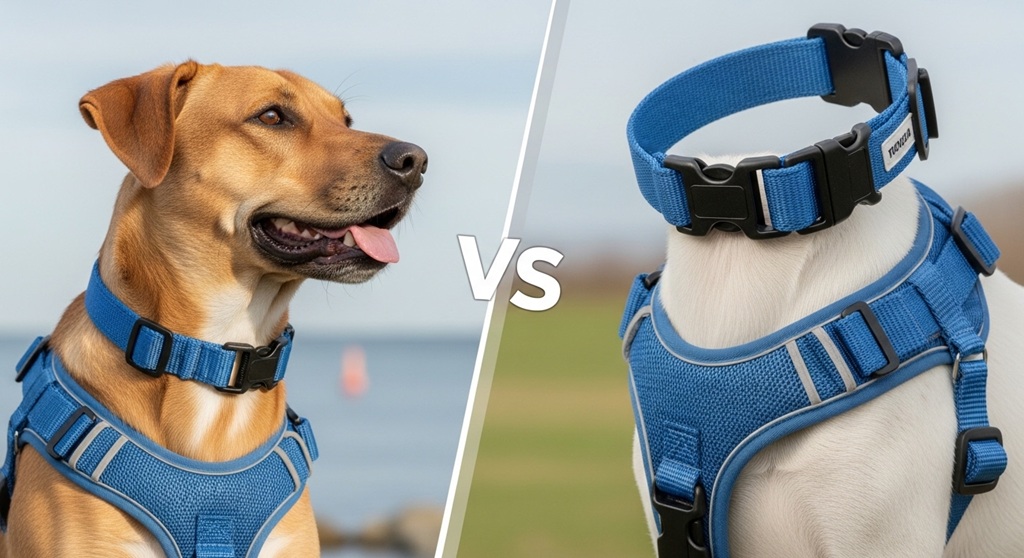
What Do Vet Recommendations Say About Harness vs Collar?
Short answer: Most vets recommend harnesses for daily walking, especially for dogs that pull or have respiratory risk factors.
Veterinarians prioritize injury prevention and long-term musculoskeletal health. Their guidance generally follows these principles:
| Situation | Common Vet Recommendation |
|---|---|
| Calm dog, no pulling | Flat collar acceptable for short walks |
| Frequent pulling | Front-clip no-pull harness |
| Small breed dog | Harness for trachea injury prevention |
| Dog with breathing issues | Chest-support harness only |
| Training sessions | Harness + reward-based leash training |
Most professionals agree: collars are best used for ID tags. Harnesses are better for controlled walking.
Can a Harness Cause Any Health Problems?
Short answer: Yes, if poorly fitted. An ill-fitting harness can cause chafing, restricted shoulder movement, or altered gait.
Not all harnesses are equal. Issues arise when:
- Straps sit too close to the armpits
- Chest plate restricts shoulder extension
- Size is too tight or too loose
- Dog wears harness continuously
A 2018 gait analysis study found that some restrictive harness designs can slightly alter natural stride length. This doesn’t mean harnesses are harmful. It means fit matters.
How to Ensure Proper Fit
- Two fingers should fit under straps
- Harness should not rotate when pulled gently
- No rubbing after 15–20 minutes of walking
- Dog should move shoulders freely
When properly fitted, harnesses typically reduce overall strain compared to collars.
Is a Collar Ever the Better Choice?
Short answer: Yes, for identification and for dogs that walk calmly without pulling.
Collars still serve important purposes:
- Holding ID tags
- Quick bathroom trips
- Backup control when combined with harness
For well-trained dogs with minimal leash tension, a flat collar may be sufficient.
However, choke chains and prong collars increase the risk of neck strain and should be used cautiously and only under professional guidance.
Harness vs Collar: Which Is Healthier Long-Term?
Short answer: For most dogs, a harness is healthier long-term because it reduces repeated neck compression and supports trachea injury prevention.
Long-term health considerations include:
- Spinal alignment
- Airway protection
- Muscle development
- Behavior reinforcement
Repeated neck pressure over years can contribute to chronic discomfort. While not every dog develops injury, prevention reduces cumulative risk.
From a preventative care standpoint, distributing force away from the throat is the safer default option.
How Does a No-Pull Harness Improve Control?
Short answer: A front-clip no-pull harness redirects forward motion, discouraging lunging without throat pressure.
Traditional collars encourage opposition reflex. Dogs pull harder when resistance meets the neck.
A front-clip harness shifts the dog’s center of gravity sideways when they pull. This makes pulling inefficient.
Benefits include:
- Reduced leash tension
- Improved training outcomes
- Lower neck strain
- Better handler control
If pulling is your main issue, explore best no-pull dog harnesses that align with vet recommendations and ergonomic design principles.
Does Breed Size Change the Recommendation?
Short answer: Yes. Small breeds benefit more from harnesses due to higher tracheal vulnerability.
Small dogs have narrower airways. Even mild compression can trigger coughing.
Large breeds may tolerate collars better structurally. But high-energy large dogs that pull still risk cervical strain.
General pattern:
- Small dogs: Harness strongly recommended
- Medium dogs: Harness preferred if pulling
- Large dogs: Harness for training and control
Individual behavior matters more than size alone.
What Is the Best Approach According to Case-Based Observations?
Short answer: Dogs switched from collars to harnesses often show reduced coughing and improved leash behavior within weeks.
In clinical practice observations, vets report improvement in dogs presenting with mild throat irritation after switching to chest-supported harness systems.
While large-scale randomized trials are limited, accumulated clinical experience supports reduced neck pressure as a preventive measure.
The principle is simple: reduce mechanical stress, reduce injury probability.
Conclusion: Which Should You Choose?
If your dog never pulls and shows no respiratory sensitivity, a flat collar may work.
But if your dog lunges, coughs, gags, or strains during walks, a harness is the safer option.
Neck strain is preventable. Trachea injury prevention is proactive care. Most vet recommendations lean toward harnesses for daily walking because they distribute pressure away from vulnerable anatomy.
Small changes now prevent bigger issues later.
Frequently Asked Questions (FAQs)
1. Can a collar cause permanent tracheal damage?
Repeated excessive pressure may contribute to tracheal irritation or collapse, especially in small breeds. Risk increases with chronic pulling.
2. Are harnesses completely risk-free?
No. Poor fit can cause chafing or restrict movement. Proper sizing and adjustment are essential.
3. What do most vets recommend for puppies?
Harnesses are often recommended to prevent early neck strain during leash training.
4. Is a back-clip or front-clip harness better?
Front-clip harnesses reduce pulling more effectively. Back-clip harnesses are suitable for calm walkers.
5. Should dogs wear harnesses all day?
No. Harnesses should be removed indoors to prevent skin irritation and matting.
6. Do large dogs need harnesses?
If they pull or show neck sensitivity, yes. Size does not eliminate risk of cervical strain.
7. Are choke collars recommended by vets?
Most veterinarians discourage routine use due to neck strain and airway pressure concerns.
Related Topic: Flat Roof Repair vs Replacement: Which Is Better?
Read Next: How to Turn Instagram Shoppers into Paying Customers