

04 Dec PACFA Thermal Comfort Thresholds for Kennels
Operating a kennel or pet care facility in Colorado comes with serious responsibilities. Owners must meet strict standards to protect animal welfare. The Pet Animal Care and Facilities Act sets clear guidelines for keeping animals safe and comfortable. Temperature control stands as one of the most critical factors in animal housing. Understanding these requirements helps facility operators provide proper care while staying compliant with state regulations.
Colorado Springs Home Living offers comprehensive resources for pet care professionals and animal lovers alike. The state’s regulations protect animals from extreme temperatures that could harm their health. Additionally, these rules ensure that all animals receive humane treatment in commercial facilities. This article explores the thermal comfort requirements, enclosure standards, and compliance steps that every kennel operator should know.
Understanding PACFA Temperature Requirements
Colorado’s climate presents unique challenges for animal care facilities. Winter temperatures can drop well below freezing, while summer heat can become dangerous. The Colorado’s Pet Animal Care and Facilities Act establishes specific thermal comfort thresholds to address these concerns. These standards apply to kennels, boarding facilities, grooming operations, and pet stores throughout the state.
The regulations require indoor temperatures between 50°F and 85°F for most animals. However, specific breeds may need different conditions. For example, Arctic breeds tolerate cold better than tropical species. Operators must consider each animal’s unique needs when maintaining facility temperatures. Regular monitoring ensures compliance and protects animal health.
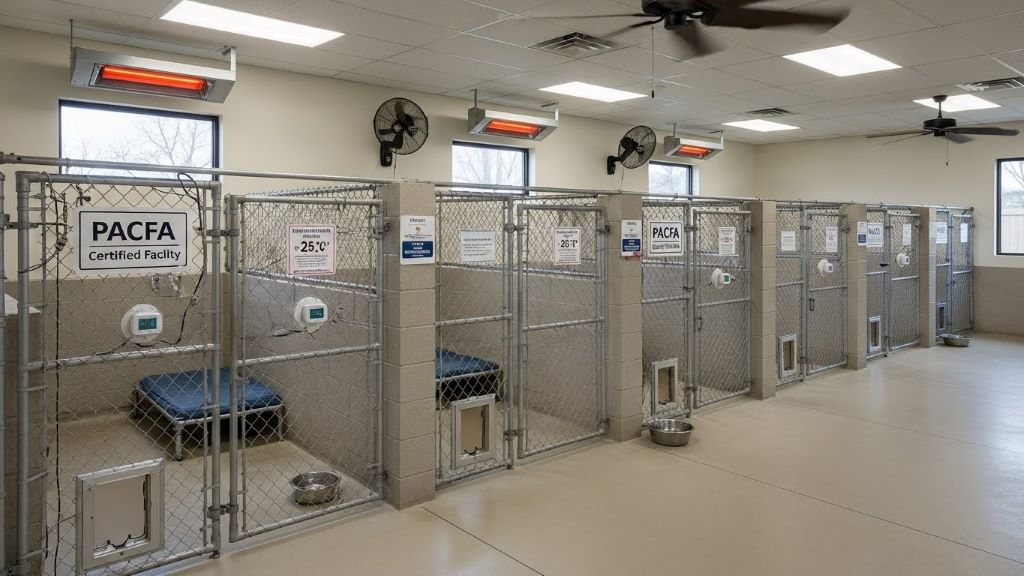
Outdoor enclosures face even stricter scrutiny. Animals housed outside must have access to shelter that protects them from wind, rain, and extreme temperatures. The shelter must allow the animal to stand, turn around, and lie down comfortably. Furthermore, operators must provide additional heating or cooling when temperatures exceed safe ranges. Failure to maintain proper conditions can result in citations, fines, or license suspension.
PACFA Rules for Animal Enclosures
Enclosure standards go beyond temperature control. The state mandates specific requirements for space, sanitation, and construction materials. Each animal must have enough room to move naturally and express normal behaviors. Overcrowding creates stress and increases disease transmission risks.
Primary enclosures must be constructed from durable, non-toxic materials. Surfaces should be smooth and easy to clean. Sharp edges or protruding objects that could injure animals are prohibited. Additionally, enclosures must provide adequate drainage to prevent standing water. Wet conditions promote bacterial growth and create health hazards.
Ventilation plays a crucial role in maintaining air quality. Proper airflow removes odors, reduces humidity, and prevents respiratory problems. The ventilation system must function without creating drafts that could chill animals. Regular maintenance ensures these systems operate effectively year-round.
Lighting requirements balance the need for visibility with animal comfort. Facilities must provide natural or artificial light for at least eight hours daily. However, animals also need darkness for rest. Some species require specific lighting cycles to maintain their natural rhythms. Operators should research the needs of each species they house.
Implementing Temperature Monitoring Systems
Modern technology makes temperature monitoring more reliable than ever. Digital thermometers with remote alerts notify staff when conditions drift outside acceptable ranges. These systems prevent dangerous situations before they threaten animal health. Many facilities install multiple sensors throughout their buildings to ensure accurate readings in all areas.
Record-keeping demonstrates compliance during inspections. Operators should log temperature readings at least twice daily. These records prove that the facility maintains proper conditions consistently. During extreme weather events, more frequent monitoring may be necessary. Documentation protects both animals and business owners.
Backup systems provide extra security. Power outages can quickly compromise climate control. Generators or battery backup systems keep heating and cooling equipment running during emergencies. Therefore, having contingency plans prevents disasters and shows commitment to animal welfare.
Staff Training and Compliance
Employees need thorough training on PACFA requirements. They should recognize signs of heat stress or hypothermia in animals. Quick action can prevent serious health problems or death. Training programs should cover emergency procedures, monitoring schedules, and proper documentation methods.
Regular staff meetings review compliance standards. New regulations or updated guidelines require prompt implementation. Creating a culture of compliance ensures that all team members prioritize animal welfare. Moreover, well-trained staff provide better care and reduce the risk of violations.
Annual refresher courses keep knowledge current. Veterinary medicine and animal care practices evolve constantly. Continuing education helps staff apply the latest best practices. Many organizations offer online courses that fit busy schedules.
Consequences of Non-Compliance
Violations of PACFA standards carry serious penalties. The Colorado Department of Agriculture conducts regular inspections of licensed facilities. Inspectors examine temperature records, enclosure conditions, and overall animal welfare. Citations for violations appear on public records and can damage a facility’s reputation.
Minor infractions may result in warnings with deadlines for correction. Repeated violations or serious welfare concerns can lead to license suspension or revocation. Criminal charges may apply in cases of intentional neglect or cruelty. According to the American Veterinary Medical Association, proper facility management prevents most compliance issues while improving animal outcomes.
Financial penalties add to the burden of non-compliance. Fines can reach thousands of dollars per violation. Legal fees and lost business during suspensions create additional costs. Prevention through proper planning and maintenance proves far less expensive than dealing with violations.
Best Practices for Thermal Comfort
Successful facilities go beyond minimum requirements. Installing high-quality HVAC systems provides consistent temperature control. Insulation reduces energy costs while maintaining stable conditions. Regular equipment maintenance prevents breakdowns during extreme weather.
Strategic facility design enhances climate control. Proper window placement minimizes heat gain in summer. Adequate insulation keeps warmth inside during winter. Some facilities use radiant floor heating for consistent, draft-free warmth. Others install misting systems for cooling during hot months.
Enrichment activities help animals cope with weather-related restrictions. When outdoor time isn’t possible due to temperature extremes, indoor play areas keep animals active and engaged. Mental stimulation reduces stress and promotes overall wellbeing.
Conclusion
PACFA thermal comfort thresholds protect animals in Colorado’s varied climate. Kennel operators must maintain temperatures between 50°F and 85°F while providing proper enclosures and ventilation. Compliance requires investment in quality equipment, staff training, and monitoring systems. However, these measures ensure animal welfare and protect business operations from penalties.
Understanding and following PACFA rules benefits everyone involved. Animals receive the care they deserve, owners gain peace of mind, and facilities build strong reputations. Staying informed about regulations and implementing best practices creates success in the pet care industry.
Frequently Asked Questions
What is the minimum temperature allowed in a Colorado kennel?
Indoor kennels must maintain temperatures above 50°F. Animals requiring warmer conditions need supplemental heating. Outdoor animals must have access to heated shelter when temperatures drop below safe levels for their breed.
How often should kennel temperatures be recorded?
Facilities should record temperatures at least twice daily. More frequent monitoring is necessary during extreme weather. Digital systems with automatic logging simplify record-keeping and ensure compliance.
What happens if a kennel fails a PACFA inspection?
Minor violations typically result in warnings with correction deadlines. Serious or repeated violations can lead to fines, license suspension, or revocation. Facilities must address all issues promptly to avoid penalties.
Do different dog breeds have different temperature needs?
Yes, breed characteristics affect thermal comfort. Arctic breeds tolerate cold better, while short-haired or small breeds need warmer conditions. Operators must consider individual animal needs when managing facility temperatures.
Are there exceptions to PACFA temperature requirements?
Limited exceptions exist for specific circumstances with veterinary documentation. However, facilities must still protect animal welfare. Proper shelter, monitoring, and care remain mandatory regardless of exemptions.
Related Topics:
Planning a Trip to Japan? Here’s Which Month You’ll See Cherry Blossoms
What Is Achma? Meet Georgia’s Most Decadent Cheese-Filled Food