
28 Feb How to Choose Affordable Hard Shell Luggage That Protects Your Items
Traveling can be stressful enough without worrying about whether your belongings will arrive intact. Hard shell luggage has become increasingly popular among travelers who want serious protection for their items without spending a fortune. The good news is that you don’t need to break the bank to find quality luggage that keeps your possessions safe throughout your journey.
Choosing the right suitcase involves balancing protection, durability, price, and practicality. With so many options flooding the market, making an informed decision can feel overwhelming. This comprehensive guide will walk you through everything you need to know about selecting affordable hard shell luggage that truly protects your belongings.
Understanding what features matter most and which ones are just marketing gimmicks will save you money and frustration. By the end of this article, you’ll know exactly what to look for when shopping for your next suitcase.
Understanding Hard Shell Luggage Materials
The material your luggage is made from directly impacts both protection and price. Different materials offer various advantages, and knowing these differences helps you make a smart choice for your budget.
Polycarbonate stands out as one of the most popular materials for hard shell luggage. This lightweight plastic offers excellent impact resistance and flexibility. When your suitcase gets tossed around by baggage handlers, polycarbonate can absorb impacts without cracking. It costs more than some alternatives but provides superior durability.
ABS plastic represents the budget-friendly option in hard shell luggage. It’s lighter than polycarbonate and significantly cheaper to manufacture. However, ABS is more rigid and therefore more prone to cracking under severe impact. For occasional travelers or those on tight budgets, ABS suitcases can be perfectly adequate.
Polypropylene offers a middle ground between polycarbonate and ABS. It’s lightweight, relatively affordable, and provides decent impact resistance. This material has gained popularity in recent years as manufacturers seek to balance cost and performance.
Composite materials blend different plastics to achieve specific properties. These blends might combine the flexibility of polycarbonate with the affordability of ABS. Many mid-range suitcases use composite materials to offer better value.
The thickness of the material matters as much as the type. Thicker shells provide better protection but add weight. Look for luggage that balances adequate thickness with manageable weight, typically around 3 to 4 millimeters for most materials.
Essential Protection Features to Look For
Beyond the basic shell material, several features contribute to how well your luggage protects your belongings. These elements work together to create a secure travel companion.
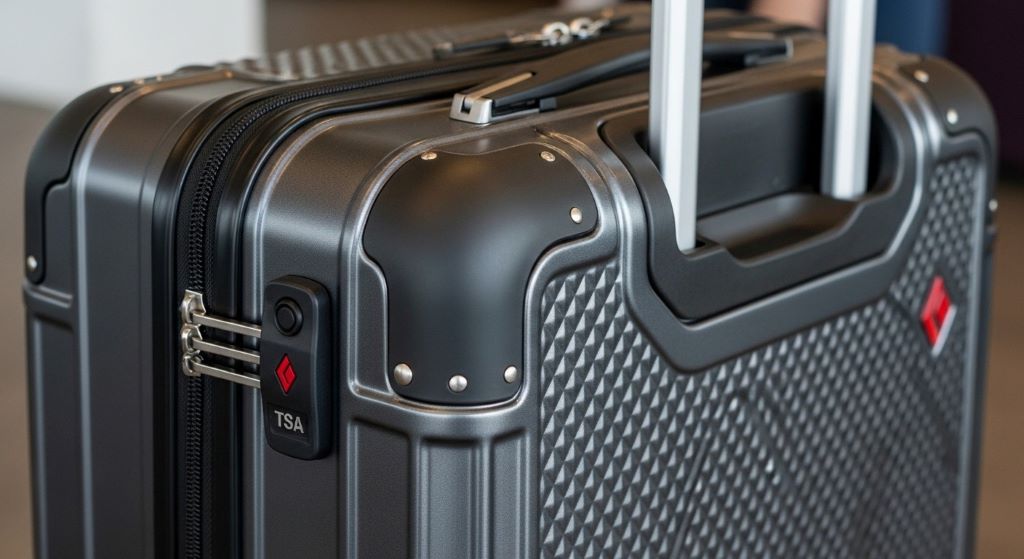
Corner reinforcements add extra protection to the most vulnerable parts of your suitcase. Corners take the brunt of impacts during handling and transport. Look for luggage with reinforced or rubberized corners that can withstand repeated drops and bumps.
Interior organization systems keep items secure and prevent shifting during transit. Compression straps, dividers, and mesh pockets ensure your belongings stay in place. When contents can’t move around freely, there’s less risk of damage from items colliding inside your luggage.
Quality zippers are crucial for security and protection. YKK zippers are considered the industry standard for reliability. They resist snagging, operate smoothly under stress, and maintain their integrity through countless openings and closings. Additionally, self-healing zippers can close over small gaps, maintaining security.
Water resistance protects your belongings from unexpected spills, rain, and moisture. While hard shells naturally resist water better than soft luggage, sealed seams and quality gaskets around zippers provide extra protection. This feature becomes particularly important for electronics and documents.
Protective coatings on the exterior shell serve multiple purposes. They help prevent scratches, make cleaning easier, and can add grip to smooth surfaces. Some coatings also provide UV resistance, preventing the color from fading over time.
Security Features That Matter
Protecting your items goes beyond physical impacts. Security features prevent unauthorized access and give you peace of mind throughout your journey.
Built-in TSA lock suitcase designs have become essential for travelers, particularly those flying within or to the United States. These locks allow TSA agents to open your luggage for inspection without breaking the lock. Without approved locks, agents may cut your locks if they need to inspect your bag, leaving your belongings vulnerable.
Lock placement affects both security and convenience. Integrated locks that are part of the zipper system provide cleaner aesthetics and better protection than external padlocks. Look for locks positioned where they’re easy to operate but difficult for potential thieves to tamper with.
Double zipper systems add an extra layer of security. When two zipper pulls meet, you can lock them together more securely. This design also provides redundancy if one zipper fails during your trip.
Combination locks offer advantages over key locks. You don’t need to worry about losing a key, and you can easily share the combination with travel companions. Choose locks with easy-to-reset combinations so you can change the code if needed.
Hidden external pockets can be useful but also create security vulnerabilities. If your luggage has external pockets, ensure they also have secure closures and consider what you store there. Never put valuables in easily accessible external compartments.
Ensuring Scratch Resistance for Long-Term Value
Scratches and scuffs are inevitable with travel, but some luggage handles wear better than others. A scratch-resistant case maintains its appearance longer and provides better long-term value.
Textured finishes naturally hide scratches better than smooth, glossy surfaces. Matte finishes with slight texture show wear less obviously than high-gloss luggage. While shiny suitcases look attractive in the store, they often show every scratch within a few trips.
Brushed metal finishes on hard shell luggage provide excellent scratch resistance. These finishes diffuse light, making minor scratches virtually invisible. However, luggage with this type of finish typically costs more than solid color options.
Certain colors hide scratches better than others. Darker colors and multi-tone finishes camouflage wear more effectively than solid light colors. Black, navy, and charcoal gray suitcases maintain their appearance through years of use.
Protective films or coatings applied during manufacturing add scratch resistance. These treatments create a harder surface layer that resists abrasion. When shopping, ask about protective coatings and check product specifications for scratch-resistance features.
Pattern designs and graphics can strategically hide wear. Luggage with printed patterns, carbon fiber textures, or geometric designs show scratches less noticeably than solid colors. This aesthetic choice serves a practical purpose.
Wheel Quality and Durability
Wheels might seem like a minor detail, but they’re critical for both convenience and protection. Quality wheels prevent strain on you and your luggage, reducing the risk of damage during transport.
Spinner wheels that rotate 360 degrees have become the standard for hard shell luggage. Four-wheel spinner systems distribute weight evenly and allow you to roll your suitcase in any direction. This mobility reduces stress on the suitcase structure and makes navigation easier in crowded airports.
Inline skate wheels offer smooth, quiet rolling across various surfaces. These rubber wheels absorb shock better than hard plastic wheels, protecting both your luggage and its contents. Look for wheels at least two inches in diameter for better stability and durability.
Wheel housing design affects durability significantly. Recessed wheels that sit partially inside the suitcase body are better protected from impact damage. External wheels are more vulnerable to breaking off during rough handling.
Double wheels on each corner provide redundancy and better weight distribution. If one wheel gets damaged, you can still roll the suitcase using the remaining wheels. This design also improves stability when the luggage is fully packed and heavy.
Replaceable wheels extend the life of your luggage. Some manufacturers design their suitcases with wheels that can be removed and replaced if damaged. This feature transforms a potentially fatal flaw into a simple repair, significantly extending your luggage’s useful life.
Handle Systems and Stability
Handles are the primary interface between you and your luggage. Quality handle systems contribute to both convenience and protection by preventing drops and allowing controlled movement.
Telescoping handles should extend smoothly and lock securely at multiple heights. Test the handle mechanism before purchasing. It should feel solid without wobbling and should lock firmly in both extended and retracted positions. Loose or weak handles can fail when you need them most.
Handle materials affect durability and comfort. Aluminum handles are lightweight and strong but can feel cold. Reinforced plastic handles cost less but may not withstand years of heavy use. Consider how often you’ll travel and choose accordingly.
Multi-position locking allows users of different heights to find comfortable positions. Look for handles with at least two or three locking positions. This adjustability prevents strain on your arm and shoulders during long walks through terminals.
Top and side handles enable lifting your luggage into overhead bins or car trunks. These handles should be well-padded and securely attached to the frame. Test their strength by lifting the luggage when it’s packed to ensure they can handle the weight.
Handle housing protection keeps the telescoping mechanism clean and functional. Look for luggage with covered handle channels that prevent dirt and debris from entering the mechanism. This simple feature prevents jams and extends handle life.

Size Considerations for Different Travel Needs
Choosing the right size affects both protection and practicality. Larger isn’t always better, and having appropriately sized luggage for different trip types optimizes both cost and convenience.
Carry-on size restrictions vary by airline, but most follow similar guidelines. Standard carry-on dimensions are approximately 22 by 14 by 9 inches, including wheels and handles. Verify specific airline requirements before purchasing, as some budget carriers have stricter limits.
Medium-checked bags around 24 to 26 inches work well for week-long trips. These sizes offer enough space for most travelers without becoming unwieldy. They’re also less expensive than larger options while providing adequate protection for typical travel needs.
Large checked bags at 28 to 32 inches suit extended trips or travelers who pack extensively. However, larger luggage costs more to manufacture and purchase. Additionally, heavier bags are more prone to damage during handling because of the increased weight and size.
Expandable luggage provides flexibility for varying packing needs. Many hard shell suitcases include expansion zippers that add one to two inches of depth. This feature lets you buy smaller luggage that can expand when needed, potentially saving money on your initial purchase.
Weight limits matter as much as dimensions. Airlines impose weight restrictions, typically 50 pounds for checked bags. Heavier hard shell luggage leaves less allowance for your belongings. Look for lightweight options that don’t sacrifice protection to avoid overweight baggage fees.
Finding Quality at Affordable Prices
Budget-conscious travelers can find excellent hard shell luggage without compromising essential protection features. Understanding where to look and when to buy makes quality affordable.
Off-season sales offer significant discounts on luggage. Retailers typically reduce prices in late fall and early spring when fewer people are shopping for travel gear. Planning ahead and buying during these periods can save you 30 to 50 percent off regular prices.
Lesser-known brands often provide comparable quality to premium names at fraction of the cost. Research customer reviews and product specifications rather than relying solely on brand recognition. Many affordable brands use the same materials and manufacturing processes as expensive competitors.
Outlet stores and discount retailers carry previous season’s models at reduced prices. Last year’s color or a discontinued design still provides the same protection as current models. Unless you need the absolute latest features, these options offer excellent value.
Online shopping enables price comparison across multiple retailers instantly. Websites and apps that track price history help you identify genuine deals versus inflated “sale” prices. However, factor in return policies and shipping costs when comparing online prices to local stores.
Warranty coverage indicates manufacturer confidence in their product. Even affordable luggage should include at least a one-year warranty covering manufacturing defects. Some budget-friendly brands offer surprisingly comprehensive warranties that protect your investment.
Testing Before You Buy
Whenever possible, physically examining luggage before purchasing helps ensure you’re getting good value and adequate protection. Several simple tests reveal quality issues that aren’t apparent in product photos.
Weight assessment is your first test. Lift the empty suitcase and consider whether you can comfortably manage it when packed. If the empty luggage already feels heavy, it will become burdensome when full, potentially exceeding airline weight limits.
Flexibility testing reveals material quality. Gently press on the shell in various locations. Quality polycarbonate should flex slightly and return to shape. Material that feels too rigid or shows permanent deformation may crack under stress.
Zipper operation should feel smooth across the entire closure. Open and close the suitcase several times, checking for snags or resistance. Quality zippers operate consistently without requiring excessive force.
Wheel testing on different surfaces helps predict real-world performance. Roll the luggage across smooth flooring and carpet if possible. Wheels should turn freely and smoothly without wobbling or making excessive noise.
Interior inspection reveals attention to detail. Check lining quality, strap attachments, and pocket construction. Loose stitching, thin linings, or flimsy dividers indicate overall quality issues that extend to protection features.
Maintenance for Extended Protection
Proper care extends the life of even budget-friendly luggage. Simple maintenance habits maximize your investment and ensure continued protection for your belongings.
Cleaning after each trip prevents dirt buildup and identifies damage early. Wipe down the exterior with a damp cloth and mild soap. Check wheels, handles, and zippers for debris that could cause operational problems.
Storage in a cool, dry place prevents material degradation. Extreme temperatures can weaken plastic materials over time. Store your luggage in a climate-controlled area, ideally with the suitcase slightly open to allow air circulation.
Lubrication of moving parts maintains smooth operation. Apply silicone lubricant to zippers and wheel axles periodically. This simple step prevents binding and extends the life of mechanical components.
Prompt repairs prevent minor issues from becoming major problems. Tighten loose screws, replace damaged wheels, and repair small cracks immediately. Many luggage repair shops can fix issues affordably, extending your suitcase’s useful life significantly.
Weight distribution during packing affects structural integrity. Pack heavier items at the bottom near the wheels. This placement prevents stress on the handle and maintains balance when rolling your luggage.
Realistic Expectations for Budget Options
Understanding the limitations of affordable luggage helps you make informed decisions and avoid disappointment. Budget options can provide excellent protection within reasonable expectations.
Lifespan differs between budget and premium luggage. Affordable hard shell luggage might last 3 to 5 years with regular use, while premium options can last 10 years or more. However, for occasional travelers, budget luggage may outlive their travel needs.
Aesthetic durability varies significantly. Budget luggage may show cosmetic wear more quickly than expensive alternatives. If appearance matters greatly to you, consider spending more. However, if function trumps form, affordable options perform admirably.
Feature limitations in budget luggage typically affect convenience rather than core protection. You might sacrifice advanced features like integrated weight scales or premium interior organization while still getting solid protection for your belongings.
Warranty coverage on budget luggage tends to be shorter and less comprehensive. However, for the price difference, you could replace affordable luggage twice and still spend less than one premium piece. Calculate the cost per year of use to determine true value.
Customer service experiences can vary more widely with budget brands. Premium manufacturers often provide better support and easier warranty claims. Research customer service reviews alongside product reviews when choosing affordable options.
Conclusion
Choosing affordable hard shell luggage that protects your items requires balancing multiple factors, but it’s entirely achievable for budget-conscious travelers. Understanding materials, essential features, and realistic expectations helps you identify genuine value among countless options.
Focus on core protection elements: durable shell materials, quality wheels and handles, effective security features, and solid construction. Features like TSA lock suitcase integration and scratch-resistant case finishes add value without dramatically increasing costs. Meanwhile, aesthetic concerns and advanced convenience features can be sacrificed to stay within budget.
Remember that the most expensive luggage isn’t necessarily the best for your needs. Conversely, the cheapest option rarely provides adequate protection and durability. Mid-range options typically offer the best balance of quality and affordability for most travelers.
Take time to research, compare options, and physically test luggage when possible. Read reviews from travelers with similar needs and travel frequencies. Consider your specific travel patterns, typical destinations, and how often you’ll use the luggage.
With careful selection and proper maintenance, affordable hard shell luggage can protect your belongings reliably through years of travel. The right choice gives you peace of mind without emptying your wallet, letting you focus on enjoying your journey rather than worrying about your possessions.
Frequently Asked Questions
Is hard shell luggage better than soft luggage for protection?
Hard shell luggage generally provides better protection for fragile items and electronics because the rigid exterior prevents crushing and absorbs impacts. However, soft luggage can be more forgiving with overpacking and may be better for clothing-only trips. For travelers carrying breakable items, cameras, or electronics, hard shell luggage offers superior protection. Additionally, hard shells resist water better, keeping contents dry in rain or when placed near spills.
How can I tell if affordable luggage is good quality before buying?
Check several key indicators of quality: examine the shell thickness and material composition, test the zipper smoothness and strength, assess wheel stability and rotation, verify secure handle mechanisms, and inspect interior construction quality. Read customer reviews focusing on durability after multiple trips rather than initial impressions. Look for warranty coverage, as manufacturers confident in their products offer better guarantees even at lower price points.
What’s the difference between TSA-approved and regular locks?
TSA-approved locks include a special keyhole that allows Transportation Security Administration agents to open your luggage for inspection without breaking the lock. Regular locks don’t have this feature, so agents may cut them if they need to inspect your bag. TSA-approved locks display a red diamond logo and provide the security you need while ensuring your luggage isn’t damaged during security checks. They’re essential for travelers flying to or within the United States.
How much should I expect to spend on quality budget hard shell luggage?
Quality budget hard shell luggage typically costs between 80 and 150 dollars for carry-on sizes and 100 to 200 dollars for checked bag sizes. Anything significantly cheaper may sacrifice durability or protection features. However, you don’t need to spend 300 dollars or more to get adequate protection. Look for sales and discounts during off-peak seasons to find quality options at the lower end of this range.
Will hard shell luggage crack or break easily?
Quality hard shell luggage made from polycarbonate or polypropylene is designed to withstand normal travel abuse without cracking. These materials flex under pressure and return to shape. However, extreme impacts, dropping from significant heights, or manufacturing defects can cause cracks. Cheaper luggage made from thin or low-quality materials is more prone to breaking. Proper handling and choosing luggage with corner reinforcements minimizes crack risks significantly.
Related Topics:
Best Mini Rice Cooker for Dorms, Travel, and Quick Meals
What Is American Airlines Pet Travel and Why Does It Matter?