

04 Dec Granite Wall Cleaning Guide: Pro Methods for Tough Stains and Everyday Care
How to clean granite stone walls is simple once you understand what products are safe, what causes stains, and how to use the right technique for each problem. Granite is tough but still porous in many finishes, so the goal is to lift dirt and stains without etching, scratching, or weakening the stone over time.
Understand Your Granite Walls First
Before cleaning, confirm that the wall surface is actually granite, not marble, limestone, or engineered stone, because each reacts differently to cleaners. Granite usually has a grainy, speckled look with visible crystals, while marble and limestone show more veins or cloudy patterns.
Check whether the wall is sealed by sprinkling a little water on a small area; if the water beads up, the surface is likely sealed, but if it darkens quickly, the stone is more porous and will need gentler cleaning and thorough drying. This helps you decide how much water and what kind of cleaner you can safely use without driving moisture deep into the wall.
Tools and Products You Will Need
Gather the right tools in advance so you can clean granite stone walls in one smooth workflow. Using the wrong tools—like harsh chemicals or stiff metal brushes—can permanently damage the surface, dull the polish, or open up the pores of the stone.
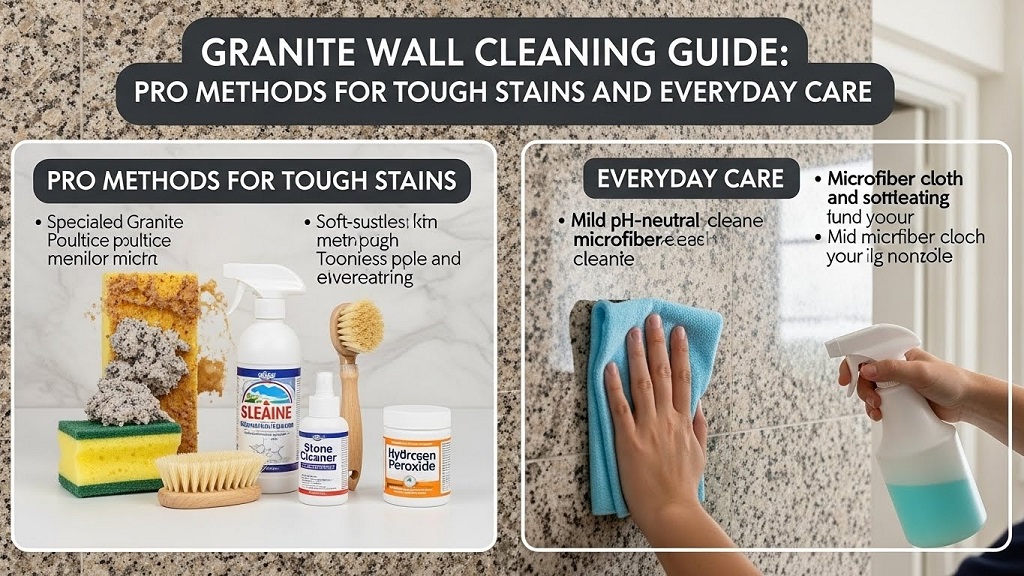
Basic kit to clean and remove stains from granite walls
- Soft-bristle brush or natural fiber broom
- Microfiber cloths or soft cotton rags
- Bucket of warm water
- Mild pH-neutral stone cleaner or a few drops of gentle dish soap
- Non-abrasive sponge
- Spray bottle (for spot cleaning and stain treatments)
- Baking soda (for many stain poultices)
- Hydrogen peroxide (for organic stains on light granite only)
- Acetone or mineral spirits (for greasy stains, used with care)
- Granite sealer (for resealing after a deep clean)
Avoid bleach, vinegar, lemon juice, bathroom descalers, or anything labeled “acidic” or “lime remover,” because these can weaken grout, etch adjacent stones, and slowly damage some granite finishes over time.
Step-by-Step: How to Clean Granite Stone Walls
Remove Dust and Loose Dirt
Start by dry cleaning the wall before introducing any moisture. Use a soft-bristle brush, broom, or vacuum with a brush attachment to sweep away dust, cobwebs, insect debris, and loose grit from top to bottom.
This step prevents abrasive particles from acting like sandpaper when you wipe with a damp cloth later. Pay extra attention to mortar joints, decorative edges, and any rough-textured sections where dirt can lodge.
Wash with Mild Soap or Stone Cleaner
Once the wall is free of loose dirt, you can wash the surface with a gentle solution. Fill a bucket with warm water and add either a small amount of pH-neutral stone cleaner or a few drops of mild dish soap—enough to feel slightly slippery, not foamy.
Dip a non-abrasive sponge or soft cloth into the solution, wring it out well, and wipe the granite stone wall in small sections, working from top to bottom to avoid streaks. Rinse the sponge often so you are not redistributing dirt, and avoid soaking the wall; controlled moisture is safer for both granite and mortar.
Rinse and Dry Thoroughly
After washing a section, rinse it with clean water using a separate sponge or a low-pressure spray (such as a gentle garden sprayer setting). This step is crucial because leftover soap or cleaner can form a film that attracts more dirt and dulls the stone.
Finish by drying the granite with a clean microfiber cloth or towel, especially on interior walls or areas with limited air circulation. Removing residual moisture reduces the risk of water spots, efflorescence, and mildew development, and helps keep the granite wall looking crisp and clean.
When and How to Use Pressure Washing
Pressure washing can be an efficient way to clean exterior granite stone walls, but only when used correctly and on sound, well-installed stone. The key is to use moderate pressure and the right nozzle to avoid chipping edges, driving water into joints, or roughening the stone surface.
If you decide to use a pressure washer, keep these guidelines in mind:
- Use a fan-tip nozzle, not a pinpoint jet
- Start at a low pressure (for many facades, staying under about 2 bar / 30 psi is safer)
- Hold the wand at least several inches away from the wall and keep it moving
- Work in vertical or horizontal passes from top to bottom
Do not use a pressure washer on cracked, loose, or very old mortar joints, and avoid blasting directly into joints or under window sills. On delicate or historic granite walls, manual washing with soft brushes and pH-neutral cleaner is usually better.
How to Remove Stains from Granite Walls
To remove stains from granite walls, you need to identify what caused the stain and match it with the right method. Many stains can be lifted with a poultice—a paste that pulls discoloration out of the stone over time rather than scrubbing it on the surface.
Oil and Grease Stains
Oil-based stains (from food splashes, pollution, or oily hands) often appear as dark patches that do not go away when dry. To treat them:
- Mix baking soda with a small amount of water or acetone to create a thick paste.
- Spread the poultice over the stain about 3–5 mm thick and slightly beyond the edges.
- Cover with plastic wrap, tape the edges, and leave for 24–48 hours so it slowly draws the oil out.
- Remove the poultice, rinse with clean water, and let the wall dry fully.
Repeat as needed for deeper stains. Always spot test acetone in an inconspicuous area first and avoid open flames or sparks nearby.
Organic Stains (Mold, Mildew, Leaves, Dirt)
Dark streaks, green patches, or brownish marks from plants, dirt, or mildew are common on exterior granite walls, especially in damp or shaded spots. For light to moderate growth:
- Scrub gently with a soft brush and pH-neutral stone cleaner or mild soapy water.
- Rinse thoroughly and dry.
For stubborn organic staining on light-colored granite only, you can:
- Mix baking soda with hydrogen peroxide to form a paste.
- Apply as a poultice over the stain, cover, and leave for several hours or overnight.
- Rinse well and dry.
Avoid chlorine bleach unless recommended by a stone professional for a specific scenario, as it can affect grout, nearby metals, and surrounding materials.
Rust and Mineral Stains
Rust stains are usually orange or brown spots near metal fixtures, railings, or hardware on granite walls. These can be difficult to remove because iron can migrate into the stone pores. Do not use generic rust removers unless they are labeled safe for natural stone.
Instead, look for a stone-safe rust remover designed for granite, follow the manufacturer’s directions carefully, and always test a small, hidden area first. After treatment, rinse the wall thoroughly to remove any chemical residue and dry the stone so minerals are less likely to re-precipitate on the surface.
How to Clean Interior vs Exterior Granite Walls
Interior Granite Walls
Interior walls are usually less exposed to harsh weather but more sensitive to moisture and indoor air quality. Use minimal water, rely on gentle hand-washing, and dry the stone completely after cleaning. Avoid strong-smelling solvents or chemicals in enclosed spaces, and consider a HEPA vacuum with a brush attachment for regular dusting.
Because indoor granite walls are more visible at eye level, streak-free cleaning and consistent sheen matter; use clean microfiber cloths and change rinse water often to maintain a polished, uniform look.
Exterior Granite Walls
Exterior granite stone walls collect pollution, algae, moss, bird droppings, and airborne grime. These often require more frequent but controlled cleaning. Mild pressure washing, soft washing systems, or manual scrubbing with larger brushes can all work, depending on the condition of the wall.
Regularly clearing vegetation away from the base of the wall, improving drainage, and fixing leaking gutters or downpipes will also reduce staining and organic growth. Prevention is a big part of keeping granite exterior walls clean over the long term.
Sealing and Ongoing Maintenance
Once you deep clean and remove stains from granite walls, sealing the surface can help resist future staining and make routine cleaning easier. Not all granite needs sealing, but many textured or lighter stones benefit from it, especially on outdoor facades or high-touch interior walls.
Choose a breathable, penetrating sealer specifically formulated for natural stone and granite. Apply it only to a clean, dry wall following the label instructions, usually with a roller, brush, or sprayer, then wipe off excess. Plan to reapply every 1–3 years depending on exposure, climate, and manufacturer guidelines, and test water beading periodically to gauge when another coat is needed.
For everyday maintenance:
- Dust or brush granite walls regularly.
- Wipe spills or splashes quickly.
- Use mild stone cleaner for monthly or seasonal washes.
- Check for cracks, loose joints, or efflorescence and address them early.
Safety Tips When Cleaning Granite Stone Walls
Working on stone walls—especially exterior ones—often means dealing with height, moisture, and chemicals at the same time. Basic safety steps protect both you and your granite.
Always:
- Wear gloves and eye protection when using any cleaner or poultice.
- Use sturdy ladders or scaffolding on level ground if cleaning higher walls.
- Avoid standing under areas where debris or water can fall on you.
- Ventilate interior spaces when using stone cleaners, solvents, or sealers.
- Follow product labels exactly, especially around dwell times and rinsing.
If a stain does not respond after several careful attempts, consult a professional stone restoration company to avoid overcleaning and potential damage.
FAQs About Cleaning Granite Stone Walls
How often should I clean granite stone walls?
For most homes, a light clean every few months and a deeper clean once or twice a year is enough for both interior and exterior granite walls. High-traffic or exposed areas may need more frequent washing or spot treatment.
Can I use vinegar or bleach on granite walls?
Avoid vinegar, lemon, and most strong acids or bleaches on granite walls because they can damage grout, nearby materials, and some stone finishes over time. It is safer to rely on pH-neutral stone cleaners or mild soap solutions designed for natural stone.
Will pressure washing damage granite?
Pressure washing can be safe on solid, well-installed granite when done at low to moderate pressure with the correct nozzle and technique. However, using very high pressure, standing too close, or blasting mortar joints can chip the stone, open pores, and force water behind the wall.
Do I really need to seal granite walls?
Not every granite wall must be sealed, but many porous or textured stones benefit from a penetrating sealer that repels stains and makes cleaning easier. If water quickly darkens the stone rather than beading on the surface, sealing is usually a good idea after a thorough clean.
How can I remove mold or green algae from exterior granite?
Use a soft brush and pH-neutral cleaner first to scrub away growth, then rinse thoroughly. For persistent organic stains on suitable light-colored granite, a baking soda and hydrogen peroxide poultice can help; always test a small area and rinse well to avoid residue.
To put this into practice, outline your cleaning plan, gather the right tools and stone-safe products, then follow the step-by-step process above on a small test area of your granite wall today. Once you see how effectively you can clean granite stone walls and remove stubborn stains, turn this guide into a full, SEO-optimized blog post for your audience and drive targeted traffic around this valuable home-care topic.
Related Topics: Inwood Hill Park Geological Rock Formations Hike
Related Topics: Must-Have Spa Accessories for a Relaxing Bath Experience