
17 Sep How Proper Golf Club Care Can Support Consistent Shots
You hit a pure 7-iron on the 4th hole, then a fat shot on the 5th that feels mysteriously heavy and comes up ten yards short. The swing felt the same. The difference is often hiding in the clubface. Mud, grass juice, and sand packed into the grooves reduce friction between the ball and the face, which quietly kills spin and distance control. The fix is simpler than a swing change: cleaning your clubs properly after every round. That means more than a quick towel wipe, which is why many players keep top-rated golf brush and cleaner tools in their bag. This article explains what dirty clubs really cost you, how to clean them properly, and where most golfers go wrong.
Quick Answer
Dirty grooves reduce spin, launch consistency, and distance control, especially on approach shots and chips. Cleaning your clubface and grooves after every shot, then doing a deeper clean after each round, keeps performance predictable. A stiff-bristled brush, a groove pick, and water are usually enough. Club care does not make you a better ball striker, but it removes one variable that quietly costs you strokes.
Key Takeaways
- Grooves channel away water, grass, and sand at impact; when they are clogged, the ball slides up the face instead of gripping, so spin drops and shots fly higher and shorter than expected.
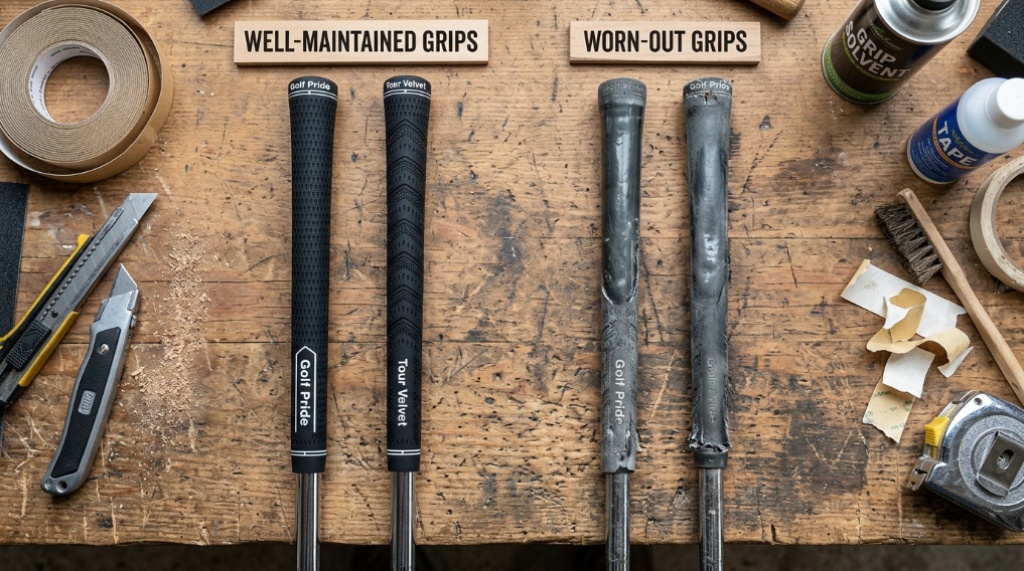
- Grip condition matters as much as a clean clubface. A slick or worn grip forces you to squeeze harder, which tightens your forearms and changes your release.
- A quick brush-and-wipe between shots takes seconds and prevents dirt from hardening in the grooves, where it becomes much harder to remove later.
- Metal groove tools can scratch or deform soft forged faces, so match your cleaning tool to your club material.
- Consistent club care will not fix a fundamentally offline swing, but it removes equipment-related variation that masks your real ball-striking pattern.
Why Clean Grooves Actually Change Your Ball Flight
Grooves exist for one main reason: to manage moisture and debris at impact. Without them, grass, water, and sand would sit between the ball and the face, and friction would drop dramatically. Less friction means less spin. Less spin means the ball launches higher, floats more, and stops less quickly on the green. This is why a shot from the rough, where grass gets trapped between the face and ball, produces a “flyer” that sails over the green.
A clogged groove from dried mud or embedded sand creates the same effect on a clean lie. The ball and face simply cannot grip each other the way they should. On short pitches and chips, where spin is what stops the ball near the hole, the loss is most visible. You hit what feels like a solid shot, and the ball rolls out well past the pin.
Where the Effect Is Biggest
Not every shot is equally sensitive to dirty grooves. A driver face with a thin layer of dust still performs reasonably well because the impact is more about launch and less about spin generation. Wedges and short irons are the opposite. Their grooves do the heavy lifting for control around the green. The same applies to irons hit from the fairway on approach shots. If you have to choose where to focus your cleaning effort, prioritize your wedges and short irons.
What a Proper Cleaning Routine Looks Like
A useful routine has two layers: a between-shot habit and an after-round full clean. Most players skip one or both, and that is where performance quietly erodes.
The Between-Shot Habit
- Wipe the face with a damp towel immediately after the shot.
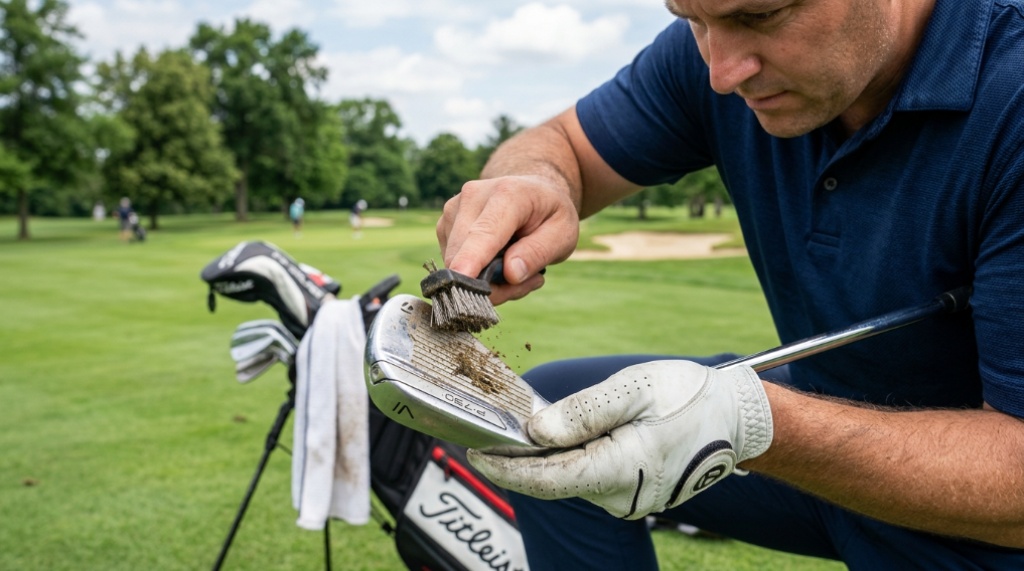
- Brush across the grooves several times to push debris out, not deeper in.
- Wipe dry so the face is not left wet going into the next shot.
This takes a few seconds but prevents dirt from drying hard in the grooves. Dried soil is much more stubborn than fresh soil.
The After-Round Full Clean
- Fill a bucket with warm water and a small amount of mild dish soap.
- Use a soft or medium brush to scrub the clubface, grooves, and the sole.
- Use a groove pick to clear any compacted debris still stuck at the base of the grooves.
- Rinse with clean water, then dry with a towel. Do not leave clubs wet in a bag.
- Wipe down grips with a damp cloth and let them dry fully before re-covering.
For irons and wedges, this keeps the faces and grooves in working condition through a full season. For woods and hybrids, follow the same steps but skip abrasive tools.
Choosing the Right Cleaning Tools
The tools you use matter, because the wrong ones can damage clubfaces, especially on softer forged irons and wedges, For optimal performance on the course, technology matters just as much as maintenance; explore premium golf watches used by serious players to track your stats and improve your game.
Brushes
Nylon or soft brass bristles work for most clubfaces. Steel wire brushes should generally be avoided on forged faces because they can scratch the surface and, over time, round the groove edges. Groove edge damage reduces the sharpness that creates spin. A brush with a compact head and a short body fits easily into a golf bag, and one with a built-in spike or pick is convenient for clearing hard debris.
Groove Picks
Groove picks are useful, but the material matters. A brass or plastic-tipped pick is gentler on the face than a hardened steel tool. If you use a sharp steel pick, apply light pressure along the groove rather than digging into the face. The goal is to lift debris out, not to reshape the groove.
Towels
You actually need two towels: one damp for wiping the face and one dry for finishing. A single soggy towel just smears dirt around and leaves the face wet, which defeats the purpose. Microfiber towels are absorbent and hold up well over a season.
Grips and Bag
Grip care is often overlooked. A dirty or glazed grip loses tackiness, which encourages a tighter hold and changes your release. Clean grips with a damp cloth and mild soap periodically, and replace them when they start feeling slick even after cleaning. Also clean out the bottom of your bag occasionally, since grit that collects there works its way into clubheads and grips.
Club Care Mistakes That Quietly Cost You Shots
You can clean your clubs regularly and still miss the important details. These are the ones that matter most:
- Only wiping the sweet spot. Debris collects near the heel and toe too, and those areas still affect contact when you catch the ball slightly off-center.
- Using a steel brush on forged wedges. This dulls the groove edges that create spin, and the loss accumulates over many rounds.
- Letting clubs sit wet in the bag. Moisture is hard on shafts, ferrules, and grip tape, especially in humid climates or a hot car trunk.
- Skipping the grooves on woods and hybrids. These clubs have grooves too, and they help stabilize flight off the tee and fairway.
- Ignoring the grips. A slick grip is the quiet cause of a lot of inconsistent iron play, and it is easy to fix.
- Cleaning once a season instead of regularly. By the time hardened debris is deep in the grooves, the performance loss has already been happening for weeks.
What Club Care Can and Cannot Fix
It helps to set realistic expectations. Clean clubs will not correct an over-the-top swing path, a poor weight shift, or a grip that does not fit your hands. What clean clubs do is remove noise from the feedback loop. When the face and grooves are consistent, a poor shot tells you something real about your swing. When they are dirty or worn, the same swing can produce two different results on back-to-back holes, and you cannot tell whether you mishit the ball or whether the equipment misbehaved.
There is also a limit to what cleaning can restore. Grooves wear out. After enough rounds, especially with wedges hit out of sand, the groove edges round over and spin generation drops even when the club is spotless. At that point, no cleaning routine will bring back the original performance. Replacing worn wedges is the right move, and it is better to recognize that than to keep scrubbing a club that has simply reached the end of its useful life.
Frequently Asked Questions
How often should I clean my golf clubs?
Wipe the face after every shot, and do a full clean after each round. If you play in wet or sandy conditions, a quick brush between shots becomes more important because soil and sand pack into the grooves faster. Grips should be cleaned every few rounds and replaced when they feel slick.
Can dirty clubs really affect distance?
Yes, mainly through spin loss. When grooves are clogged, the ball cannot grip the face as well, so spin drops and the ball tends to launch higher and land with less control. Distance can vary, but the bigger issue is usually inconsistent carry and rollout, especially on approach shots and chips.
Is a steel brush safe for my irons?
It depends on the club. Steel brushes are generally too abrasive for forged irons and wedges because they can scratch the face and round the groove edges. Nylon or soft brass bristles are safer for regular use on most clubfaces.
Do I need a groove pick, or is a brush enough?
A brush handles most debris, but compacted dirt and sand at the base of the grooves need a pick to remove fully. Use a brass or plastic-tipped pick and light pressure. A brush alone will often leave the deepest part of the groove dirty.
Can I clean golf clubs with dish soap?
Yes, mild dish soap mixed with warm water is a common and safe cleaning solution for clubheads and grips. Avoid harsh chemicals, and always dry the clubs thoroughly afterward. Never leave clubs soaking in water for long periods, since moisture can damage the bond between the shaft and head.
Does cleaning grips extend their life?
It can. Regular cleaning removes oils and dirt that make a grip slick, and it restores some tackiness. Grips still wear out over time, but cleaning them keeps them usable longer and helps you avoid unconsciously squeezing the club harder to hold on.
Conclusion
Clean clubs give you a fair chance to judge your swing. When grooves are clear and faces are dry, the ball reacts the way it should, and the feedback you get after each shot is real. Build the habit: quick wipe and brush between shots, a full clean after each round, and grip checks every few rounds. Match your tools to your club material, avoid steel on soft forged faces, and replace wedges when the grooves wear out. Club care will not replace practice, but it removes one variable that quietly costs strokes.