

03 Dec Flying Ants vs Termites: Key Differences, Behavior, and Identification
Identifying flying ants vs termites is crucial for homeowners and pest enthusiasts alike. While both insects appear similar, they have vastly different behaviors, roles in ecosystems, and impacts on human structures. Distinguishing between them requires understanding their physical characteristics, nesting habits, and life cycles. In this comprehensive guide, we will break down the essential differences between flying ants and termites, supported by research and expert insights.
Before diving into the comparisons, let’s explore Ideya for insights on understanding pest behavior and control strategies.
Understanding Flying Ants and Termites
What Are Flying Ants?
Flying ants, or alates, are the winged reproductive forms of ants. These insects emerge seasonally, often during warmer months, as part of their mating swarms. Common ant species that produce flying ants include carpenter ants, fire ants, and pavement ants.
Key Traits of Flying Ants:
- Physical Appearance: Flying ants have bent antennae, narrow waists, and two sets of wings. The front wings are larger than the hind wings.
- Behavior: They swarm in large numbers during mating flights, usually after rain.
- Habitat: Ant colonies are typically found in soil, wood, or under rocks.
Flying ants are largely harmless, but certain species, such as carpenter ants, can cause structural damage if their nests expand indoors.
What Are Termites?
Termites are eusocial insects primarily known for their wood-eating habits. Their winged forms, also called alates, appear during their reproductive season, making them easily confused with flying ants. Termites play a vital role in breaking down dead plant material in nature, but their presence in human structures is a cause for concern.
Key Traits of Termites:
- Physical Appearance: Termites have straight antennae, thick waists, and wings of equal length.
- Behavior: Termites work tirelessly, consuming cellulose-based materials like wood and paper.
- Habitat: They build elaborate colonies, often underground or inside wooden structures.
Flying Ants vs Termites: Physical Differences
Antennae and Body Structure
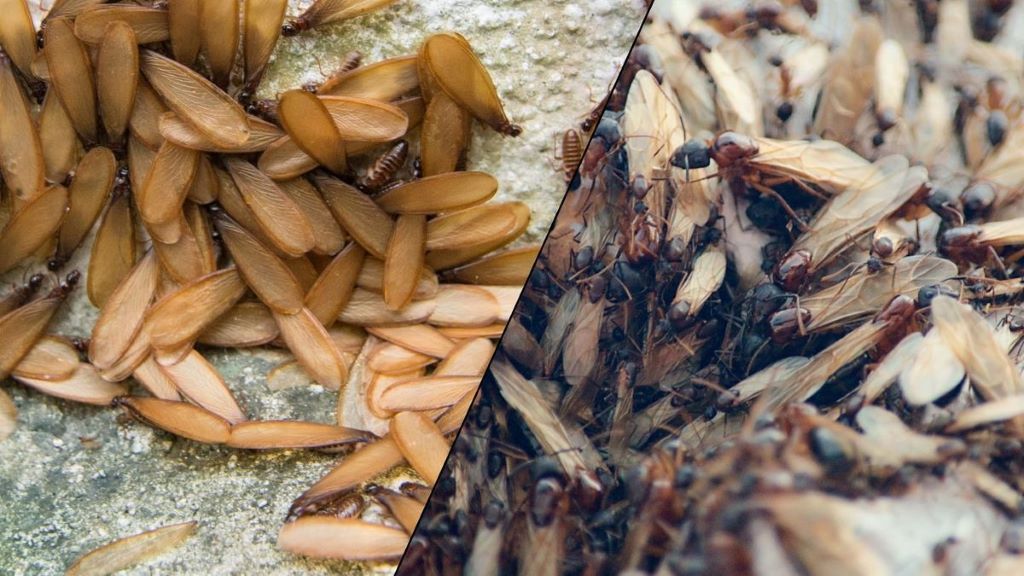
The most noticeable difference lies in their antennae. Flying ants have elbowed antennae, while termites possess straight ones. Additionally, the body of a termite is more uniform, without the narrow “pinched” waist seen in flying ants.
Wings
When viewed closely, the wings of these insects provide a clear distinction. Flying ants’ forewings are larger than their hind wings, whereas termites’ wings are of equal size. If you are wondering, what termites look like to the human eye, subtle differences in body shape and wing proportion are the first indicators.
Color
Flying ants often display darker, reddish-brown hues, while termites are lighter, ranging from pale beige to white.
Behavioral Contrasts
Swarming Behavior
Both flying ants and termites swarm, but for different purposes. Flying ants take part in nuptial flights to mate and establish new colonies. In contrast, termite swarms are triggered when mature colonies produce reproductive alates in search of new nesting grounds.
Nesting Habits
- Flying Ants: Build their nests in diverse locations, including soil, decayed wood, or urban settings.
- Termites: Construct massive colonies underground or within wood, often compromising the structural integrity of buildings.
Diet
Termites consume cellulose, making them highly destructive to wooden structures. Flying ants, on the other hand, do not feed on wood; instead, they rely on a variety of organic material, including insects, nectar, and food crumbs.
Damage Potential
Flying Ants’ Impact
Although carpenter ants can weaken wood structures over time, most flying ants do not cause significant damage. Their presence indoors often indicates nearby colonies but rarely results in immediate structural concerns.
Termite Destruction
Termites are notorious for their ability to cause billions of dollars in damage annually. According to the National Pest Management Association, termites affect over 600,000 homes in the U.S. each year. Their relentless appetite for cellulose makes early detection critical.
How to Identify an Infestation
Signs of Flying Ants
- Presence of discarded wings near windows or doors.
- Sightings of winged ants indoors during mating season.
- Trails of ants leading to food or water sources.
Signs of Termites
- Hollow-sounding wood when tapped.
- Mud tubes along walls or foundations.
- Frass (termite droppings) near wooden areas.
- Swarming alates near light sources.
Prevention and Control
Preventing Flying Ants
- Seal cracks and crevices in walls and foundations.
- Remove potential nesting materials like decaying wood.
- Keep food sources stored securely.
Termite Prevention
- Regularly inspect and treat wooden structures.
- Maintain proper ventilation to reduce moisture.
- Use termite-resistant materials for construction.
How to Use Wind Waker Randomizer Tracker: Master the Art of Randomized Adventures
Professional Treatment Options
Flying Ant Removal
While DIY methods like bait traps and insecticides can manage small infestations, professional pest control ensures the complete eradication of colonies.
Termite Management
Termite control often requires more advanced techniques, including fumigation, soil treatment, and bait systems. Professionals use specific tools to detect and eliminate termites deep within structures.
Ecological Importance
Despite their challenges, both flying ants and termites play vital roles in ecosystems. Flying ants help control other insect populations and contribute to soil aeration. Termites, meanwhile, recycle organic material and enrich soil with nutrients.
You Might Enjoy: Styling Look with Rose Gold Tragus Jewelry: Tips to Shine Effortlessly
Conclusion
Understanding the differences between flying ants vs termites is essential for effective pest management. From physical distinctions like antennae and wings to behavioral traits such as nesting and feeding, these insects are worlds apart. Whether you’re a homeowner dealing with an infestation or simply curious, recognizing the unique characteristics of these pests empowers you to take action