

07 May Fin Placement Guide for Better Surf Control
Fin placement directly affects how a surfboard turns, holds speed, grips the wave face, and responds under pressure. Small adjustments in fin positioning can make a board feel faster, looser, more stable, or more responsive. Many surfers struggle with inconsistent control not because of poor technique, but because their fin setup is working against the wave conditions and board design.
What Is Fin Placement on a Surfboard?
Fin placement refers to the positioning of surfboard fins relative to the tail, rails, and stringer of the board. It influences drive, pivot, hold, release, and overall surf control.
Surfboard fins act like the steering and traction system of the board. The location, angle, and spacing of the fins determine how water flows underneath the board during turns and trimming. Even moving a fin forward or backward by a few millimeters can noticeably change performance.
Modern surfboard tuning combines:
- Fin placement
- Fin templates
- Fin cant and toe
- Board rocker
- Tail shape
- Wave conditions
Professional surfers constantly adjust fin setups depending on wave size, speed, and surfing style. Recreational surfers can benefit from the same approach.
Why Does Fin Placement Matter for Surf Control?
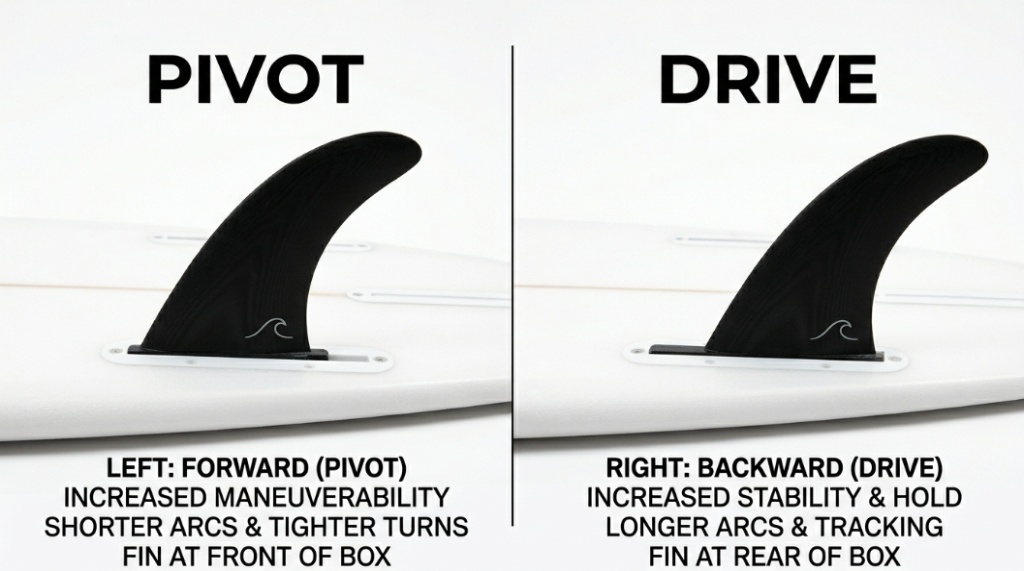
Fin placement matters because it controls the balance between stability, speed, maneuverability, and hold during surfing.
Incorrect placement can make a surfboard feel stiff, unstable, slow, or unpredictable. Proper fin positioning helps surfers generate speed efficiently and maintain rail control through turns.
Here’s how fin position changes board behavior:
| Fin Position | Effect on Surfing |
|---|---|
| Fins moved forward | Looser feel, tighter turns, faster pivot |
| Fins moved backward | More drive, stability, and hold |
| Wider fin spacing | Increased control and projection |
| Narrow fin spacing | Quicker rail-to-rail transitions |
| More cant angle | Better responsiveness in turns |
| Less cant angle | More speed down the line |
According to surfboard manufacturers and competitive surf coaches, fin tuning is one of the fastest ways to improve board feel without buying a new board.
How Does Fin Placement Affect Speed and Drive?
Fins positioned farther back generally increase drive and speed by improving water hold and projection through turns.
Drive comes from resistance against water flow. When fins sit closer to the tail, the board tracks more efficiently and creates stronger projection down the line.
This setup works especially well for:
- Power surfing
- Steep waves
- Fast point breaks
- Larger surf conditions
However, too much rear placement can make a board feel stiff. Surfers may struggle with quick direction changes or snaps in smaller waves.
Forward fin placement reduces drag and increases maneuverability. This is preferred in:
- Small beach breaks
- Weak waves
- Aerial surfing
- High-performance shortboarding
The ideal setup depends on balancing speed with responsiveness.
What Are Fin Templates in Surfboard Tuning?
Fin templates are the shape profiles of surfboard fins that influence turning style, control, release, and speed generation.
Different fin templates create different surfing sensations. Template design affects how water releases off the fin during turns.
What Are the Main Types of Fin Templates?
The most common fin templates are upright, rake, pivot, and hybrid designs.
| Fin Template | Characteristics | Best For |
|---|---|---|
| Upright | Tight turns and quick release | Small waves and vertical surfing |
| Raked | Long drawn-out turns and hold | Powerful waves |
| Pivot | Stable turning from center point | Longboards |
| Hybrid | Balanced control and maneuverability | All-around performance |
Many surfers incorrectly blame their board when the real issue is mismatched fin templates.
How Do Fin Templates Affect Turning?
More rake increases hold and carving ability, while upright templates create sharper and faster turns.
Raked fins store energy through longer arcs. Upright fins release energy quickly, making them ideal for progressive surfing.
A surfer riding punchy beach breaks may prefer upright fins, while point break surfers often use raked templates for smooth carving lines.
How Does a Thruster Fin Setup Change Surf Control?
A thruster setup provides balanced control, drive, and maneuverability by using three similarly sized fins.
The thruster is the most widely used fin configuration in modern surfing. Developed by Simon Anderson in the early 1980s, it transformed competitive surfing by combining stability with turning freedom.
Benefits of thruster fin placement include:
- Strong rail control
- Reliable hold in steep waves
- Predictable turning response
- Balanced speed generation
The center fin creates drag but adds stability. Side fins generate speed and turning power.
Small adjustments to the rear fin position can dramatically alter performance.
Should the Center Fin Be Moved Forward or Back?
Moving the center fin forward loosens the board, while moving it backward increases hold and control.
This is one of the simplest forms of surfboard tuning. Many surfers ignore adjustable fin boxes, but they offer significant customization.
General tuning rules:
- Forward center fin = looser board
- Rearward center fin = more stability
- Smaller center fin = faster release
- Larger center fin = more control
What Is the Best Quad Fin Placement?
Quad fin setups place four fins closer to the rails, increasing speed and hold while reducing drag from a center fin.
Quad setups excel in fast waves because they generate exceptional down-the-line speed.
Compared to thrusters, quads often feel:
- Faster
- Looser during rail transitions
- More responsive in barrels
- Less pivot-oriented
Why Do Quads Feel Faster?
Quads feel faster because they eliminate center-fin drag and create cleaner water flow through the tail.
Rear quad fins channel water efficiently between the fins, increasing acceleration. This setup works especially well on fish surfboards and hybrid performance boards.
However, some surfers find quads harder to control during sharp top turns.
How Does Twin Fin Placement Affect Surfboard Feel?
Twin fin setups create speed and freedom by reducing drag and increasing release through turns.
Twin fins became popular again due to retro fish designs and modern progressive twin templates.
Compared to thrusters, twin fins feel:
- Faster in weak waves
- Looser on the tail
- More skate-like
- Less stable in steep surf
Where Should Twin Fins Be Positioned?
Twin fins are usually placed farther forward and closer to the rails to maximize speed and responsiveness.
This placement allows quick acceleration and smooth rail transitions. Modern twin setups often add a small stabilizer trailer fin for extra control.
Can Fin Placement Improve Small Wave Surfing?
Yes. Moving fins slightly forward and using smaller or more upright templates can improve speed and maneuverability in weak surf.
Small waves lack natural power. Surfboard tuning helps compensate by reducing drag and increasing responsiveness.
Recommended small-wave fin adjustments include:
- Smaller center fin
- Upright templates
- Forward fin placement
- Quad or twin setups
These changes help surfers generate speed without relying entirely on wave energy.
What Fin Placement Works Best for Big Waves?
Big-wave surfing usually benefits from fins positioned farther back with larger templates for increased hold and stability.
Powerful surf creates more water pressure across the board. Stable fin positioning prevents sliding and improves confidence during critical turns.
Big-wave surfers often prefer:
- Raked templates
- Larger fins
- Thruster setups
- Rearward center fin positioning
Control becomes more important than looseness in heavy surf.
How Do Fin Size and Placement Work Together?
Fin size and fin placement interact to determine overall board feel and responsiveness.
Larger fins create more hold and drive, while smaller fins loosen the board and reduce drag.
Here’s a simple breakdown:
| Setup | Result |
|---|---|
| Large fins + rear placement | Maximum control and projection |
| Small fins + forward placement | Loose and playful surfing |
| Medium fins + neutral placement | Balanced all-around performance |
Body weight also matters. Heavier surfers usually need larger fins for sufficient hold.
What Is Surfboard Tuning?
Surfboard tuning is the process of adjusting fins and setup variables to optimize performance for conditions and riding style.
Many surfers buy new boards when they could improve performance simply by tuning their existing setup.
Surfboard tuning includes:
- Changing fin templates
- Adjusting fin placement
- Experimenting with fin size
- Switching between thruster, quad, or twin setups
- Matching setups to wave conditions
How Often Should Surfers Change Fin Setups?
Surfers should adjust fin setups whenever wave conditions, board types, or surfing goals change significantly.
Professional surfers regularly switch fins depending on:
- Wave size
- Wave shape
- Board dimensions
- Competition strategy
- Water speed
Even recreational surfers can notice immediate differences from small tuning adjustments.
What Are Common Fin Placement Mistakes?
The most common fin placement mistakes include using the wrong fin template, ignoring wave conditions, and failing to experiment with positioning.
Many surfers use the same fin setup year-round despite changing surf conditions.
Which Fin Setup Mistakes Hurt Performance?
Incorrect fin combinations can reduce speed, weaken control, and create inconsistent turning response.
- Using oversized fins in weak waves
- Running quads in mushy conditions without enough rail engagement
- Placing fins too far back in small surf
- Using upright fins in heavy hollow waves
- Ignoring rider weight recommendations
Testing multiple setups is essential for understanding surfboard behavior.
How Can Beginners Choose the Right Fin Placement?
Beginners should prioritize stability and predictable control before experimenting with loose performance setups.
A balanced thruster setup with medium-sized fins is usually the safest starting point.
Beginner-friendly recommendations:
- Medium template fins
- Neutral center-fin positioning
- Thruster configuration
- Avoid extremely upright or oversized fins
As skill improves, surfers can fine-tune setups based on personal style.
What Do Professional Surfers Use for Fin Placement?
Professional surfers constantly adjust fin placement based on wave conditions, board design, and performance goals.
Elite surfers rarely use one permanent setup. Even slight changes can improve:
- Tube riding control
- Aerial performance
- Rail transitions
- Bottom-turn projection
- Release off the lip
Modern surf coaching increasingly emphasizes fin experimentation because equipment tuning directly impacts progression.
Conclusion
Fin placement is one of the most overlooked elements of surf performance. Yet small adjustments can dramatically improve control, speed, responsiveness, and confidence in the water.
Understanding how fin templates, fin size, and positioning interact allows surfers to tune their boards for specific wave conditions and riding styles. Forward fin placement creates looseness and quick turning. Rearward placement increases hold and drive. Thrusters offer balanced control, quads maximize speed, and twins deliver freedom and flow.
Instead of immediately buying a new surfboard, experiment with surfboard tuning first. Test different fin templates. Shift the center fin position. Match setups to wave quality. Many surfers discover their board performs completely differently with the right configuration.
The best surfers constantly fine-tune equipment because surf control depends on precision. The same approach can help everyday surfers improve speed generation, consistency, and overall wave performance.
If you want better surfing without replacing your board, start with your fins.
FAQ About Fin Placement and Surfboard Tuning
Does moving fins forward make a surfboard faster?
Moving fins forward usually makes a surfboard looser and easier to turn, but it may slightly reduce drive and hold. In small waves, this can feel faster because the board becomes more responsive.
What fin setup is best for beginners?
A medium-sized thruster setup is generally best for beginners because it provides balanced control, stability, and predictable turning response.
Are quad fins better than thrusters?
Quad fins are faster and generate excellent down-the-line speed, while thrusters provide more pivot control and stability in critical turns. The better setup depends on wave conditions and surfing style.
How do I know if my fins are too big?
If your board feels stiff, slow to turn, or difficult to release through maneuvers, your fins may be too large for your weight, wave conditions, or surfing style.
What fin template works best for carving?
Raked fin templates work best for carving because they hold through long drawn-out turns and maintain drive on the wave face.
Should small-wave boards use different fin placement?
Yes. Small-wave boards often benefit from slightly forward fin placement and more upright templates to increase speed generation and maneuverability.
Can changing fins really improve surfing?
Yes. Fin adjustments can significantly affect speed, control, release, and responsiveness. Many surfers improve board performance more through tuning than by buying new boards.
📌 Related Reads
Discover: How to Find an Affordable 3D Printer Under $300 That Prints Fast
Explore: Balcony Plunge Pool Backyard Spa Tips to Create Your Perfect Outdoor Sanctuary