
07 Dec Dark Funnel Influencer ROI Decoding
The modern marketing landscape has shifted dramatically. Brands now invest heavily in influencer partnerships, yet many struggle to measure true returns. The dark funnel represents those hidden touchpoints where potential customers interact with your brand before converting. Understanding this invisible journey is crucial for accurate ROI measurement. Companies like Cakra Studio specialize in helping businesses navigate these complex attribution challenges through advanced tracking methodologies.
Traditional metrics often miss the bigger picture. A customer might discover your product through an influencer’s Instagram story, research it later through Google, and finally purchase after seeing a Facebook ad. This multi-touch journey creates measurement blind spots. However, decoding dark funnel activities reveals the true impact of influencer collaborations. Marketing teams need sophisticated approaches to connect these scattered data points.
The challenge intensifies as consumers use multiple devices and platforms. Therefore, brands must adopt comprehensive tracking strategies. The best ways to track influencer ROI involve combining various attribution models, using unique tracking codes, and leveraging advanced analytics platforms. These methods illuminate previously invisible conversion paths.
Understanding the Dark Funnel Phenomenon
The dark funnel describes customer interactions that traditional analytics cannot capture. Social media shares, private messaging, word-of-mouth recommendations, and offline conversations all contribute to purchase decisions. These activities leave minimal digital footprints. Consequently, marketers often undervalue influencer campaigns that generate substantial dark funnel activity.
Research shows that up to 70% of the buyer’s journey happens in these hidden channels. Customers browse content anonymously, discuss products in private groups, and research extensively before engaging directly with brands. This behavior creates attribution gaps that make influencer ROI appear lower than reality. Recognizing these patterns helps marketers adjust their measurement frameworks accordingly.
Key Metrics Beyond Vanity Numbers
Likes and follower counts tell incomplete stories. Smart marketers dig deeper into engagement quality, audience sentiment, and conversion indicators. Additionally, tracking branded search volume increases after influencer campaigns reveals dark funnel impact. When people search specifically for your brand following an influencer post, it signals genuine interest.
Website traffic patterns provide valuable insights too. Monitor direct traffic spikes, time spent on site, and pages visited per session. These metrics indicate how effectively influencer content drives qualified visitors. Furthermore, analyzing the content pieces that attract the most engagement helps identify which influencer partnerships deliver real value.
Attribution Models That Capture Hidden Value
Single-touch attribution models fail in complex buyer journeys. Multi-touch attribution distributes credit across all touchpoints, revealing influencer contributions throughout the funnel. First-touch models show which influencers excel at awareness building. Last-touch models highlight conversion drivers. However, data-driven attribution uses machine learning to assign proportional credit based on actual impact.
Time decay models recognize that recent touchpoints often matter more. Linear models distribute credit equally across all interactions. Each approach offers different perspectives on influencer effectiveness. Therefore, combining multiple models provides the most comprehensive view of ROI.
Implementing Advanced Tracking Techniques
Unique promo codes remain effective for direct attribution. Each influencer receives a custom code, making conversions immediately trackable. UTM parameters in links provide granular campaign data. These tags identify traffic sources, campaign names, and specific content pieces that drive results.
Pixel tracking offers another powerful solution. Installing tracking pixels on your website monitors visitor behavior after they click influencer content. This technology reveals which influencers send high-quality traffic that explores multiple pages and returns repeatedly. Additionally, conversion pixels track specific actions like purchases, signups, or downloads.
According to Forbes, brands using comprehensive tracking systems see 30% better ROI measurement accuracy. This improved visibility enables smarter budget allocation and partnership decisions.
Leveraging Survey and Feedback Data
Direct customer feedback fills attribution gaps that technology cannot. Post-purchase surveys asking “How did you hear about us?” capture dark funnel influences. Many customers cite influencer content they encountered weeks earlier. This qualitative data complements quantitative analytics beautifully.
Brand lift studies measure awareness, consideration, and purchase intent changes following influencer campaigns. These surveys compare exposed and unexposed audiences, isolating influencer impact. Furthermore, social listening tools monitor brand mentions across platforms, revealing organic conversations sparked by influencer content.

Platform-Specific Tracking Strategies
Each social platform requires tailored tracking approaches. Instagram Stories present unique challenges since they disappear after 24 hours. Link stickers with UTM parameters and swipe-up analytics provide measurable data. TikTok’s Creator Marketplace offers built-in analytics for brand partnerships. YouTube provides detailed watch time metrics and traffic source reports.
LinkedIn campaigns targeting B2B audiences need different measurement frameworks. Track content downloads, webinar signups, and lead quality rather than just clicks. Meanwhile, Twitter campaigns benefit from hashtag tracking and retweet analysis. Understanding platform-specific behaviors improves measurement accuracy significantly.
Building a Comprehensive Dashboard
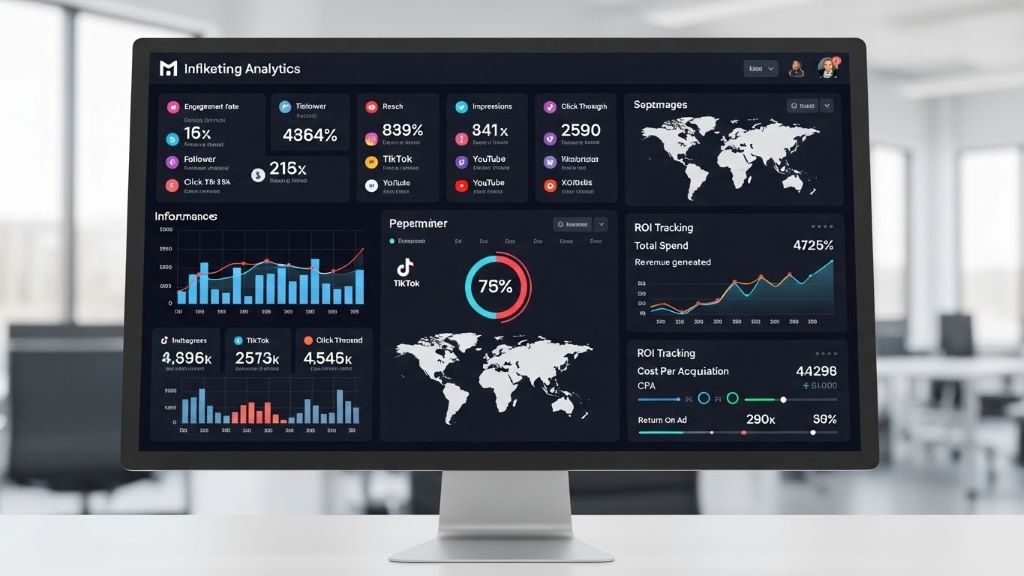
Centralized reporting brings clarity to scattered data. Marketing dashboards should integrate data from social platforms, website analytics, CRM systems, and sales records. This holistic view connects influencer activities to actual business outcomes. Visualizing the complete customer journey highlights influencer touchpoints that might otherwise go unnoticed.
Real-time dashboards enable quick campaign adjustments. When certain influencer content underperforms, marketers can shift strategies immediately. Conversely, identifying high-performing partnerships allows for strategic amplification. Automated reporting saves time while ensuring consistent monitoring.
Calculating True Influencer ROI
The basic ROI formula divides returns by investment costs. However, influencer ROI requires broader definitions of value. Beyond immediate sales, consider lifetime customer value, brand awareness gains, and content creation costs saved. Influencers generate authentic content that brands can repurpose across channels.
Calculate cost per acquisition by dividing campaign costs by conversions attributed to influencers. Compare this metric against other marketing channels. Additionally, measure engagement rate, reach quality, and audience alignment. These factors indicate long-term partnership potential beyond single campaign returns.
Overcoming Common Measurement Challenges
Cross-device tracking remains difficult despite technological advances. Customers might discover products on mobile but purchase on desktop. Cookie restrictions and privacy regulations further complicate tracking. Therefore, probabilistic matching techniques and first-party data collection become increasingly important.
Long sales cycles in B2B and high-consideration purchases create attribution difficulties. Influencer content might influence decisions months before conversion. Implementing extended attribution windows captures these delayed impacts. Furthermore, integrating CRM data with marketing analytics connects initial touchpoints to eventual sales.
Future-Proofing Your Measurement Strategy
Privacy-first tracking solutions will dominate the future landscape. First-party data collection through email signups, loyalty programs, and direct customer relationships provides sustainable alternatives to third-party cookies. Contextual advertising and aggregated measurement preserve privacy while delivering insights.
Artificial intelligence and machine learning improve attribution accuracy continuously. These technologies identify patterns humans might miss, connecting distant touchpoints across complex journeys. Predictive analytics forecast which influencer partnerships will deliver strongest returns. Staying current with technological advances ensures measurement strategies remain effective.
Conclusion
Decoding dark funnel influencer ROI requires sophisticated approaches beyond traditional metrics. Brands must implement multi-touch attribution, leverage advanced tracking technologies, and integrate diverse data sources. Understanding hidden customer journeys reveals the true value of influencer partnerships. While measurement challenges exist, combining quantitative analytics with qualitative feedback provides comprehensive insights. As privacy regulations evolve, first-party data and AI-driven attribution become increasingly vital. Marketers who master these techniques gain competitive advantages, optimizing budgets and building profitable long-term influencer relationships. The investment in proper measurement infrastructure pays dividends through improved decision-making and maximized campaign effectiveness.
Frequently Asked Questions
What is the dark funnel in influencer marketing?
The dark funnel refers to customer interactions and touchpoints that occur outside traditional tracking systems, including private messages, word-of-mouth recommendations, anonymous browsing, and offline conversations that influence purchasing decisions but leave minimal digital traces.
How can I measure influencer ROI without direct conversion tracking?
Measure influencer ROI through branded search volume increases, website traffic quality metrics, customer surveys, brand lift studies, social listening data, and engagement quality indicators that reveal indirect influence on purchase decisions beyond immediate conversions.
What attribution model works best for influencer campaigns?
Multi-touch attribution models work best because they distribute credit across all customer touchpoints rather than assigning value to a single interaction. Data-driven attribution using machine learning provides the most accurate assessment of influencer contributions throughout the buyer journey.
How long should I track influencer campaign results?
Track influencer campaigns for at least 30-90 days depending on your sales cycle length. High-consideration purchases and B2B sales require extended tracking windows of 6-12 months to capture delayed conversions influenced by early influencer touchpoints.
What tools help track dark funnel influencer activities?
Tools include UTM parameters, tracking pixels, survey platforms, social listening software, multi-touch attribution platforms, CRM integration systems, branded search monitoring tools, and marketing analytics dashboards that consolidate data from multiple sources into unified reports.
Related Topics:
How to Master Seiko 5 Rotor Noise Troubleshooting with Advanced Techniques
How to Connect Your Smith Helmet Bluetooth System: A Step-by-Step Guide