

11 Jul How to Get Control with Top Wedges in CO
You step onto a Colorado course, the thin air doing strange things to your ball flight. You face a 95-yard approach shot and the green is firm. Your standard pitching wedge flies 125 yards, so you choke down and try to take something off it. The result? A thin, skittering shot that rolls through the back fringe. Sound familiar? The struggle for short-game precision in the Rocky Mountain altitude is real. You need to control golf wedges in Colorado effectively by understanding loft dynamics, turf interaction, and swing adjustments specific to high elevations. This guide delivers the exact strategies to dial in your wedge game for better scoring.
Why Is Wedge Control Different at Colorado Altitude?
The physics change when you play golf above 5,000 feet. Thinner air reduces drag by roughly 10% per 5,000 feet of elevation gain, meaning the ball flies further and checks up less on the greens. Standard wedge techniques from sea-level courses often fail in Colorado.
The Physics of Thin Air
At mile-high elevation, the air density is about 82% of sea level. This impacts two things: distance and spin. Your wedge shots will travel approximately 10% further laterally, but the spin rate drops because the ball encounters less resistance to stop its rotation. A shot that normally flies 100 yards might fly 110 yards with the same swing.
Turf and Firmness Factors
Colorado courses typically feature bentgrass or fescue on fairways and approaches. These surfaces tend to be firmer and less forgiving than the wet, soft turf common in coastal regions. You cannot rely on the ball “sucking back” as easily. Understanding the interaction between your wedge sole and the ground becomes critical for consistent contact.
Altitude Adjustment Fallacy
Many golfers simply club down one or two irons for full shots. This fails for wedges because they require precise distance gapping. You must adjust your wedge lofts or carry distances systematically, not just guess a shorter club. A 56-degree wedge at sea level might behave like a 52-degree wedge in Denver if you do not alter your mechanics or equipment.
What Wedge Lofts Work Best for Colorado Conditions?
Ideally, you want a steeper effective loft at impact to generate sufficient spin and control in thin air. A traditional 60-degree lob wedge can feel unreliable from tight lies in Colorado, while a 58-degree wedge with more bounce provides better consistency.
Loft Gapping Strategy
Carry at least three wedges after your pitching wedge. The ideal spread is a gap wedge (50-52 degrees), a sand wedge (54-56 degrees), and a lob wedge (58-60 degrees). However, in Colorado, many skilled players prefer a 48-degree gap wedge, a 52-degree sand wedge, and a 56-degree lob wedge. This flatter setup helps control trajectory and prevents the ball from ballooning into the thin air.
Bounce Angle Selection
Bounce is your friend on firm Colorado turf. A 10-14 degree bounce on your sand wedge prevents the leading edge from digging into tight lies common on high-elevation courses. High bounce wedges (12-16 degrees) for your lob wedge help you execute open-face shots without the heel digging.
Grind Options for Firm Turf
C-grind or M-grind wedges allow you to open the face without the leading edge bouncing off the turf. This is vital for flop shots around Colorado greens that are often surrounded by tight, hard ground. Avoid full sole wedges if you like to manipulate the face angle.
How to Adjust Your Wedge Swing for Thin Air
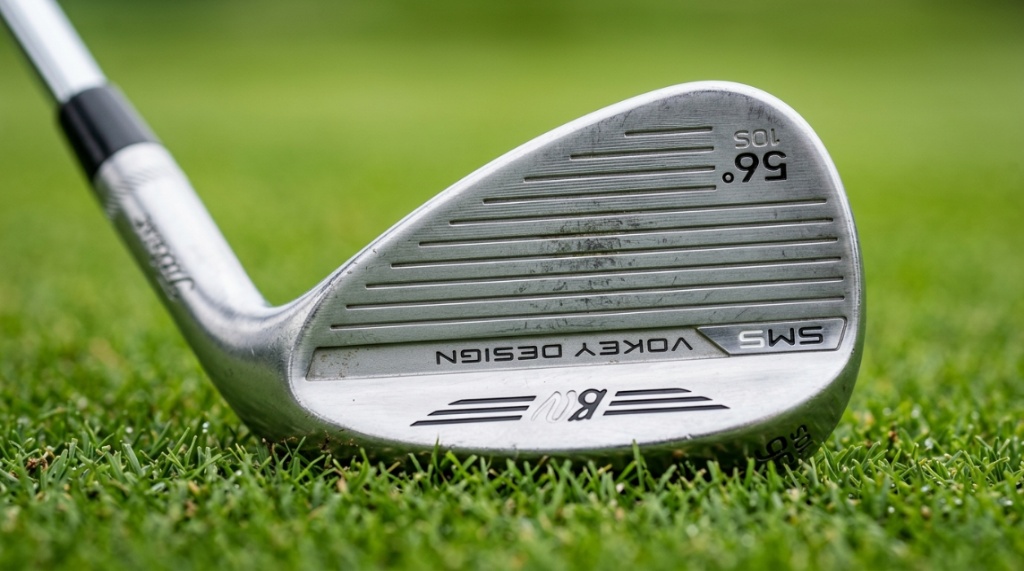
To control your wedges in Colorado, reduce your swing length and focus on accelerating through the ball. A half-swing with a 56-degree wedge in sea level plays like a three-quarter swing at altitude. You must recalibrate your feel for distance and trajectory.
The “105 Percent” Rule for Full Wedges
Take your normal sea-level wedge distance and multiply by 0.9 for a starting point. If your 54-degree wedge goes 95 yards at sea level, expect about 104 yards in Colorado. You cannot simply grip down or swing easier. Instead, practice using a 3/4 swing with your sand wedge for specific yardages.
Controlling Spin and Trajectory
To generate sufficient backspin, you need a clean, slightly descending strike. Hitting the ball first with a shallow angle of attack produces less spin, which combined with thin air, leads to balls rolling out uncontrollably. Focus on a steeper angle of attack with your wedges, using your body rotation to maintain speed through impact.
The Low-Punch Shot Technique
This is the most valuable wedge shot for Colorado. Set the ball back in your stance, hands forward, and make a compact swing. The ball stays low and runs out predictably. This shot neutralizes the altitude effect because you are not relying on backspin to stop the ball; you are using a controlled trajectory.
Which Wedge Grind Is Best for Colorado’s Tight Lies?
A low-bounce, heel-and-toe relief grind is the best choice for most Colorado fairways and approaches. This design prevents the leading edge from catching on firm ground and allows you to open the face reliably for high, soft shots.
Full-Sole Wedge Limitations
Full-sole wedges (like those found on many game-improvement sets) tend to bounce off tight, hard Colorado turf. You either thin the shot or blade it across the green. These wedges work fine in soft, fluffy conditions but are difficult to control on firm ground.
Bounce and Grind Combinations for Colorado
| Wedge Type | Bounce Range | Grind | Best Use in Colorado |
|---|---|---|---|
| Gap Wedge (50-52°) | 8-12° | Standard | Full shots, bump-and-run |
| Sand Wedge (54-56°) | 10-14° | C-Grind or M-Grind | Green-side bunkers, tight lies |
| Lob Wedge (58-60°) | 6-10° | Heel Relief | High flops, short-sided shots |
How to Practice Wedge Control on Colorado Courses
The driving range at sea-level altitude will mislead you. You need to practice on an actual Colorado course with real turf conditions. Without on-course practice, your distance control will be off by 5-10 yards per shot.
Indoor Simulators vs. On-Course Practice
Indoor simulators that do not adjust for altitude will give you flawed data. If you practice indoors, verify the system uses a “thin air” setting that accounts for reduced drag. Otherwise, hit the practice green and short-game area at your local Colorado course for accurate feedback.
The Distance Ladder Drill
Use a launch monitor or GPS to hit 10 balls each at 30, 50, 70, and 90 yards. Log your actual carry distances at your home course elevation. Do this for each wedge. This builds a personalized distance chart specific to your altitude, not a generic one from a golf magazine.
Practicing the “Dead Hands” Shot
For partial wedge shots in Colorado, try the “dead hands” approach: make your normal half-swing but keep your wrists firm through impact. This produces a lower, spinning shot that checks up better on firm greens. It counters the tendency for the ball to fly too far in thin air.
When Should You Use a Bump-and-Run vs. a Lob Wedge in Colorado?
In Colorado, the bump-and-run is often the smarter play. The lob wedge is high-risk because thin air reduces spin, causing the ball to roll out unpredictably. Bump-and-run shots are less affected by altitude because they stay low and rely on ground contact.
Bump-and-Run Execution
Use your 8-iron or gap wedge with a putting stroke motion. Keep the ball low and let it roll like a putt. This shot is highly predictable because the ball spends minimal time in the thin air. Practice this from 20-40 yards off the green for consistent results.
Lob Wedge Only When Necessary
Only resort to the lob wedge when you need to carry a bunker or clear a severe ridge. Even then, open the face and swing aggressively to generate sufficient spin. A half-hearted lob wedge in Colorado usually results in a shot that flies too far and rolls out over the green.
Can Wedge Technology Help Overcome Altitude Issues?
Yes, modern wedge designs with higher spin rates and better groove technology help counteract the spin reduction caused by thin air. Forged wedges with aggressive grooves and a milled face provide significantly more friction at impact.
Groove Volume and Sharpness
Wedges with deeper, sharper grooves (like the Cleveland RTX series or Titleist Vokey SM10) maximize spin. In Colorado, you need every RPM you can get. Consider replacing your wedges every 1-2 seasons because grooves wear down faster when you practice on rocky or sandy Colorado turf.
Material and Face Texture
Raw or unplated wedges tend to produce more spin than chrome-plated ones at high altitude. The rougher face texture creates more friction. Some brands offer laser-etched faces or micro-grooves to enhance spin. This can add 200-400 RPM of spin, which makes a noticeable difference on firm greens.
Is a 60-Degree Wedge Worth Carrying in Colorado?
For high-handicap or mid-handicap golfers, a 60-degree wedge often does more harm than good in Colorado. The risk-reward ratio is poor because it requires precision and spin that thin air undermines. Most players are better off with a 56- or 58-degree wedge as their highest loft.
When the 60-Degree Works
Only keep a 60-degree wedge if you are a low-handicap player (5 or less) who practices extensively with it. You also need a wedge with high bounce (10-12 degrees) to prevent digging. Use it exclusively for green-side shots that require a steep angle of descent.
Alternatives to the 60-Degree
Replace the 60-degree with a 58-degree wedge that has moderate bounce. This gives you the ability to hit high shots without the extreme fliers that 60-degree wedges produce in thin air. Practice a 3/4 swing with your 58-degree for shots inside 70 yards.
How to Choose the Right Golf Wedge for Colorado Courses
Select wedges that offer forgiving sole designs, moderate to high bounce, and aggressive groove technology. Avoid wedges with low bounce and sharp leading edges unless you play on very soft ground.
Wedge Specifications Checklist
- Bounce: 10-16 degrees (for sand and lob wedges)
- Grind: Low-heel relief or C-grind
- Grooves: Sharp, deep, or laser-milled
- Finish: Raw or unplated for maximum spin
- Shaft: Lightweight steel or stiff flex to control trajectory
Where to Test Wedges in Colorado
Visit local golf retailers like PGA Tour Superstore or independent pro shops that have outdoor demo days. Testing wedges on actual Colorado turf is essential. Hitting off mats indoors will not tell you how the wedge interacts with firm ground or how much spin you actually generate,
To truly master your distance and spin control, you need to measure your data in real time. Many competitors pair their club data with Premium Golf Watches Used by Serious Players to instantly track clubhead speed, tempo, and wrist launch angles right from the fairway.
What Common Mistakes Do Golfers Make With Wedges in Colorado?
The biggest mistake is assuming your sea-level distances apply. The second is using too much wrist action in the swing, which causes inconsistent ball-striking and unpredictable spin rates.
Mistake 1: Over-Swinging for Distance
Golfers often try to “take a little off” their wedge shots by swinging easier, which flips the hands and causes fat or thin contact. Instead, use your control golf wedges Colorado strategy: choose a higher lofted wedge and take a 3/4 swing with full acceleration.
Mistake 2: Ignoring Lie Angles
The lie angle of your wedge matters enormously on sloped Colorado fairways. If your wedge is too upright, you hit it left; too flat, you hit it right. Get fitted for lie angle by a professional who understands the turf conditions in your region.
Mistake 3: Not Cleaning Grooves
Dirt or grass in your wedge grooves reduces spin by up to 30%. Given that thin air already reduces spin, you cannot afford any groove contamination. Clean your wedge face after every two shots during practice and every hole during play.
Frequently Asked Questions
What is the best wedge bounce for Colorado?
For most Colorado courses, select wedges with 10-14 degrees of bounce. This prevents the leading edge from digging into firm, tight lies and helps you make clean contact from hardpan and short grass.
Do I need a different set of wedges for high altitude?
Not necessarily a different set, but you should adjust your loft choices and bounce angles. A 60-degree lob wedge is less useful, while a 58-degree wedge with higher bounce is more versatile. Consider regapping your wedge lofts if you move to Colorado permanently.
How much further do wedges go in Colorado?
Wedge shots typically travel 8-12% further in Colorado compared to sea level. A 100-yard wedge shot at sea level will fly approximately 108-112 yards at 5,000 feet elevation. This requires you to club down or swing shorter.
Does spin matter as much in Colorado?
Spin is even more important in Colorado because thin air reduces the ball’s ability to check up. Without sufficient spin, wedge shots roll out uncontrollably. Wedges with sharp grooves and a raw finish help generate more friction.
Can I use the same wedge technique as sea level?
No. You must adjust your technique to produce lower trajectory shots and more spin. The low-punch shot and abbreviated backswing techniques are essential for reliable wedge performance in Colorado conditions.
What is the best wedge grind for tight lies?
A C-grind or M-grind with heel and toe relief is ideal. These grinds allow you to open the face and strike the ball cleanly from tight lies without the leading edge bouncing off the turf.
How often should I replace my wedges in Colorado?
Replace your wedges every 1-2 years, depending on usage. The abrasive soil and frequent practice common among Colorado golfers wear down grooves faster than in regions with softer turf. Worn grooves reduce spin significantly.
Conclusion
Getting control with top wedges in Colorado comes down to understanding that thin air alters every aspect of your short game. You must adjust your lofts, swing techniques, and practice habits specifically for high-altitude performance. Focus on using moderate to high bounce wedges, practice the low-punch shot, and develop a personalized distance chart based on your actual on-course play in Colorado. Do not underestimate the importance of clean grooves and a proper lie angle. By applying the strategies outlined here, you will transform your wedge play from a liability into a scoring weapon. Go to your local Colorado course, spend time on the practice green, and start recalibrating your wedge distances today. Your scorecard will thank you.