

07 Aug Complete Pillow Dimensions Chart: Find the Perfect Fit for Your Bed
Choosing the right pillow can transform your sleep experience, ensuring comfort and proper support for your neck and spine. At Pillow Show Case, we understand that pillow size plays a critical role in achieving restful sleep. Whether you’re outfitting a twin bed for a child or a king-sized bed for a luxurious bedroom, understanding pillow dimensions is essential. This article provides a comprehensive pillow dimensions chart to help you select the perfect fit for your bed, along with practical tips to make an informed decision.
Why Pillow Size Matters
The size of your pillow affects both comfort and bedroom aesthetics. A pillow that’s too small may leave gaps on your bed, while an oversized one can overwhelm the space or feel cumbersome. Additionally, the right pillow size supports proper spinal alignment, reducing discomfort during sleep. To make the best choice, refer to a reliable pillow dimensions chart that outlines standard sizes and their ideal uses. By matching pillow size to your bed and sleeping preferences, you can enhance both functionality and style.
Standard Pillow Sizes Explained
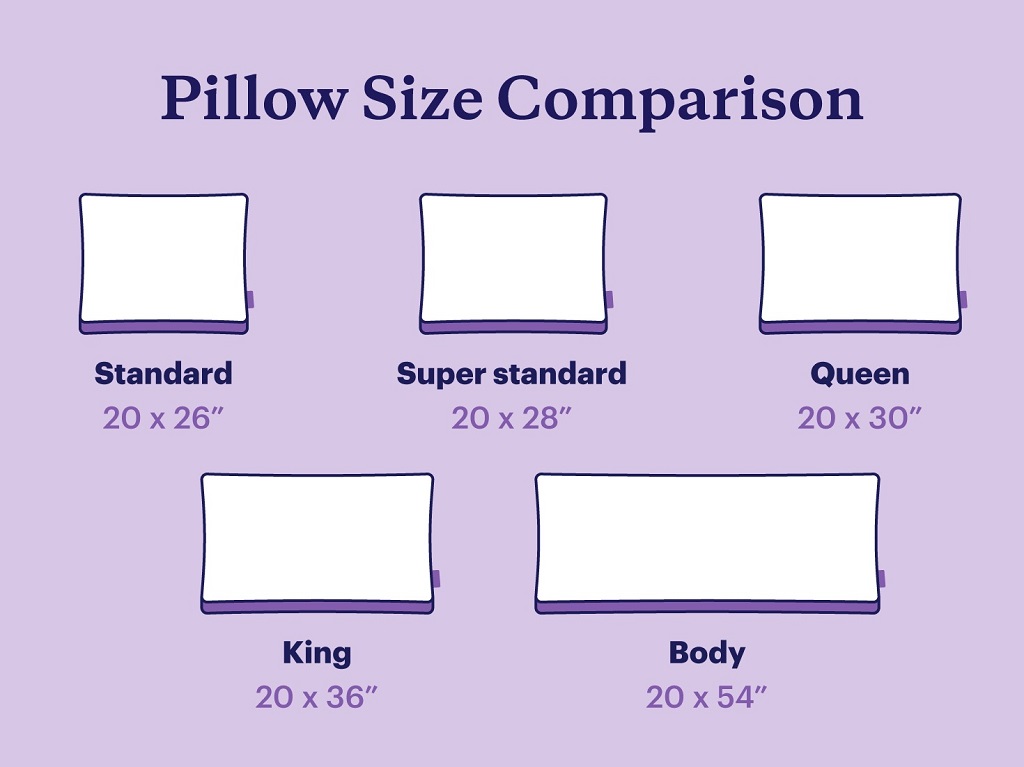
Pillows come in various standard sizes, each designed for specific bed sizes and sleeping needs. Below, we break down the most common pillow dimensions to help you navigate your options.
Standard Pillow
The standard pillow, measuring 20 x 26 inches, is the most common size used in North America. It fits perfectly on twin, full, and queen-sized beds, making it versatile for most households. This size is ideal for side, back, and stomach sleepers, offering ample surface area without taking up too much space. However, it may feel slightly small on a king-sized bed unless paired with additional pillows.
Queen Pillow
Measuring 20 x 30 inches, the queen pillow is slightly longer than the standard size. It’s a great fit for queen and king-sized beds, providing extra coverage for larger mattresses. This size works well for sleepers who move around during the night, as it offers more room to adjust. Additionally, queen pillows are often used in decorative pillow arrangements to create a fuller look.
King Pillow
King pillows, at 20 x 36 inches, are the largest standard size. They’re designed for king and California king beds, filling the width of these larger mattresses beautifully. These pillows are ideal for those who prefer extra support or enjoy propping themselves up for reading or watching TV in bed. However, they may feel too large for smaller beds like twins or fulls.
Specialty Pillow Sizes
Beyond standard sizes, specialty pillows cater to unique needs. Here are some common options:
- Euro Pillow: Square-shaped at 26 x 26 inches, often used for decorative purposes or as a backrest.
- Body Pillow: Long and narrow, typically 20 x 54 inches, ideal for side sleepers or pregnancy support.
- Travel Pillow: Compact at 12 x 16 inches, perfect for portability during trips.
- Toddler Pillow: Small, around 13 x 18 inches, designed for young children transitioning to pillows.
Each of these sizes serves a specific purpose, so consider your sleeping habits and bed size when choosing.
Pillow Dimensions Chart
To simplify your decision-making, here’s a clear pillow dimensions chart summarizing the most common sizes:
| Pillow Type | Dimensions (inches) | Best for Bed Size |
| Standard | 20 x 26 | Twin, Full, Queen |
| Queen | 20 x 30 | Queen, King |
| King | 20 x 36 | King, California King |
| Euro | 26 x 26 | Decorative, Any Bed |
| Body | 20 x 54 | Side Sleepers, Any Bed |
| Travel | 12 x 16 | Travel, Portability |
| Toddler | 13 x 18 | Toddler Beds, Cribs |
This chart helps you quickly identify which pillow size suits your bed and preferences. For example, a queen bed looks best with two queen pillows or a mix of standard and decorative pillows.
How to Choose the Right Pillow Size
Selecting the perfect pillow size depends on several factors, including bed size, sleeping position, and personal preferences. Here are some tips to guide your choice:
- Match Your Bed Size: Use standard pillows for twin or full beds, queen pillows for queen beds, and king pillows for king-sized beds to ensure proportionality.
- Consider Sleeping Position: Side sleepers may prefer larger pillows like body or king sizes for better support, while stomach sleepers might opt for smaller, flatter pillows.
- Think About Aesthetics: Decorative pillows like Euro squares add visual appeal but should complement functional pillows.
- Test for Comfort: If possible, try pillows in-store to ensure they feel right for your body.
Additionally, consider the pillow’s firmness and material, as these factors work alongside size to determine comfort. For instance, memory foam pillows may feel different than down-filled ones, even in the same size.
Pillow Arrangement Ideas for Different Bed Sizes
The way you arrange pillows can elevate your bedroom’s style while ensuring comfort. Here are some arrangement ideas based on bed size:
- Twin Bed: One standard or toddler pillow for sleeping, with one small decorative pillow for flair.
- Full Bed: Two standard pillows side by side, optionally topped with a Euro pillow for a polished look.
- Queen Bed: Two queen pillows for sleeping, paired with two Euro pillows or one body pillow for decoration.
- King Bed: Two king pillows for sleeping, supplemented with three Euro pillows or a mix of standard and decorative pillows for a luxurious setup.
These arrangements balance functionality and aesthetics, making your bed both inviting and practical.
Common Mistakes to Avoid When Choosing Pillows
When selecting pillows, it’s easy to overlook key details. Here are some common pitfalls to avoid:
- Ignoring Bed Size: Using king pillows on a twin bed can overwhelm the space, while standard pillows on a king bed may look undersized.
- Overlooking Sleeping Needs: Choosing a pillow without considering your sleeping position can lead to discomfort or poor sleep quality.
- Neglecting Pillowcases: Ensure your pillowcases match the pillow size to avoid loose or tight fits.
- Focusing Only on Aesthetics: Decorative pillows are great, but prioritize functional pillows for sleep quality.
By keeping these factors in mind, you can make a well-rounded choice that enhances both comfort and style.
Read More Also: How to Choose an Affordable Electric Surfboard Without Sacrificing Quality
Frequently Asked Questions About Pillow Sizes
Here are answers to five common questions about pillow dimensions to help you make an informed choice:
What is the standard pillow size?
The standard pillow size is 20 x 26 inches, suitable for twin, full, and queen beds.
Can I use king pillows on a queen bed?
Yes, but king pillows may look oversized. Queen pillows (20 x 30 inches) are typically a better fit.
What’s the difference between a standard and queen pillow?
A queen pillow is 4 inches longer (20 x 30 inches) than a standard pillow (20 x 26 inches), offering more coverage.
What size pillow is best for side sleepers?
Side sleepers often benefit from larger pillows, like body pillows (20 x 54 inches) or king pillows (20 x 36 inches), for better support.
How do I choose decorative pillows?
Opt for Euro pillows (26 x 26 inches) or smaller accent pillows to complement functional pillows without cluttering the bed.
Read More Also: Ted Danson Net Worth: How Much Is the Cheers Star Worth in 2025?
Conclusion
Finding the perfect pillow size is key to creating a comfortable and visually appealing bedroom. By using a pillow dimensions chart, you can easily match pillows to your bed size and sleeping needs. Whether you prefer the compact standard pillow, the spacious king pillow, or a specialty option like a body pillow, understanding dimensions ensures better sleep and style. Consider your bed size, sleeping position, and aesthetic goals when choosing, and avoid common mistakes like mismatching sizes or overlooking comfort. With the right pillows, you’ll enjoy restful nights and a beautifully made bed.