
19 Sep How to Find an RPO Code by VIN: A Complete GM RPO Code Guide
Key Takeaways
- RPO codes are three-character codes that describe every factory option on a GM vehicle.
- The complete RPO list sits on a sticker inside the car, not inside the VIN itself.
- A GM dealer or a build sheet service can pull the full RPO list using your VIN.
- Common sticker locations include the glove box, trunk lid, and spare tire cover.
- Checking codes helps you verify packages, order parts, and avoid paying for fake badges.
As the automotive specialists at https://tradecarhub.com/ frequently warn buyers, badges lie more often than you think. Last fall, I nearly paid $2,000 extra for a Silverado advertised as a Z71. The seller pointed at the fender badge with pride. However, when I opened the glove box and read the RPO codes, the story changed. The truck carried Z85, the standard heavy-duty suspension, not the real Z71 off-road package. The badge was an easy online purchase. The code told the truth.
That moment sold me on this skill. RPO codes describe exactly what GM built into a vehicle. Therefore, they settle debates that badges and ads cannot. This guide explains how to find RPO codes by VIN information, step by step. You will learn where the sticker hides, how to read the codes, and how to pull the full build sheet. You’ll also learn which seller claims deserve healthy doubt.
What Are RPO Codes?
RPO stands for Regular Production Option. GM has used this system since the 1960s to track every feature it installs at the factory. Each code is three characters long, mixing letters and numbers. One code might describe an axle ratio, while another describes paint, suspension, or an engine.
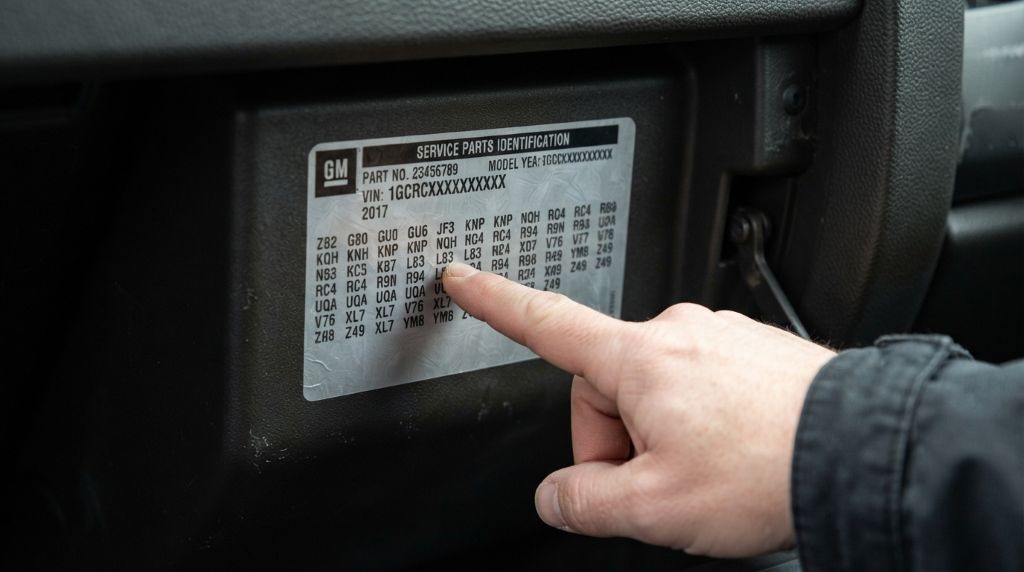
You will usually find the codes grouped on a single label called the Service Parts Identification sticker. Enthusiasts call it the SPID sticker or simply the RPO sticker. It lists hundreds of codes with short descriptions beside each one.
The scale behind this system is enormous. GM sold nearly 2.6 million vehicles in the United States in 2023, according to the company’s sales report. Every one of those trucks, cars, and SUVs carries its own unique mix of codes. Therefore, no two builds are exactly alike.
Why should buyers care? Because codes answer questions that sellers often guess at. Does this truck have the locking rear differential? Which axle ratio is inside? Was this Camaro built with the performance package or just the badge? The codes answer all three, quietly and accurately. Additionally, parts counters use them to match components to your exact build, which prevents costly ordering mistakes.
How to Find RPO Code by VIN: Start With the Facts
Here is an honest point that surprises many people. The VIN does not contain the RPO list. The VIN is a 17-character code that reveals the model year, plant, body style, and engine family. You can confirm those basics with the free NHTSA VIN decoder. However, the full option list lives somewhere else.
Therefore, finding RPO codes means taking one of two paths:
- Path one: find the SPID sticker physically inside the vehicle.
- Path two: use the VIN through a GM dealer or build sheet service.
Path one is free and takes five minutes. Path two works when the sticker is missing, faded, or damaged. Additionally, path two is essential for classic cars, where stickers aged out long ago.
Many owners combine both paths. First, they photograph the sticker and study it at home. Then, they confirm the results with a dealer build sheet. This double check takes one phone call and removes all doubt. As a result, you can negotiate or buy with facts in hand instead of promises.
Step 1: Locate the RPO Sticker in Your Vehicle
GM has never chosen one universal spot, so check several locations. Look here first:
- Inside the glove box, often on the back wall (most trucks and SUVs)
- The underside of the trunk lid (most sedans and coupes)
- The driver’s door jamb sticker area
- Under the spare tire cover in the trunk floor
- The center console lid on some models
- The compartment under the rear seat on some trucks
The glove box is the most common spot on modern Silverados, Sierras, Tahoes, and Suburbans. Trunk lids dominate on Camaros, Malibus, and older sedans. Additionally, some sports cars hide the sticker under the cargo floor, so bring a flashlight.
Once you find the label, photograph it immediately. These stickers fade badly after fifteen or twenty years of sun and heat. A clear photo preserves the data before time erases it. Also, check the sticker for damage or tampering. A sticker that looks brand new on an older car deserves questions. However, glove box doors are replaceable parts, so a fresh sticker alone is not proof of fraud. Therefore, treat the photo as step one, and confirm later with the dealer.
Step 2: Read and Decode the Codes Correctly
The sticker looks overwhelming at first, because it lists every code with its description. In fact, you do not need to memorize thousands of codes. You only need the ones that matter for your decision. Here are the codes owners ask about most:
- Z71: off-road suspension package
- G80: automatic locking rear differential
- GU6: 3.42 rear axle ratio
- GT4: 3.73 rear axle ratio
- Z82: trailering package
- L83: 5.3L V8 engine
- LS3: 6.2L V8 engine
Notice the engine codes carefully. Marketing names and RPO codes do not always match, which confuses buyers. Therefore, always match the RPO code, not the badge or the ad.
This step saved me real money. Back to my Silverado story: the sticker in that glove box listed Z85 but no Z71. Additionally, the axle code showed GU6, the standard 3.42 ratio, not the deeper gearing many Z71 trucks carried. The seller’s story fell apart in thirty seconds. I pointed at the codes, he dropped his price by $2,500, and I still walked away.
When you meet an unknown code, search a trusted RPO code list online. GM parts counters also confirm codes quickly over the phone. Therefore, never guess when one call settles it.
Step 3: Pull the Full Build Sheet Using Your VIN
When the sticker is missing, your VIN becomes the master key. Start with the simplest route: call a GM dealer’s parts department. Give them the VIN, and their system can print the complete factory build data. Most dealers handle this for free or for a small fee. Bring proof of ownership, such as the title or registration, because policies vary.
Classic car owners have stronger options as well. The National Corvette Museum offers build sheet retrieval services for Corvettes, matched to the VIN. Additionally, the GM Heritage Center maintains archives for many historic models, which helps restorers confirm original equipment.
Paid third-party lookup services also exist online. Some are legitimate, however, others sell recycled data with little care. Therefore, verify reviews before paying, and prefer official channels when possible.
A full build sheet offers three big benefits. First, it confirms rare packages that raise collector value. Second, it lists exact parts numbers, which makes restoration shopping painless. Third, it protects you from clone cars, where sellers dress up a base model as a rare edition. As a result, one phone call can defend thousands of dollars.
Why RPO Codes Matter Before You Buy
RPO codes are not trivia. They change real money outcomes in four ways.
First, they verify packages. Sellers charge premiums for Z71, Z82, or performance packages. The codes prove whether the premium is honest. My Silverado story proves how much this matters.
Second, they guide correct repairs. Axle ratios like GU6 or GT4 affect gearing, tire sizing, and speedometer accuracy. Therefore, a mechanic needs the code, not a guess, before ordering a differential or ring gear.
Third, they define towing ability. The trailering package (Z82) and locking differential (G80) change what a truck can safely pull. Additionally, insurers and lawyers may ask for this data after a towing accident.
Fourth, they set resale value. A documented, matching build always sells faster than a mystery car. Collectors pay extra for proof, and the codes are that proof.
Think of the SPID sticker as the car’s birth certificate. Therefore, photograph it, store it digitally, and request the build sheet for any GM vehicle you plan to keep. Ten minutes of effort protects years of ownership.
Common Mistakes to Avoid
Buyers and owners stumble in predictable ways. Avoid these errors:
- Trusting badges instead of codes, because badges bolt on easily
- Confusing engine RPO codes with marketing names
- Reading codes from a different model year and assuming they transfer
- Skipping the VIN check on cars with missing or damaged stickers
- Assuming every paid lookup site is accurate or current
- Forgetting to photograph the sticker before it fades
Additionally, remember that modifications can hide factory data. A swapped rear axle makes GU6 or GT4 codes useless for current gearing. Therefore, verify that major drivetrain parts still match the build sheet. When in doubt, ask a GM parts professional to confirm.
Final Thoughts
Learning how to find RPO code by VIN data takes one afternoon, and the payoff lasts for years. Start with the sticker, decode the codes that matter, and confirm everything with a dealer build sheet. If you’re also researching how modern vehicles are built and where their materials come from, this guide on 10 ethical solutions for sourcing materials in electric car batteries offers useful background. Then decide, negotiate, or walk away with facts on your side.
My Z71 story ended well because the codes spoke first. That glove box sticker said what the seller never would. The same small label is waiting in your next GM deal, so go read it before you pay.
Have you ever caught a fake package or solved a parts mystery with RPO codes? Share your story in the comments below. Additionally, share this guide with a friend who owns a GM truck or is shopping for one right now.
Frequently Asked Questions
Where is the RPO code sticker located?
Check the glove box, trunk lid underside, door jamb, or spare tire cover. Locations vary by model and year.
Can I get RPO codes from the VIN alone?
Not directly. A GM dealer or a build sheet service uses your VIN to pull the full RPO list.
What does the Z71 RPO code mean?
Z71 is GM’s off-road suspension package for trucks and SUVs. It includes specific springs, shocks, and skid protection.
Are RPO codes the same as engine codes?
No. RPO codes cover every factory option. Some codes, like LS3 or L83, simply name the engine.
Do older GM vehicles have RPO stickers?
Many models from the 1980s onward include them. For classics, use dealer archives or the National Corvette Museum.