
02 Sep Where Can You Find an Affordable Paddle Board Oregon?
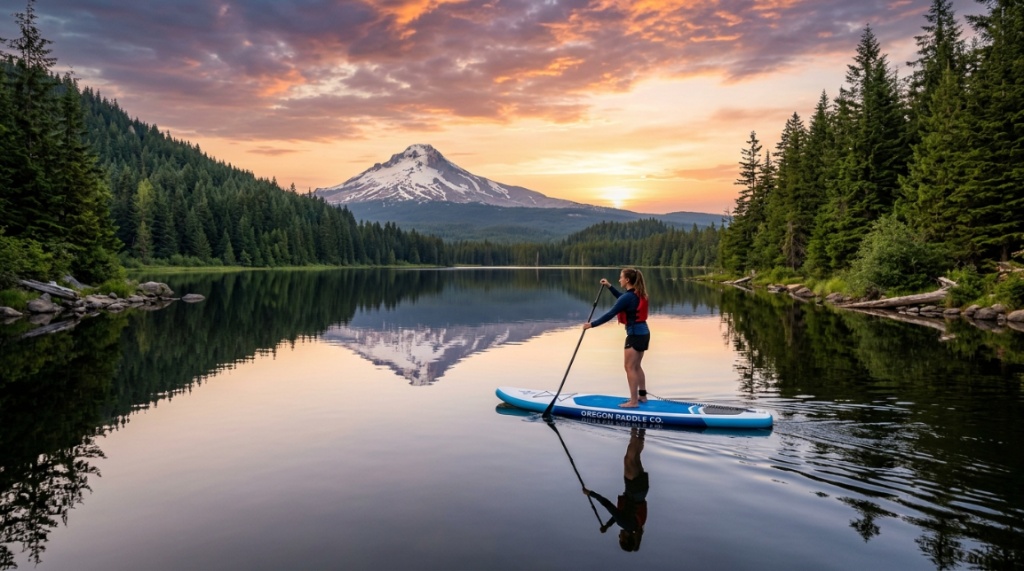
Oregon’s landscape is a paddle boarder’s dream, offering everything from the calm, mirrored surfaces of Crater Lake to the gentle currents of the Willamette River and the rugged Pacific coastline. However, for newcomers and budget-conscious enthusiasts alike, the cost of entry can be a significant hurdle. High-end boards from premium brands often carry price tags exceeding $1,200, which is a tough pill to swallow for anyone unsure if the sport is a long-term passion. The good news is that finding an affordable paddleboard in Oregon is entirely possible if you know where to look and what to sacrifice. This guide is designed to help you navigate the market, understand the difference between cheap and valuable, and secure a board that fits both your budget and your local paddling ambitions.
Key Takeaways
- Focus on inflatable paddle boards (iSUPs) for the best value, as they are generally cheaper to manufacture and ship than rigid boards.
- Prioritize board construction quality (military-grade PVC) over trendy aesthetics to avoid delamination and air leaks.
- Consider buying directly from online manufacturers to bypass the overhead costs associated with local retail shops.
- Look for “complete packages” that include a paddle, pump, and leash, as these hidden costs often push the total price up.
- Verify the durability and warranty policy before purchasing to ensure your investment survives Oregon’s rocky riverbeds and windy coastlines.
Why Inflatable Boards Are the Best Route to Affordability
When you start searching for an affordable paddle board in Oregon, you will quickly notice that inflatable paddle boards (iSUPs) dominate the lower price brackets. This isn’t a coincidence. While hard boards (epoxy or fiberglass) offer superior glide and speed, they are expensive to produce and fragile. Inflatables, on the other hand, are made from drop-stitch PVC fabric, which is less costly to source and much easier to ship due to their compact size when deflated.
This logistical advantage is passed down to the consumer. By choosing an iSUP, you save money on the board itself and avoid the need for roof racks, which are almost mandatory for transporting a hard board. For Oregon paddlers, the inflatable route is not just about saving cash; it is also practical. It allows you to deflate your board and store it in a backpack in your apartment or pack it in the trunk of your car to drive up to the gorge without needing a specialized vehicle.
What Is “Drop-Stitch” Construction, and Why Does It Matter?
To ensure your budget board lasts in Oregon’s variable conditions, you need to understand construction. The term “drop-stitch” refers to thousands of polyester threads that connect the top and bottom layers of the PVC fabric. When inflated to the recommended PSI (usually 15 PSI), these threads keep the board rigid. The density of this stitch—measured in cubic centimeters (e.g., 200 g PVC vs. 1000 g PVC)—determines the board’s stiffness and longevity.
Entry-level boards often use thinner PVC at the rails (sides), making them susceptible to impact damage. When looking for a budget option, look for boards that specifically mention “military-grade” PVC or at least double-layer side walls. This is the primary factor that separates a board that will survive a summer in Oregon from one that will develop leaks at the seams after a few uses.
The Hidden Costs: What to Look For in a “Complete” Kit
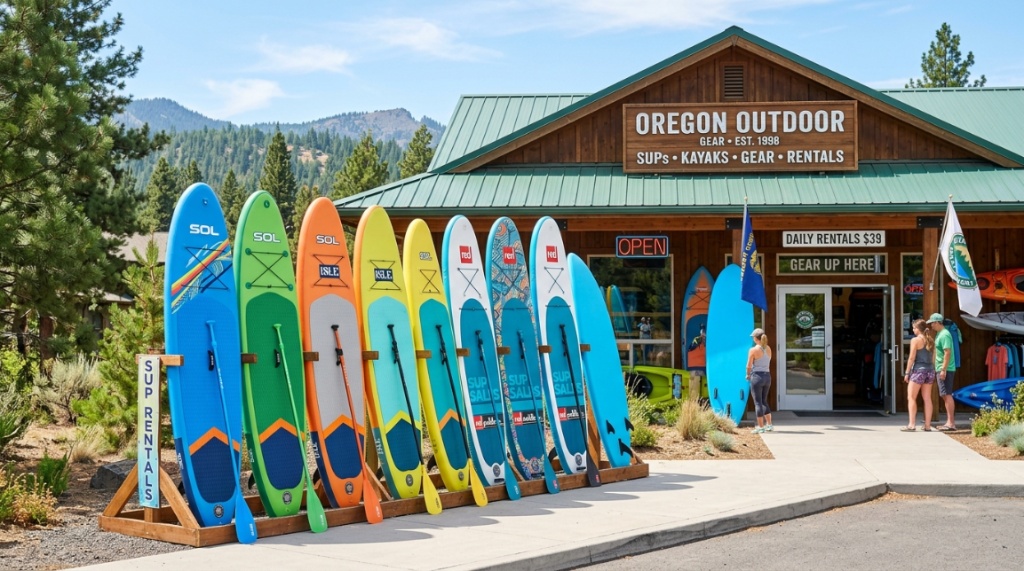
One of the most common mistakes first-time buyers make is looking solely at the price tag of the board without accounting for the accessories. Many “affordable” boards are sold as bare shells, requiring you to purchase a paddle, pump, and leash separately. When you total those items, the price advantage often disappears. Conversely, reputable budget brands offer complete packages that include the essentials.
When evaluating an affordable kit, you need to check the quality of the included accessories. Does the package include a standard coiled leash? Is the pump a dual-chamber pump that actually allows you to reach the high PSI required without exhausting yourself? Does the paddle have a nylon blade (breakable but cheap), or is it a basic aluminum shaft? A quality package might cost slightly more upfront, but it should include a three-piece travel paddle and a high-pressure pump, ensuring you don’t have to purchase items twice.
Evaluating the “Cheap” Paddle
The paddle is your direct connection to the water, yet it is often the weakest link in budget packages. Most affordable bundles include a standard aluminum shaft with a plastic blade. While functional, these can feel heavy and flex during your stroke. If you are in the $300–$400 price range, you may find packages that upgrade to a fiberglass shaft and nylon blade, which reduces fatigue significantly. If your budget package comes with a poor paddle, factor in the cost of replacing it—that is an extra $50–$80 expense you should plan for.
Local Retail Shops vs. Direct-to-Consumer Brands
In Oregon, you have two main purchasing avenues: local paddle shops (often located near rivers and lakes) and online direct-to-consumer brands. Buying local offers the advantage of seeing the board, testing its weight, and getting expert advice. However, local shops must pay for rent and staff, which often results in a 20–30% markup compared to online. You are also more likely to find rental fleets being sold at the end of the season, which can be a great source for a used affordable board.
Online direct-to-consumer brands (like FunWater, Peak, and SereneLife) offer the lowest prices because they cut out the middleman. While you cannot test these boards physically, they are often supported by generous return policies. When comparing these two options, consider the “Total Cost of Ownership.” If an online board fails after a year and has a poor warranty, the local shop’s higher price might actually be the more affordable option in the long run. For a quick comparison of specific models available online without the markups, you can check resources that review these direct-to-consumer options specifically for Oregon paddlers.
Top Locations to Buy Second-Hand Boards in Oregon
If you want significant savings, the used market is often your best bet. However, this comes with risks, especially for inflatable boards. Oregon’s UV rays can degrade PVC over time, and improper storage (like leaving it in a hot car in Eugene or Bend) can cause the glue to fail and result in delamination.
Where to Look
- Craigslist Portland: A high volume of boards because of the Willamette and Columbia rivers.
- Facebook Marketplace: Look in areas around Bend and the Deschutes River, but be aware that river paddling causes “rail rash” on hard boards.
- REI Garage Sales: Though less frequent now, these offer used boards tried by members who often return them for minor cosmetic issues.
- Local Kayak & Paddle Shops: Many shops in Portland and Hood River offer “demo” sales at the end of September when the season winds down.
When buying used, always ask for a photo of the board inflated and hold it up to the light to look for pinprick holes. For inflatables, check the air valves carefully—replacing a valve requires special glues and expertise.
Budget Ranges: What You Get at Each Price Point
The term “affordable” is relative. Prices have dropped significantly over the last few years, but it is essential to know the quality thresholds. You should avoid boards under $200, as these are swim toys and may not support the weight capacity safely or remain rigid enough to paddle efficiently. Here is a breakdown of what to expect at different budget levels.
| Price Range | What to Expect | Oregon Suitability |
|---|---|---|
| $200–$300 | Entry-level inflatable, single-layer PVC, basic accessories included. | Fine for calm lakes (Lost Lake, Wallowa Lake) on glassy days. Avoid wind and rivers. |
| $300–$500 | Better materials, including fiberglass paddles, and higher weight capacity. | Suitable for the Willamette River and Crescent Lake. Allows for light touring. |
| $500–$800 | Often features dual-layer PVC, better fin systems, and upgraded pump designs. | Handles the chop of the Columbia River Gorge better and offers greater stability. |
Why is the $300-$500 sweet spot?
In my analysis of the current market, the $300 to $500 range is where you find the “goldilocks” zone. It offers durable build quality that can handle the cooler water temperatures and abrasive sandy landings common in Oregon. In this range, you can find boards with weight capacities around 300+ lbs, ensuring you have room for a cooler of water or a dry bag without sinking the rails.
Oregon-Specific Conditions and Their Impact on Budget Boards
Oregon is not simply one paddling environment. The state demands different things from your equipment depending on where you go. A board that is perfect for the protected waters of Lake Oswego might be dangerous on the windswept waters of the Columbia River. If you are buying a budget board, you must respect these conditions.
The Columbia River Gorge: Wind and Chop
This is not beginner territory. The Gorge is famous for the “nuclear option” of afternoon winds. A lightweight budget board will be blown downwind incredibly fast. If you insist on paddling in the Gorge, you need more volume and a longer board to track against the waves. However, for an affordable board, it is generally safer to stick to the smaller, protected lakes near The Dalles or set up on the Washington side leeward of the wind, For more gear recommendations and top picks for your next trip, check out our guide on the Best Paddle Boards for Lakes.
The Central Oregon Lakes: High Altitude and Sun
At high altitudes, the UV rays are stronger. Cheap PVC glues can degrade faster here. Once you finish paddling on lakes like Sparks Lake or Elk Lake, ensure you rinse the board with fresh water. The volcanic ash and sand along these shores can act like sandpaper on the bottom of the board. While this will not affect the “affordability,” it will affect how the board looks over time.
Practical Tips for Extending the Life of Your Budget Board
To get the most value out of your purchase, you need to treat the board well. Budget boards are not indestructible tanks. Here are the best ways to avoid early failure:
- Store it out of direct sunlight: UV rays are the number one killer of inflatable SUPs. Store it in a gear closet, not on the back deck of your pickup truck.
- Invest in a repair kit: Most budget boards do not include the proper PVC glue. Buy a specific iSUP repair kit (usually $15) before you head out to avoid a stranded outing.
- Inflate to the max PSI: Lighter pressure makes the board “banana” or flex in the middle, which reduces buoyancy and increases the risk of creasing the drop-stitch threads.
- Rinse after saltwater: Even though Oregon’s ocean is cold, it is still corrosive. If you venture into the Pacific at Nye Beach or Seaside, rinse the fin and valves meticulously.
Frequently Asked Questions
Can I use a cheap paddleboard in the Pacific Ocean in Oregon?
It is not recommended unless you have prior ocean experience and strictly stay in the surf zone or bay areas. Ocean paddling involves unpredictable swells, strong rip currents, and cold water (60°F or less), which can induce shock. Budget boards are often less stiff, making them harder to maneuver through breaking waves. If the wind picks up, a lower-cost inflatable may be difficult to control, posing a safety risk.
Is a kayak paddle better than an SUP paddle for beginners?
No. A kayak paddle is used to sit down and has a blade on both ends. SUP paddles have a single blade and a T-grip. If you stand on an SUP and try to use a kayak paddle, you will be bent over and put immense strain on your back. Stick to a single-blade SUP paddle that matches your height.
How long does it take to inflate a budget paddle board?
With the high-pressure hand pump included in most budget kits, inflation to 15 PSI will take approximately 10–15 minutes of physical effort. If you paddle frequently in Oregon, consider investing in an electric air pump ($60–$100). This reduces inflation time to under 5 minutes and ensures consistent pressure, which protects the board’s structural integrity.
Are there any hidden fees for getting an affordable board delivered to Oregon?
Most reputable brands offer free shipping to the contiguous United States, including Oregon. However, check if the retailer charges for “oversized baggage” or “remote area shipping” if you live in rural areas like Prineville or Astoria. Generally, iSUP packages never exceed the standard shipping dimensions set by UPS or FedEx.
What is the necessary weight limit to look for?
You should look for a board rated for at least 50 lbs more than your actual body weight. This allows for variable gear weight. For most adults, a board rated at 275 lbs to 330 lbs is ideal. This ensures the board sits high enough in the water to cut through chop rather than plow through it.
Conclusion
Finding an affordable paddleboard in Oregon does not mean sacrificing your safety or enjoyment if you approach the search with the right knowledge. The key takeaway is to prioritize construction quality and included accessories over brand logos. By focusing on direct-to-consumer inflatable models in the $300–$500 range, you can secure a board that performs well on our lakes and gentle rivers without breaking the bank.
Remember that the cheapest board is not always the best deal. A board that lasts three seasons because it has good glue, dense PVC, and a proper warranty is ultimately far more affordable than a board that needs replaced every year. Take the time to assess your storage space, your primary paddling locations, and your weight requirements. With these factors in mind, you are ready to get on the water and enjoy the beauty Oregon has to offer.