
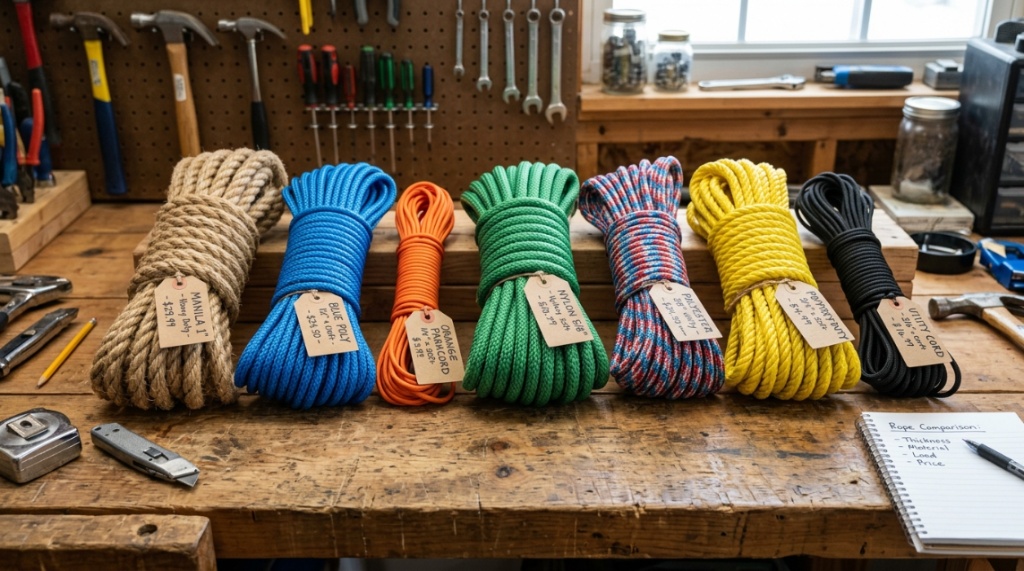
25 Jul How to Compare Rope Strength and Value for Everyday Tasks
You grab a rope from the garage shelf. It feels solid. The price was right. But when you need to haul a load or secure gear for a weekend job, that unlabeled coil suddenly feels like a gamble. Is it strong enough? Will it snap under pressure? This uncertainty is exactly why a proper rope strength comparison matters more than the price tag. You do not need a degree in materials science to buy the right rope. You just need a practical framework for evaluating what holds things together. This guide will walk you through the real-world factors that determine both strength and value, so you stop guessing and start buying with confidence.
What Does Rope Strength Actually Mean?
Rope strength refers to the maximum load a rope can handle before it breaks. In technical terms, this is called breaking strength or tensile strength. However, the number on a package does not tell the whole story for everyday use.
Breaking Strength versus Working Load Limit
Breaking strength is the point of failure under ideal lab conditions. The working load limit (WLL) is the safe load you should apply during normal use. Most experts recommend using only 10 to 20 percent of the breaking strength for dynamic loads and up to 33 percent for static loads. Ignoring this distinction is the most common mistake people make when assessing rope value.
Why Static and Dynamic Loads Matter
A static load is a steady pull, like tensioning a tarp. A dynamic load involves sudden force, such as towing a stuck vehicle or catching a falling climber. Dynamic loads can spike far above the weight of the object. A rope that holds 500 pounds in a static test might snap under a 300-pound dynamic load. Always consider how you will use the rope, not just the weight of what you plan to lift.
Manufacturer Ratings and Real-World Conditions
Manufacturer ratings assume new, dry, undamaged rope with perfect knots. In reality, knots reduce strength by 30 to 50 percent. Wet conditions, UV exposure, and abrasion further degrade performance. A rope that ranks high in a controlled test may underperform in your shed or truck bed.
Which Rope Materials Offer the Best Strength-to-Value Ratio?
Different materials excel in different situations. The best value rope is not the cheapest or the strongest, but the one that matches your specific needs without overspending on unnecessary features.
Nylon: The Tough All-Rounder
Nylon offers excellent elasticity, which makes it ideal for dynamic loads like towing or climbing. It absorbs shock well and resists abrasion. The downside is that nylon loses significant strength when wet, sometimes as much as 20 percent. It also degrades in prolonged sunlight. For general-purpose use where shock loading is possible, nylon provides good value.
Polyester: The Stable Workhorse
Polyester has nearly the same dry strength as nylon but does not weaken when wet. It also resists UV damage much better. This makes polyester the best choice for marine environments, outdoor rigging, and long-term exposure. The trade-off is lower elasticity, so it does not handle sudden shock loads as gracefully. For static applications like mooring lines or securing cargo, polyester often delivers superior long-term value.
Polypropylene and Natural Fibers
Polypropylene floats, resists chemicals, and is inexpensive, but it has lower strength and degrades quickly in sunlight. Natural fibers like manila or hemp offer historical charm and good grip, but they rot, stretch unevenly, and lack the consistency of synthetics. These materials rarely provide the best value for modern multi-purpose use unless you have a specific niche requirement.
How Does Rope Construction Affect Strength?
The way a rope is built influences its strength, flexibility, and durability just as much as the material itself. You cannot judge a rope by its cover alone.
Three-Strand versus Braided Ropes
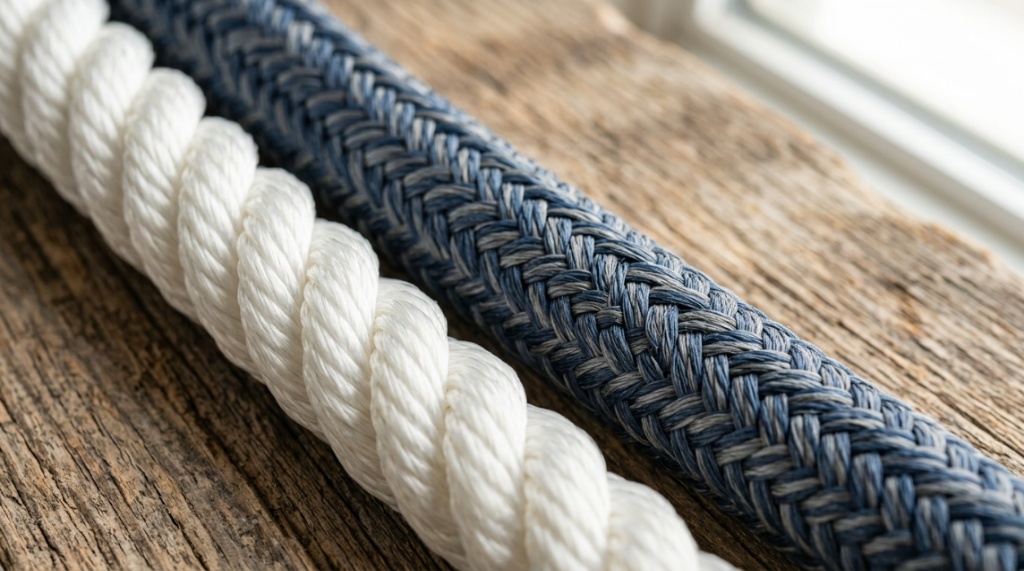
Three-strand twisted ropes are easy to inspect, splice, and handle. They offer good strength for their diameter and are economical. However, they can untwist under load and are less resistant to abrasion than braided ropes. Braided ropes, including double braid and kernmantle designs, have a protective outer sheath and a load-bearing core. They tend to be stronger, more resistant to wear, and easier on the hands, When choosing heavy-duty materials for rugged outdoor projects, evaluating tensile limits is critical—much like selecting a Lightweight Climbing Rope for Long Climbs in Nevada (NV) when tackling steep vertical terrain.
Kernmantle Construction for High-Stakes Use
Kernmantle ropes feature a core (kern) that carries the load and a mantle (cover) that protects against abrasion and UV. This design is standard in climbing and rescue because it offers high strength, controlled stretch, and excellent durability. If safety is critical, kernmantle construction justifies its higher price through reliability alone.
Diamond Braid and Solid Braid Options
Diamond braid ropes are hollow and flatten under load, making them good for pulleys or drawstrings but poor for heavy lifting. Solid braid ropes are dense and strong but can be stiff. Understanding these structural differences helps you avoid buying a rope that looks strong but performs poorly under real stress.
How Can You Test Rope Strength Without Expensive Equipment?
You do not need a tensile testing machine to gauge whether a rope meets your needs. Simple field checks can reveal a lot about quality and condition.
Visual Inspection for Obvious Flaws
Look for fraying, cuts, discoloration, or uneven thickness. A rope with broken strands or a flattened section has compromised strength. Check the core if the rope has a sheath. Any inconsistencies in color or texture may indicate chemical damage or UV degradation.
The Bend Test for Flexibility and Core Integrity
Bend the rope into a tight U-shape. If the rope kinks or shows a permanent crease, the fibers or core may be damaged. A healthy rope should flex smoothly and return to its original shape. Stiff areas often indicate hidden internal wear.
Load Testing Safely in the Field
If you need to verify a rope for a critical task, perform a controlled static test using known weights. Attach the rope to a secure anchor and gradually apply load while staying clear of the line. Never exceed half the rated breaking strength during a field test. This practical check can confirm whether a rope still performs close to its original specifications.
Which Knots Preserve the Most Rope Strength?
Every knot reduces rope strength. The type of knot you choose directly affects how much strength remains available for the job. Choosing the right knot is a critical part of any rope strength comparison.
Knots That Weaken Rope the Least
The water knot, double overhand, and figure-eight follow-through knots retain around 70 to 80 percent of original strength. These knots distribute load more evenly and cause less internal friction. For maximum strength retention, avoid sharp bends and use knots with generous curves.
Knots to Avoid for High-Load Applications
Square knots, bowlines tied incorrectly, and simple half hitches can reduce strength by 50 percent or more. These knots create severe bends and pinch points that concentrate stress. If you are lifting or pulling heavy loads, test your knot selection before relying on it.
Using Splices Instead of Knots
Properly made splices retain 90 to 100 percent of rope strength. If your application demands maximum strength, such as in rigging or rescue, a spliced eye or endless loop offers the best performance. Learning to splice takes practice but pays off in reliability and rope longevity.
How Does Rope Diameter Influence Strength and Value?
Thicker ropes are generally stronger, but diameter alone does not guarantee value. The relationship between diameter, material, and construction determines true capability.
Breaking Strength Increases with the Square of Diameter
Doubling the diameter roughly quadruples the cross-sectional area and breaking strength. However, thicker ropes are heavier, bulkier, and more expensive. For many tasks, a thinner high-strength rope made from advanced materials offers better value than a thick rope made from basic fiber.
When Thinner Ropes Make More Sense
Modern synthetic ropes like dyneema or spectra achieve breaking strengths comparable to steel cable at a fraction of the weight. These ropes are expensive but excel where weight, bulk, or handling are concerns. For backpacking, marine racing, or technical rescue, the higher cost per foot delivers exceptional value through portability and performance.
Matching Diameter to Your Hardware
Pulleys, winches, and cleats are designed for specific rope diameters. A rope that is too thin may slip or jam. A rope that is too thick may not fit or may damage equipment. Always check compatibility before prioritizing strength numbers.
Can You Trust Rope Strength Ratings from Online Sellers?
Not all ratings are created equal. Some sellers inflate numbers to make products appear stronger. Knowing how to verify claims protects your safety and your wallet.
Look for Third-Party Testing Certifications
Ropes tested by independent organizations like the Cordage Institute or meet ASTM standards have verified ratings. If a seller only provides vague claims without referencing a standard, treat the numbers with skepticism. Reputable brands publish test data or reference industry norms.
Beware of Misleading Marketing Terms
Phrases like super strength, heavy duty, or industrial grade often have no legal definition. These terms may describe a product that fails under moderate load. Always look for specific breaking strength figures in pounds or kilograms, not just fluffy adjectives.
Check User Reviews for Real-World Performance
User reviews often reveal issues that specs sheets hide. Look for comments about abrasion resistance, knot slippage, and durability after repeated use. Patterns of complaints about premature failure are red flags, even if the listed strength looks impressive.
How to Calculate the True Value of a Rope
Value is not the same as price. A cheap rope that fails after one use costs more in the long run than a durable rope that lasts for years. Calculating true value requires looking beyond the initial purchase.
Cost Per Use Versus Cost Per Foot
Divide the purchase price by the number of times you expect to use the rope safely. A $50 rope used 100 times costs $0.50 per use. A $15 rope that degrades after five uses costs $3.00 per use. The expensive rope delivers better value by this measure.
Maintenance and Replacement Costs
Ropes that require frequent cleaning, drying, or inspection add hidden costs. Materials like polyester and nylon are low maintenance compared to natural fibers. Factor in how much time and money you will spend keeping the rope in serviceable condition.
Safety Costs of a Rope Failure
A broken rope can damage property, cause injury, or worse. The potential cost of failure far exceeds any savings from buying a cheaper rope. For critical applications, value should always include a margin for safety, not just upfront savings.
Which Rope Is Best for Multi-Purpose Home and Outdoor Use?
For most people, a single rope that handles multiple tasks well provides the best overall value. The ideal multi-purpose rope balances strength, durability, weight, and cost.
Polyester Double Braid as the Top Recommendation
Polyester double braid ropes offer high breaking strength, excellent UV resistance, low stretch, and good wet performance. They work for towing, camping, securing loads, and general rigging. While more expensive than polypropylene, the longevity and reliability make them a smart investment.
Nylon Kernmantle for Situations with Shock Loads
If your tasks include towing, vehicle recovery, or any sudden force application, nylon kernmantle provides the elasticity needed to absorb shock without snapping. The strength retention in dry conditions is excellent, and the abrasion resistance is sufficient for most outdoor uses.
What to Look for When Buying
Focus on ropes with a breaking strength at least three times your expected maximum load. Choose a diameter that fits your hardware. Verify that the construction matches your primary use case. Finally, buy from a supplier that provides clear, verifiable specifications.
Frequently Asked Questions
What is the difference between breaking strength and working load limit?
Breaking strength is the point where the rope fails under laboratory conditions. A working load limit is the safe maximum load for routine use, typically 10 to 33 percent of breaking strength depending on the application.
Does a thicker rope always mean stronger rope?
Not exactly. Thicker ropes made from low-quality fibers may be weaker than thinner ropes made from high-tenacity synthetics. Material and construction matter as much as diameter.
Can I use a climbing rope for towing?
Generally no. Climbing ropes designed for dynamic falls may not handle the sustained load or abrasion of towing. Use ropes specifically rated for towing or recovery applications.
How often should I replace my multi-purpose rope?
Inspect your rope before each use. Replace it if you see fraying, cuts, discoloration, stiffness, or any signs of damage. Heavy use may require annual replacement, while occasional use can last several years.
What is the strongest knot for joining two ropes?
The double fisherman’s knot is one of the strongest for joining ropes of similar diameter. It retains about 75 percent of rope strength and is reliable for critical connections.
Is a more expensive rope always better value?
No. Value depends on matching the rope to your specific needs. An expensive climbing rope is poor value for tying down a tarp. A cheap polypropylene rope is poor value for towing. Choose based on application, not price alone.
Can rope strength be improved by using multiple strands?
Yes, using multiple strands in parallel can increase overall strength, but the load must be distributed evenly. Uneven loading can cause one strand to bear most of the force and fail prematurely.