
27 May How to Pick Waterproof Pool Bags That Are Both Stylish and Practical
A great pool bag does more than carry your towel. It protects your belongings, keeps wet items away from dry ones, and looks good doing it. However, finding a bag that checks every box is harder than it sounds. Many waterproof bags are purely functional but lack any visual appeal. Others look wonderful but fall apart after a few months of regular use.
The good news is that you do not have to choose between style and practicality. The market has evolved. Today, there are bags designed with both qualities in mind, and knowing what to look for makes finding them much easier.
This guide walks you through everything you need to consider before buying a waterproof pool bag in 2026.
Why Your Pool Bag Choice Actually Matters
It is tempting to grab the cheapest bag available and move on. However, a poor-quality pool bag creates real problems. Wet swimwear soaks through thin fabric and ruins your dry clothes, phone, or wallet. Flimsy zippers corrode in chlorinated or salt water environments. Straps that are not reinforced tear away from the body of the bag after just a few uses.
A well-chosen bag, on the other hand, simplifies your routine. Everything has a place, wet items stay contained, and your dry gear stays dry. You carry it confidently whether you are walking poolside, heading to a beach, or packing it into a gym locker.
Therefore, treating your pool bag as a genuine investment rather than an afterthought pays off quickly in convenience and longevity.
Understanding Waterproof vs. Water-Resistant
These two terms are used interchangeably in many product listings, but they mean very different things. Understanding the distinction helps you avoid buying the wrong bag.
What Water-Resistant Really Means
A water-resistant bag can handle light splashes and brief exposure to moisture. The fabric has been treated with a coating that repels surface water. However, this coating wears off over time, and prolonged exposure to water will eventually soak through the material.
For casual pool visits where you only need to carry your bag from the car to the changing room, water resistance may be sufficient. However, if you are storing wet swimwear, a dripping towel, or water shoes inside your bag, water resistance alone will not protect your other belongings.
What True Waterproofing Provides
A genuinely waterproof bag uses sealed seams, waterproof zippers, and materials like PVC, TPU-coated nylon, or ripstop polyester with full waterproof lamination. These bags can hold wet items inside without leaking outward and resist water penetration from outside even in heavy rain or full submersion.
Additionally, some bags use a roll-top closure system instead of a zipper. When rolled and clipped correctly, this creates an airtight and watertight seal. These are popular among swimmers, kayakers, and beach regulars who need reliable protection in demanding conditions.
Key Features to Look for in a Pool Bag
Once you understand the basics of waterproofing, focus on the specific features that determine whether a bag will work well for your needs.
Separate Wet and Dry Compartments
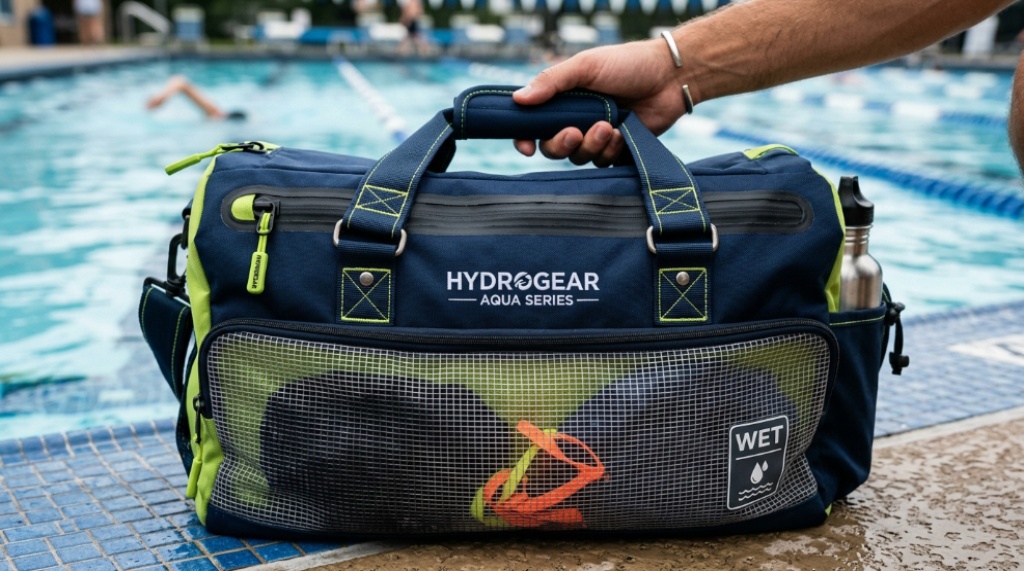
This is the single most useful feature in any swim or pool bag. A dedicated wet compartment with a sealed lining keeps your soaking swimwear and towel away from your phone, keys, and clean clothes. Some bags place this compartment at the bottom with a zippered access point. Others include a removable wet bag that sits inside the main compartment.
Without this separation, everything in your bag ends up damp and smelling of chlorine. Therefore, always prioritise bags that keep wet and dry items physically divided.
Sturdy Zippers and Closures
Zippers are one of the first things to fail on lower-quality bags. Standard metal zippers corrode quickly when exposed to chlorinated water, salt, or sand. Look for zippers made from coated nylon or plastic that are specifically rated for water exposure. YKK zippers, in particular, are an industry standard for durability and smooth operation.
Magnetic snap closures and buckle clasps are worth checking as well. These should feel solid and secure, not flimsy or loose. A closure that pops open in your gym locker is frustrating. One that fails after a few weeks is worse.
Reinforced Handles and Straps
Handles and straps carry the full load of a packed bag. Reinforced stitching at attachment points prevents the most common type of bag failure. Additionally, padded shoulder straps make a noticeable difference if you are carrying a heavy load any distance, such as from a car park to a beach or across a large aquatic centre.
Dual carry options are also worth seeking out. A bag that has both short grab handles and a longer shoulder strap gives you flexibility for different situations.
Drainage Holes or Ventilation
Some pool bags include small drainage holes at the base. These are particularly useful if you pack very wet gear and do not want water to pool inside. Ventilation panels or mesh sections help with airflow and allow the interior to dry out between uses, which reduces odour buildup over time.
Balancing Style With Function
Style and practicality can absolutely coexist in a pool bag. The key is knowing which design elements contribute to both rather than sacrificing one for the other.
Colour and Pattern Choices
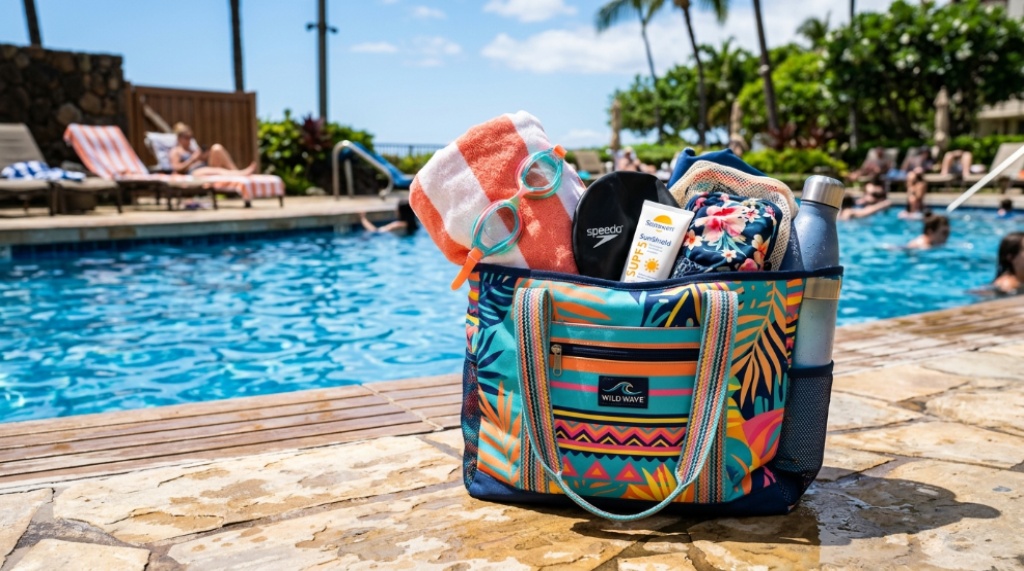
Bright colours and bold patterns have become a hallmark of stylish swim bags. Beyond aesthetics, colour serves a practical purpose. A bright or distinctive bag is easy to spot in a busy changing room or on a crowded beach. You are far less likely to accidentally pick up the wrong black bag among a sea of identical ones.
However, be aware that very light colours show chlorine staining and general wear more quickly than mid-tones or darker shades. Navy, forest green, terracotta, and bold geometric prints are popular choices that strike a good balance between visual appeal and practical durability.
Bag Shape and Structure
Tote-style bags are the most popular format for poolside use. Durable tote bags offer a wide opening for easy packing and unpacking, sit stably on benches or floors, and come in a wide range of designs. Additionally, they tend to be more spacious than structured backpacks, which is useful when you need to pack bulky towels or swim fins.
Backpack-style pool bags are a strong alternative for those who prefer hands-free carrying. Some hybrid designs function as both a tote and a backpack, with tucked-away shoulder straps that reveal themselves when needed.
Hardware and Finishing Details
The small details signal quality. Metal D-rings, polished buckles, and neatly finished seams all indicate a bag built to last. Contrast stitching, piping along edges, and well-matched lining fabrics elevate a bag from purely functional to genuinely attractive.
These details also tend to correlate with better overall construction. Brands that pay attention to how their bags look usually pay equal attention to how they hold up over time.
Materials That Deliver Both Looks and Longevity
The material a bag is made from determines both its appearance and its durability. Some materials look great but wear poorly. Others are extremely tough but unattractive. The best pool bags find a middle ground.
Coated canvas is a popular choice. It has a classic, polished look that suits both casual and sporty styles. Additionally, the coating provides meaningful water resistance and makes the surface easy to wipe clean. High-quality coated canvas lasts for years with basic care.
TPU-coated nylon is the most technical option. It is lightweight, extremely tough, and genuinely waterproof. It comes in a growing range of colours and textures, meaning it no longer has to look purely utilitarian. Many of the best stylish swim bags on the market now use TPU-coated nylon as their primary material.
Waxed canvas offers a heritage aesthetic that suits a more classic or outdoor-inspired style. It is naturally water-resistant, develops character with age, and is highly durable. However, it tends to be heavier than synthetic options and requires occasional re-waxing to maintain its water-resistant properties.
Size and Capacity: Getting the Right Fit
A bag that is too small forces you to cram things in and damages the structure over time. A bag that is too large becomes unwieldy and uncomfortable to carry when full.
Think about what you typically carry to the pool. A standard kit for most swimmers includes a towel, swimwear, goggles, shampoo, a change of clothes, and a phone or wallet. A capacity of 20 to 30 litres covers this comfortably. If you swim with children or carry additional gear like fins, a pull buoy, or a kick board, move up to 35 litres or more.
Consider your storage situation as well. A bag that is too wide will not fit in a standard gym locker. Check the dimensions before purchasing, particularly the width and depth.
Caring for Your Pool Bag to Extend Its Life
Even the most durable tote bags benefit from consistent care. Rinse the interior with clean water after each use to remove chlorine and salt residue. Both are corrosive over time and accelerate fabric degradation and zipper wear.
Leave the bag open to air-dry completely before storing it. Packing a damp bag into a cupboard encourages mould and mildew growth, which damages the fabric and creates persistent odours. Wipe the exterior down with a damp cloth as needed. Most coated or waterproof materials clean up easily without requiring anything more than plain water.
Conclusion
Finding a waterproof pool bag that is both stylish and practical is entirely achievable when you know what to look for. Start with the fundamentals: true waterproofing, separate wet and dry compartments, durable zippers, and reinforced handles. Then consider the details that contribute to both appearance and longevity, including material choice, hardware quality, and colour selection.
Stylish swim bags and durable tote bags are no longer at opposite ends of the market. The best options combine thoughtful design with robust construction, giving you a bag that looks great and performs reliably for years. With the guidance in this article, you are fully equipped to make a confident, informed purchase that suits your lifestyle on and off the water.
Frequently Asked Questions
What is the difference between a waterproof and a water-resistant pool bag?
A water-resistant bag repels surface splashes but will soak through with prolonged exposure. A waterproof bag uses sealed seams, waterproof zippers, or roll-top closures made from fully waterproof materials. For storing wet swimwear and towels, a genuinely waterproof bag is the better choice.
How big should a pool bag be for regular lap swimming?
For solo swimmers carrying a towel, swimwear, goggles, and a change of clothes, a 20 to 25 litre bag is usually sufficient. Swimmers who carry more gear or equipment may prefer 30 litres or above for comfortable packing without overstuffing.
Are tote bags or backpacks better for pool use?
Tote bags offer easier access and more packing space, which makes them popular for poolside use. Backpacks are better if you are commuting or cycling to the pool and need both hands free. Some hybrid designs offer both carrying styles in one bag.
How do I remove chlorine smell from my pool bag?
Rinse the interior thoroughly with clean, cool water after each use. For persistent odours, mix one part white vinegar with four parts water and wipe the interior. Leave the bag open in a ventilated area to dry completely. Avoid using strong detergents, which can damage waterproof coatings.
What material is best for a long-lasting waterproof pool bag?
TPU-coated nylon is the most durable and reliably waterproof option. It is lightweight, resistant to abrasion and chlorine, and available in many styles. Coated canvas is a stylish alternative with strong water resistance, while waxed canvas suits those who prefer a classic aesthetic and are willing to maintain the wax coating periodically.