
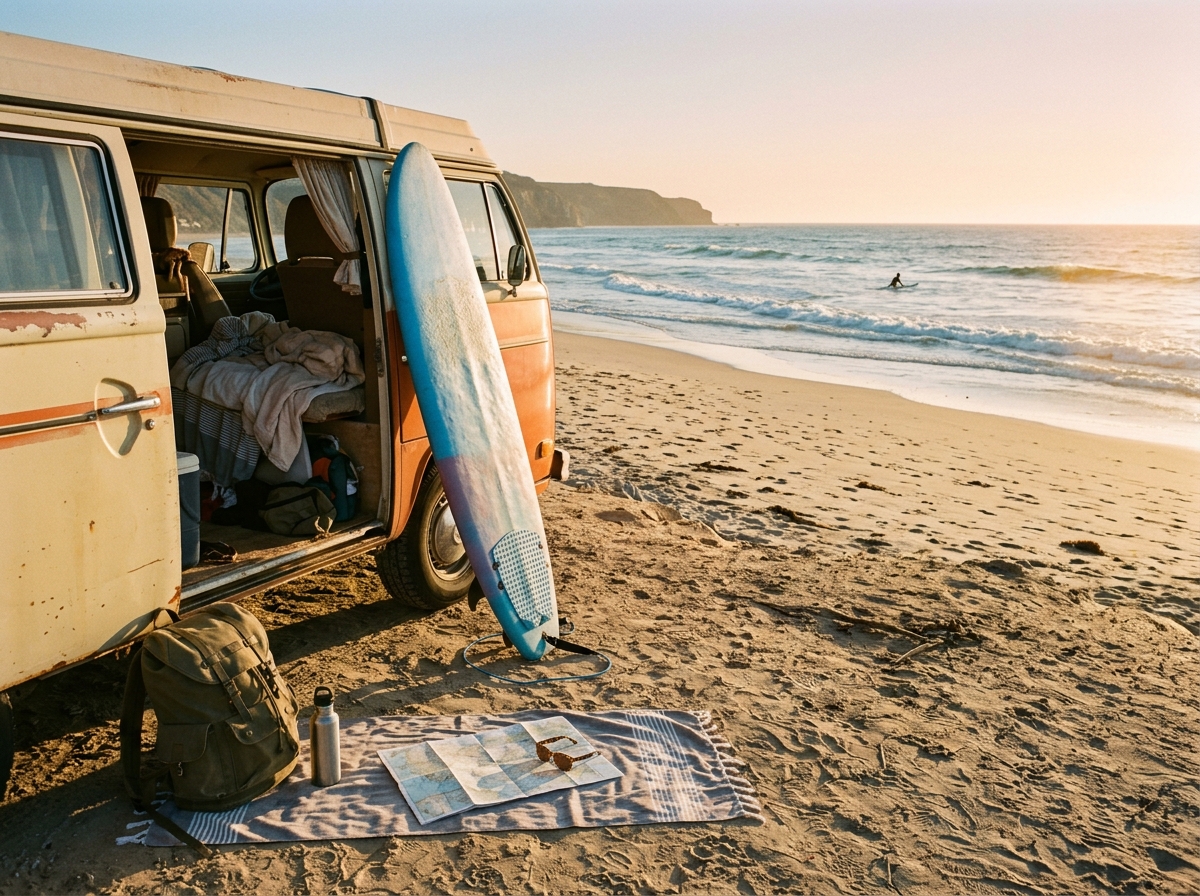
08 Oct How to Plan a Budget-Friendly Beach Trip for First-Time Surf Lovers
You’ve booked a cheap beach rental, the forecast looks perfect, and you’re already picturing yourself gliding across the water. Then you start pricing surfboards and realize a single longboard can cost more than your entire weekend. Before you cancel the trip, know that the gap between wanting to surf and actually affording it is smaller than most people think. You don’t need a custom board or a pricey surf school to catch your first wave. You need one right decision: get a stable, used, or budget-friendly board and build the rest of the trip around it. That’s why cheap surf longboards //coolsurfinggear.com/best-affordable-longboards/ deserve a spot at the top of your planning list—they keep the trip affordable while giving beginners the stability and paddle power they actually need.
Quick Answer
Plan a budget-friendly surf trip by choosing a soft-top or used longboard instead of a performance board, staying slightly inland, surfing early when rentals are cheaper and crowds smaller, and packing your own food and water. A foam longboard costs the least, floats beginners best, and reduces the number of lessons you need. Reserve gear in advance, expect to pay less off-season, and treat the trip as a long weekend rather than a week.
Key Takeaways
- A longboard—not a shortboard—is the correct first board because its volume makes it easier to paddle, catch waves, and stand up.
- Soft-top foam longboards and used fiberglass boards are usually the cheapest way to start; rental is often the smartest first step.
- Travel and lodging costs drop sharply if you stay a short drive from the beach instead of beachfront.
- Timing matters more than gear: off-season weekends, early mornings, and shoulder-season weather save the most money.
- The biggest beginner mistake is buying an advanced board, which makes learning harder and wastes money.
Why a Longboard Is the Right First Board
Longboards are the beginner’s board for a reason: their length and volume make them float higher, paddle faster, and catch small waves a shortboard would miss. A short, low-volume board forces you to generate speed constantly and punishes balance mistakes, which is exactly what a new surfer is still developing. A longboard absorbs those mistakes so you spend more time standing and less time swimming.
How much board you actually need
For a first-time adult surfer, a board in the 8 to 9-foot range is a common starting point, with more volume for heavier riders and less for lighter ones. You don’t need to memorize specs. What matters is that the board floats you comfortably and feels stable when you sit or paddle on it. If a rental shop can’t help you float, move on.
Soft-top vs. fiberglass
Soft-top foam boards are forgiving, safer when you fall on them, and far cheaper than a fiberglass performance board. Fiberglass boards offer more glide and durability but cost more and can be intimidating to a beginner. Start with foam, upgrade only once you’re consistently standing and reading waves.
Cheap Ways to Get on the Water Without Buying
You have three main budget routes: rent, buy used, or buy budget-new. Each has real trade-offs, and the “cheapest” option depends on how often you’ll surf.
| Option | Typical Cost Level | Best For | Trade-offs |
|---|---|---|---|
| Rental | Low per day | First trip, testing the sport | Adds up over many days; limited board choice |
| Used purchase | Moderate one-time | Surfing multiple trips | Inspect for dings, delamination, and repairs |
| Budget-new foam board | Moderate one-time | Reliable, consistent board you own | Lower resale value; softer performance ceiling |
For a single weekend, rental usually wins—you avoid storage, transport, and resale hassle. If you’ll surf a few times over a season, a used longboard often pays for itself compared to repeated rentals. Budget-new foam boards are the safe middle ground when you want predictable quality without a premium price.
Build the Trip Around the Board, Not the Other Way Around
Your board decision drives every other cost. A longboard may need roof straps or a longboard bag, which affects whether you can drive instead of fly. If you fly, plan to rent at the destination rather than pay airline board fees.
Step-by-step: a workable cheap surf weekend
- Pick a beginner-friendly beach with gentle, consistent waves rather than a famous break.
- Choose a soft-top or used longboard that actually floats you.
- Reserve it in advance to lock in lower rates and avoid sold-out weekends.
- Book lodging one to two blocks away or a short drive inland.
- Plan one or two short sessions per day; two hours of surfing is plenty when you’re new.
- Pack food, water, and sun protection so you’re not buying marked-up beach food.
Common beginner mistakes that cost money
- Buying a shortboard because it looks cool, then struggling and quitting.
- Renting the most expensive board at a tourist-trap shop instead of comparing.
- Booking peak-season beachfront lodging when a short drive saves a lot.
- Skipping a single lesson and spending days relearning basic pop-ups.
- Overpacking gear you won’t use, like multiple boards for one weekend.
Cutting Costs on Travel, Lodging, and Food
Gear is only one line item. The bigger savings often hide in logistics.
Lodging: A property a few minutes inland can cost noticeably less than beachfront. You’re surfing at dawn and dusk anyway, so the ocean view is mostly decorative.
Timing: Shoulder seasons and weekdays are cheaper for both rentals and rooms. Early-morning sessions also mean calmer winds and smaller crowds.
Food: Bringing a cooler with breakfast and lunch keeps you fueled without paying beach prices, and it keeps you on the water longer instead of waiting in line.
Lessons: One or two group lessons deliver most of the value. They’re cheaper than private coaching and give you the fundamentals you’d otherwise spend days guessing at.
Where the Primary Keyword Fits Your Budget
Cheap surf longboards matter because they solve the beginner’s core problem—stability and float—without the premium price of high-performance boards. You don’t have to sacrifice fun for affordability when you choose a soft-top or gently used longboard that suits your size and local waves. If you’re ready to compare options, keep the focus on float, length, and condition rather than brand hype.
Frequently Asked Questions
Is it cheaper to rent or buy a longboard for a surf trip?
For one trip, renting is usually cheaper because you avoid purchase, transport, and storage costs. If you’ll surf several times in a season, a used or budget new longboard often costs less overall than repeated rentals.
What size longboard should a total beginner ride?
Most adult beginners do well on an 8- to 9-foot longboard, with more volume for heavier riders. The right board floats you comfortably and feels stable when you paddle and sit on it.
Can I learn to surf without lessons?
You can, but a single group lesson usually pays off. It shortens the frustrating learning curve, teaches water safety and etiquette, and reduces the chance you waste days on the wrong technique.
What’s the biggest mistake first-time surfers make?
Buying an advanced shortboard. It’s harder to paddle and balance on, which makes learning slower and more discouraging. Start on a longboard, then downsize later.
How much does a budget surf trip cost?
Costs vary widely by region and season, so treat any specific number with caution. The reliable savings come from inland lodging, off-peak timing, cooking your own meals, and renting or buying a used longboard instead of premium gear.
Conclusion
The cheapest path to your first wave starts with the right board, not the biggest budget. Choose a soft-top or used longboard that floats you, rent before you buy, and build the trip around off-peak timing and simple logistics. That combination cuts costs without cutting the experience. Once you’re consistently standing, you can start comparing affordable boards to own for future trips. Plan smart, surf early, and keep your first trip focused on fun rather than spending.