
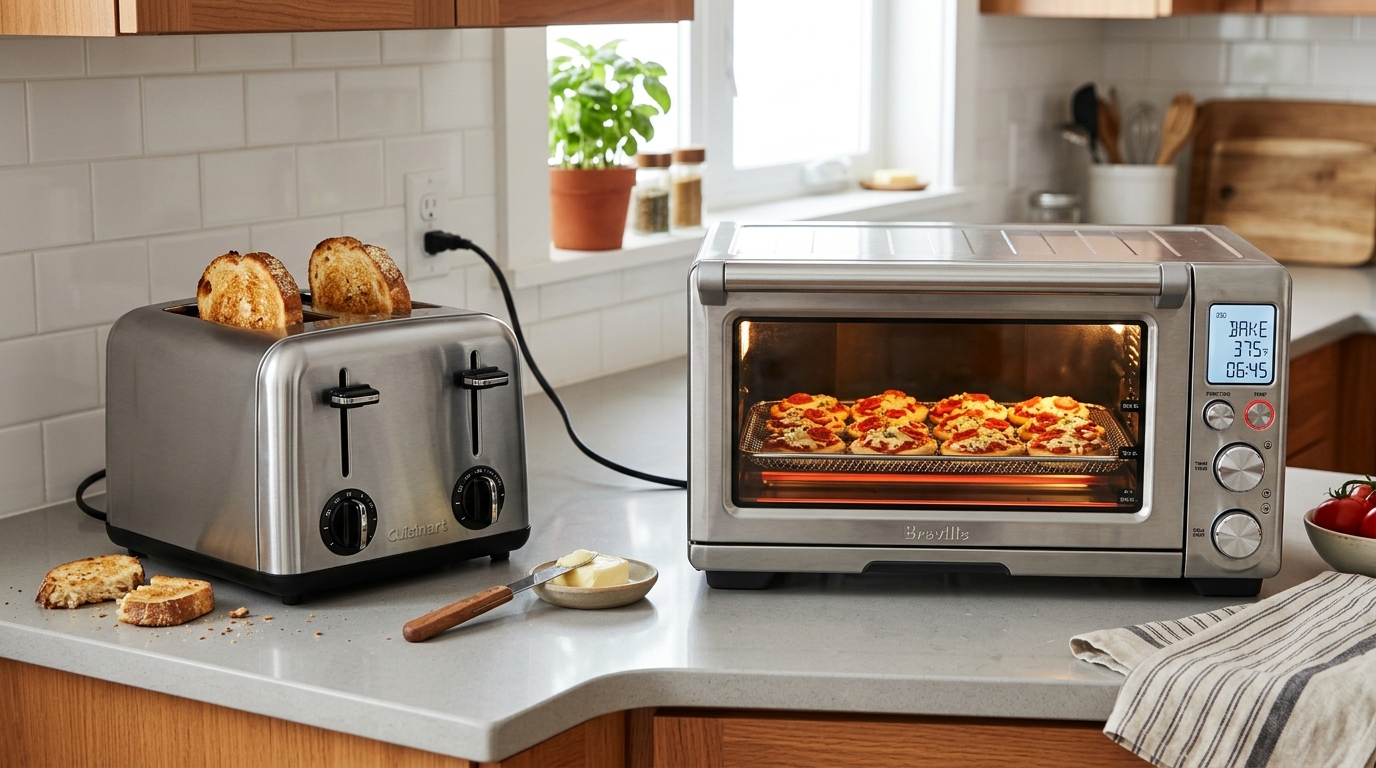
26 Sep Toaster vs. Toaster Oven: Which Is Better for Everyday Kitchen Use?
It’s 7:15 on a Tuesday morning, and you’re staring at a cold slice of bread with a decision to make. Do you reach for the familiar pop-up toaster, or do you fire up the larger toaster oven that’s been sitting on your counter? For anyone setting up a kitchen or replacing a broken appliance, this isn’t just a matter of preference—it’s a question of counter space, daily habits, and what you actually cook. The right choice often comes down to understanding how you use your kitchen, not just which appliance looks better on a spec sheet. If you’re weighing a simple two-slot model against a larger countertop oven, resources like FirstGradeAppliances.com can help you compare specific models and features side by side. Let’s break down the real differences so you can decide which one earns a permanent spot on your counter.
Quick Answer
For most everyday kitchens, a standard toaster is the better choice if your primary goal is making toast quickly and consistently with minimal counter space. However, a toaster oven wins if you regularly reheat leftovers, cook small meals, or want one appliance that can handle toast, bagels, and baking. The best choice depends on your cooking habits, available space, and whether you value speed or versatility more.
Key Takeaways
- A standard toaster excels at one job—making consistent, evenly browned toast—and does it faster than a toaster oven.
- A toaster oven can replace multiple appliances, including a microwave for reheating and a full oven for small baking tasks, but it takes up significantly more counter space.
- Toaster ovens typically cost more upfront and use more energy per use than a basic two-slice toaster.
- If you rarely cook and mostly make toast or bagels, a simple toaster is the more practical, budget-friendly option.
- If you live alone, have limited oven access, or frequently reheat and cook small portions, a toaster oven offers better long-term value.
Core Differences at a Glance
The fundamental difference between a toaster and a toaster oven comes down to how they apply heat. A standard toaster uses vertical heating elements on both sides of the bread slots, toasting both sides simultaneously. A toaster oven works like a miniature conventional oven, using horizontal heating elements to cook food placed on a rack or tray. This design difference shapes everything—speed, versatility, results, and how much space the appliance occupies.
| Feature | Standard Toaster | Toaster Oven |
|---|---|---|
| Primary function | Toasting bread, bagels, waffles | Toasting, baking, broiling, reheating |
| Speed for toast | Faster (typically 1–3 minutes) | Slower (typically 3–6 minutes) |
| Counter space | Minimal | Significant |
| Versatility | Limited to toasting | Can cook small meals, reheat leftovers, bake |
| Energy use | Lower per use | Higher per use |
| Price range | Generally lower | Generally higher |
| Cleaning | Simple—empty crumb tray | More involved—racks, trays, interior walls |
Neither appliance is universally better. The table above shows that each has clear strengths and weaknesses that matter differently depending on your situation.
When a Standard Toaster Makes More Sense
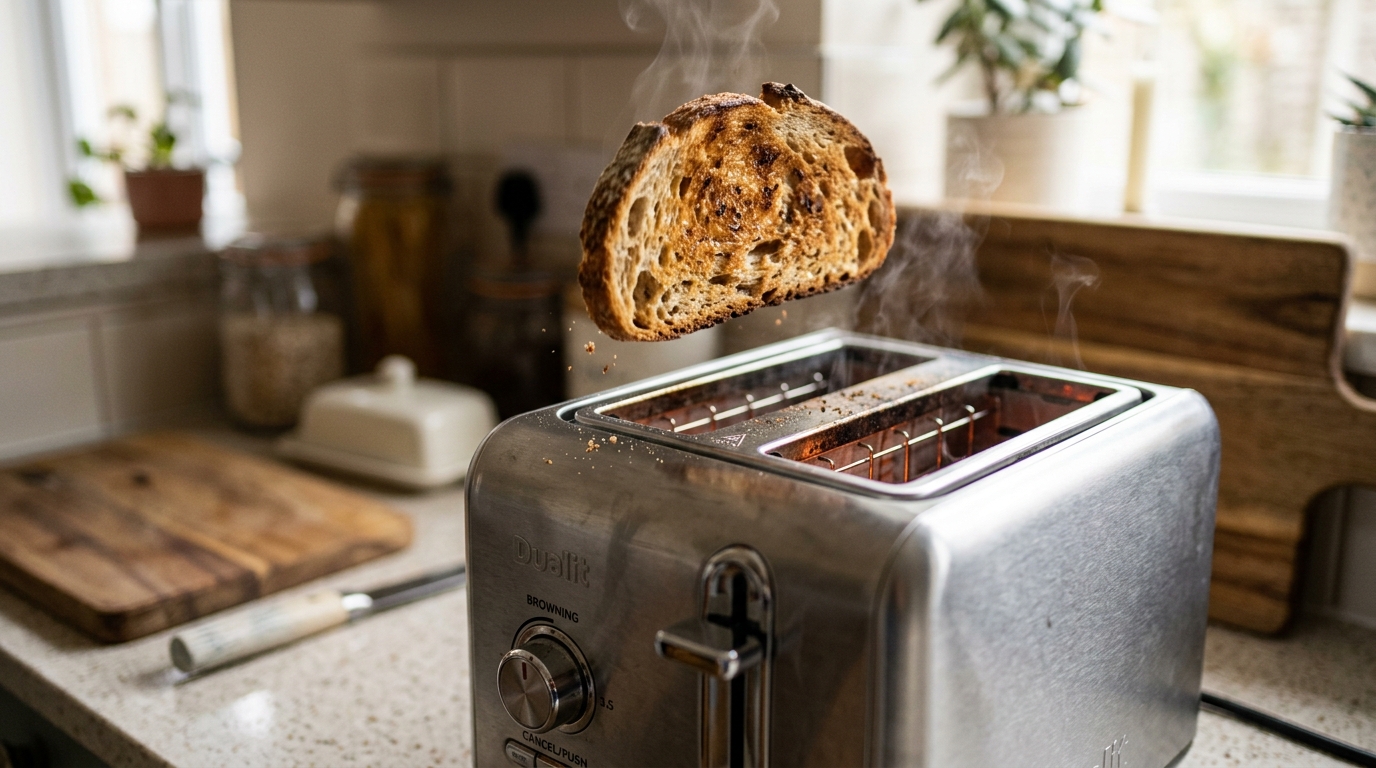
A standard toaster is the better choice when toast is your main priority and you don’t need your appliance to do anything else. It’s also the smarter pick when counter space is tight—a two-slice toaster takes up a fraction of the footprint of even a compact toaster oven, If you enjoy preparing nutritious meals and exploring wholesome culinary ideas, you might also love checking out the spa kitchen: cooking for health and wellness for fresh inspiration.
Consider these scenarios where a toaster wins:
- You make toast or bagels daily but rarely cook. If your morning routine is toast and coffee, a toaster delivers consistent results in less time.
- Your kitchen has limited counter space. A toaster can be stored in a cabinet and pulled out when needed. A toaster oven is heavy and bulky, making it impractical to move frequently.
- You want predictable results with minimal effort. A toaster has one job and does it well. There’s no preheating, no tray to position, and no guesswork about rack height.
- You’re on a tight budget. Basic two-slice toasters are among the most affordable kitchen appliances available.
One common mistake is buying a toaster oven expecting it to toast as quickly as a standard toaster. It won’t. Toaster ovens take longer to reach toasting temperature, and the results can be less even if the bread isn’t positioned carefully. If speed and consistency matter most, a standard toaster is the practical choice.
When a Toaster Oven Is the Better Investment
A toaster oven becomes the better choice when you need an appliance that can do more than toast. It can reheat leftovers, bake small batches of cookies, roast vegetables, broil fish, and even cook a small pizza—tasks a standard toaster simply cannot perform.
Consider a toaster oven if:
- You frequently reheat food. A toaster oven reheats leftovers without the sogginess a microwave can cause, especially for items like pizza, fried foods, or casseroles.
- You live alone or have a small household. Heating a full-size oven for a single serving is wasteful. A toaster oven handles small portions efficiently.
- You want to reduce appliance clutter. A toaster oven can replace a toaster, a small oven, and sometimes even a microwave, freeing up space in the long run.
- You cook small meals regularly. From roasted vegetables to baked chicken breasts, a toaster oven can handle many everyday cooking tasks.
The trade-off is that a toaster oven requires more counter space, costs more upfront, and needs more attention during cleaning. It also takes longer to toast bread than a standard toaster. But if you use it for more than toast, the versatility often justifies the drawbacks.
How to Decide Based on Your Daily Routine
The most reliable way to choose is to think about what you actually did in the kitchen over the past week, not what you imagine you might do someday. If you made toast every morning but didn’t bake, broil, or reheat anything, a standard toaster is the obvious choice. If you found yourself wishing you could reheat a slice of pizza, toast a sandwich, or bake a small batch of something, a toaster oven would have earned its keep.
Here’s a simple decision framework:
- Toast only, limited space, tight budget: Choose a standard toaster.
- Toast plus reheating or small cooking tasks: Choose a toaster oven.
- Toast daily and cook occasionally: A toaster oven may still be worth it if you have the space.
- Toast daily but no interest in cooking: A standard toaster is the better fit.
One overlooked factor is cleaning. A toaster requires only emptying a crumb tray. A toaster oven accumulates grease, crumbs, and stains on racks, trays, and interior walls. If you dislike cleaning appliances, that’s a legitimate reason to stick with a simpler toaster.
Common Mistakes to Avoid
Many buyers regret their choice because they overlooked a practical detail. Here are the most common mistakes:
- Buying a toaster oven for toast alone. If you only make toast, you’re paying more, using more space, and waiting longer for results that a basic toaster delivers faster.
- Assuming a toaster oven can replace a full oven entirely. It can’t handle large meals, multiple racks of baking, or high-heat roasting the way a full-size oven can.
- Ignoring the learning curve. Toaster ovens require attention to rack position, preheating, and timing. If you want push-button simplicity, a standard toaster is less frustrating.
- Overlooking energy use. A toaster oven uses more electricity per use than a standard toaster, especially for small tasks like toasting a single slice of bread.
- Not measuring your counter space. Toaster ovens vary widely in size. Some are compact, but many take up as much space as a microwave.
Frequently Asked Questions
Can a toaster oven replace a regular toaster?
Yes, a toaster oven can toast bread, but it takes longer and may produce less even results unless you position the bread carefully. If you only need toast, a standard toaster is faster and more consistent. If you want one appliance for multiple tasks, a toaster oven can replace a toaster.
Is a toaster oven worth it for a small kitchen?
It depends on how you cook. If you have limited counter space and only make toast, a standard toaster is more practical. If you regularly reheat leftovers or cook small meals and can spare the space, a toaster oven can replace multiple appliances and save room in the long run.
Which uses more electricity, a toaster or a toaster oven?
A toaster oven generally uses more electricity per use because it heats a larger interior space. A standard toaster heats only the area around the bread slots, making it more energy-efficient for toasting. For cooking or reheating, a toaster oven is still more efficient than a full-size oven.
How long does toast take in a toaster vs. a toaster oven?
A standard toaster typically takes 1 to 3 minutes to toast bread, depending on the setting. A toaster oven usually takes 3 to 6 minutes, including preheating time. If speed matters most, a standard toaster is the faster option.
Can I cook a meal in a toaster oven?
Yes, a toaster oven can bake, broil, and roast small portions of food. It works well for single servings, small pizzas, vegetables, and baked goods. It cannot replace a full-size oven for large meals or multiple dishes at once.
Do I need both a toaster and a toaster oven?
Not necessarily. Many people choose one or the other based on their habits. If you make toast daily and also cook small meals, a toaster oven alone may suffice. If you want the fastest toast possible and have the space, keeping both is an option, though it’s rarely necessary.
Conclusion
There’s no single winner in the toaster vs. toaster oven debate—only the right fit for your kitchen and habits. A standard toaster is faster, cheaper, and simpler, making it ideal for toast-focused routines and small spaces. A toaster oven offers versatility that can replace multiple appliances, making it worthwhile if you reheat, bake, or cook small meals regularly. Choose based on what you actually do in the kitchen, not what you hope to do. If toast is your main priority, go simple. If you want one appliance that can do more, a toaster oven earns its counter space.