
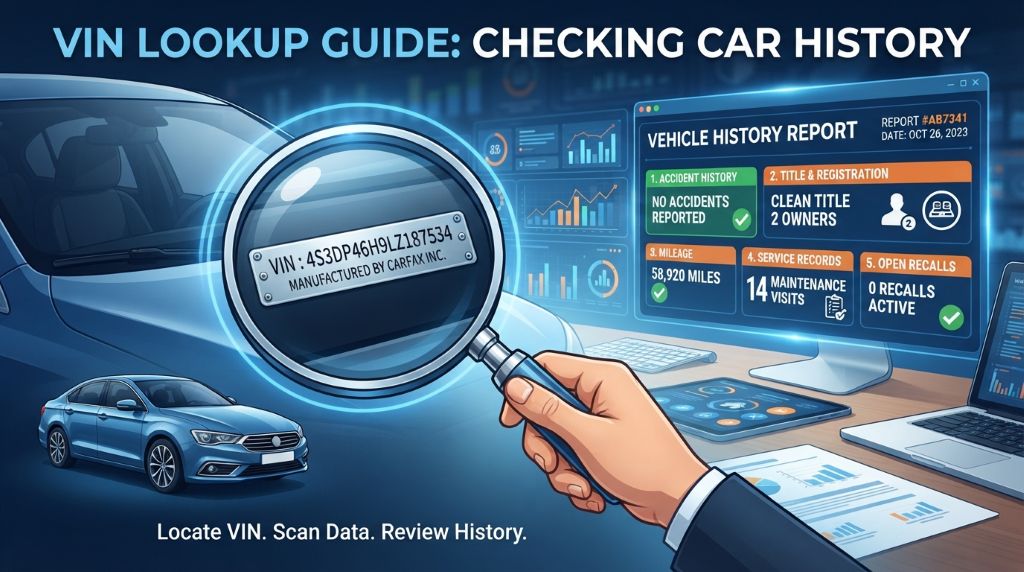
22 Sep VIN Lookup Guide: How to Check a Car’s History, Specifications, and Recalls
Key Takeaways
- A VIN lookup reveals a car’s history, specifications, and recall status in minutes.
- The National Highway Traffic Safety Administration offers a free VIN decoder and recall search tool.
- In 2025 alone, 982 safety recalls affected over 30 million vehicles, and many remain unrepaired.
- You should check for recalls at least twice a year, not just before buying.
- Paid history reports add ownership records, accident data, and title information that free tools skip.
Buying a used car without checking its VIN is like signing a contract without reading it. You might get lucky. You might not. A VIN lookup removes the guesswork and gives you facts instead of a seller’s promises.
I learned this lesson the hard way years ago. A friend bought a sedan that looked flawless. Two weeks later, the check engine light revealed a flood-damaged title the seller never disclosed. A five-minute VIN lookup would have caught it. That single mistake cost him thousands of dollars in repairs.
This guide breaks down exactly how a VIN lookup works, what it reveals, and why it matters for every car buyer.
What Is a VIN and Why It Matters
Every vehicle built after 1981 carries a unique 17-character Vehicle Identification Number. Manufacturers stamp this code onto the frame, dashboard, and door jamb. No two VINs match, which makes the number a fingerprint for any car on the road.
Each character encodes specific information. The first three digits identify the manufacturer and country of origin. The next five describe the vehicle’s brand, engine type, and body style. The tenth character reveals the model year, and the last six digits form a unique production sequence.
A VIN lookup decodes this string instantly. You avoid guessing whether a listing matches its claimed specifications. Sellers sometimes misstate trim levels or engine sizes, whether by mistake or intentionally. The VIN never lies, because it’s stamped at the factory and can’t be altered without leaving evidence.
According to the NHTSA VIN decoder API, a free public service converts a VIN into basic vehicle information using manufacturer-submitted data, including core details like make, model, year, and engine. This makes verification accessible to anyone, not just dealers or mechanics.
Understanding your VIN also helps with insurance quotes, parts ordering, and registration paperwork. Many DMV offices require the VIN for title transfers. Knowing how to read it saves time at every step of car ownership.
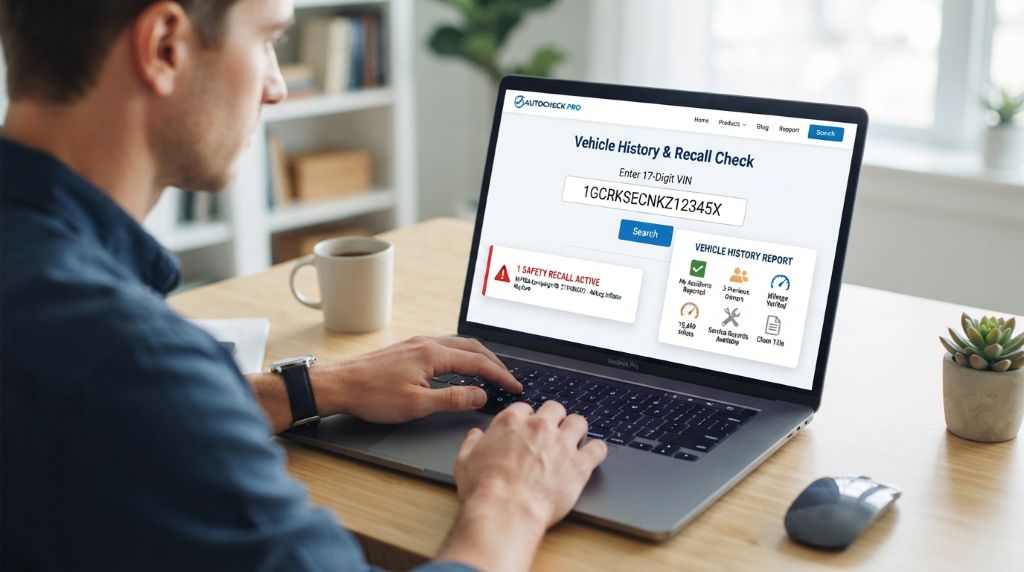
How to Perform a VIN Lookup
Running a VIN lookup takes less effort than most buyers expect. You need the 17-character code and access to a decoder tool. Here’s the process broken into simple steps:
- Locate the VIN on the dashboard, driver’s door jamb, or vehicle registration.
- Copy the code exactly, since one wrong character returns inaccurate results.
- Enter it into a VIN decoder website, such as the official NHTSA tool.
- Review the decoded specifications against the seller’s listing.
- Cross-check recall status through a separate recall search if the decoder doesn’t include it.
Free government tools handle the first four steps well. However, they don’t always show ownership history or accident records. For a fuller picture, paid services like Carfax or AutoCheck fill those gaps.
I always recommend running the VIN twice through different sources. One decoder might miss a detail another catches. This small habit has saved buyers from purchasing vehicles with mismatched engines or rebuilt titles. Redundancy costs nothing but a few extra minutes.
Mobile apps now offer instant VIN scanning through your phone’s camera. This speeds up the process at dealership lots, where typing a long code by hand feels tedious. Scanning also reduces typo errors that skew results.
Checking Vehicle Specifications
Specifications matter more than most buyers realize. A VIN lookup confirms the engine size, transmission type, drivetrain, and trim level. This information protects you from paying premium prices for base models.
Dealers occasionally list vehicles with incorrect specifications, whether through database errors or deliberate upselling. A decoded VIN settles the dispute immediately. You’ll see the factory-installed engine, not what a listing claims.
Specifications also affect insurance premiums and fuel economy expectations. A V8 engine costs more to insure than a four-cylinder. Knowing the exact trim helps you compare real costs before committing to a purchase.
Body style and manufacturing plant location appear in decoded results too. Some buyers prefer vehicles built in specific factories due to perceived quality differences. This level of detail wouldn’t be available without decoding the VIN directly.
Safety features also show up during a specification check. Modern decoders list driver-assistance systems, airbag configurations, and crash test ratings tied to that model year. This matters for families prioritizing safety over style.
Uncovering Recall History
Recalls represent one of the most overlooked aspects of used car buying. Manufacturers issue recalls when they identify safety defects, and unrepaired vehicles can pose serious risks.
The numbers here are striking. In 2025 alone, there were 982 safety recalls affecting over 30 million vehicles, yet millions remain unrepaired. That means a meaningful share of cars on the road today carry open safety issues their owners never fixed.
Recall repairs cost nothing at authorized dealerships. This includes both parts and labor, so there’s no financial excuse to skip them. Yet many owners never check, because they assume dealerships notify them automatically. That assumption often proves wrong, especially for used vehicles purchased after the original owner sold them.
NHTSA recommends checking for recalls regularly, not just once. You should check for recalls at least twice a year, making it part of your regular vehicle maintenance, since recalls can affect vehicles of any age, including new models.
However, VIN-level recall accuracy has limits worth understanding. NHTSA’s public recall data works at the make, model, and year level. It doesn’t always confirm whether your specific VIN falls within an affected production batch. For certainty, always verify directly with the manufacturer before assuming a repair is complete or unnecessary.
Free vs Paid VIN Lookup Tools
Free tools, like the NHTSA VIN decoder, cover specifications and open recalls at no cost. They pull directly from government and manufacturer databases, so accuracy stays high for the categories they cover.
Paid services add layers free tools skip entirely. These include:
- Accident history and reported damage
- Number of previous owners
- Odometer rollback flags
- Title status, including salvage or flood damage
- Service and maintenance records where available
For a five-figure purchase, spending twenty or thirty dollars on a paid report is a reasonable investment. The cost is minor compared to the risk of buying a car with hidden problems. I’ve watched buyers skip this step to save money, only to spend far more on repairs later.
Frequently Asked Questions
What is a VIN lookup used for?
A VIN lookup decodes a vehicle’s specifications, checks recall status, and can reveal ownership or accident history through paid services.
Is a VIN lookup free?
Basic VIN lookups through NHTSA are free. Detailed history reports covering accidents and ownership typically require payment.
How accurate is a VIN lookup?
Specification and recall data from official sources are highly accurate. History details from third-party services depend on reporting completeness.
Can a VIN reveal if a car was in an accident?
Free government decoders don’t show accident history. Paid services like Carfax or AutoCheck often include this information.
How often should I check my car for recalls?
NHTSA recommends checking twice a year, since recalls can appear on vehicles of any age, including brand-new models.
A VIN lookup takes minutes but protects you for years. Whether you’re buying, selling, or simply maintaining your current car, this habit belongs in your routine. You can also use the VIN to find specific vehicle details, such as the RPO codes that identify factory-installed options and equipment, with this helpful guide on how to find an RPO code by VIN. Have you ever caught a hidden issue through a VIN check? Share your experience in the comments, and pass this guide along to anyone shopping for a used car.